Most organizations run in hybrid environments, blending public cloud services with on-prem servers, legacy systems, manual workflows, and everything in between.
They store compliance evidence in decades-old file systems. They run mission-critical apps on infrastructure that predates the cloud era. And they rely on custom scripts that no SaaS dashboard knows how to handle.
This hybrid reality isn’t going away. 30% of organizations still rely on traditional on-premises environments. Besides, 80% of organizations run a multi-cloud strategy, combining the use of both public and private cloud.
Most GRC platforms in the market focus on cloud-first environments.They expect APIs, real-time data, and containerized systems to be the norm. But in reality, most enterprises still rely on hybrid infrastructure —a mix of cloud services and on-premises systems.
This gap between modern GRC tools and actual enterprise environments creates a real challenge. Most platforms are not equipped to fully support the complexity of hybrid IT.
Organizations need GRC solutions that connect easily across both cloud and on-prem systems. Hybrid GRC integrations solve this problem. They help teams manage risk and ensure compliance, without replacing existing systems.
In this article, we’ll explore why hybrid GRC is essential and how it helps businesses overcome the growing challenges of fragmented environments.
Hybrid IT Infrastructure: The New Normal
From a business standpoint, a hybrid IT approach offers strategic flexibility. Instead of committing entirely to on-prem or cloud, organizations can mix and match infrastructure to suit specific needs—adapting as those needs evolve. This bottom-up, evolutionary model reduces the risks of large, rigid IT overhauls, which are often costly, slow, and difficult to manage.
However, this flexibility comes at a cost: complexity. Managing a mix of on-premise, hosted, and cloud services—along with BYOD and distributed platforms—creates new challenges for IT leaders. For today’s CIO, the real concern isn’t just technical—it’s about maintaining governance, risk, and compliance across a fragmented ecosystem.
The future of IT leadership lies in effectively managing this hybrid reality while still delivering on business goals and user expectations.
According to Gartner Peer Community Insights, more than 50% of organizations have adopted hybrid infrastructure in response to newer technology requirements and/or business continuity. Despite the accelerating shift to cloud services, the vast majority of enterprises haven’t left their on-premises systems behind and they won’t anytime soon.
Enterprise Investments in Cloud vs On-premises
 Source-Gartner
For IT and security teams, this hybrid environment creates new challenges:
- Visibility gaps between systems
- Disconnected sources of truth
- Manual workarounds to link cloud and on-prem data
- Increased risk of compliance failures due to inconsistent processes
To navigate today’s complex infrastructure, organizations need a GRC platform that can penetrate across both cloud and on-prem environments, without compromising on automation, clarity, or control.
Expanding GRC Beyond the Cloud
Cloud-native GRC platforms were built for a very specific world—a world where everything has an API, data flows in real time, and every system is containerized, tagged, and observable. In theory, it’s efficient. In practice, it’s narrow.
The problem isn’t with the cloud. The problem is that many of these tools were designed with an assumption that everything is in the cloud. And that’s rarely the case.
Most enterprises aren’t all-in on the cloud. They’re somewhere in between—replatforming, refactoring, or just keeping certain systems where they are because they still work (and are too costly to replace). Legacy ERP systems, on-prem file servers, and manual access review workflows aren’t going away anytime soon.
When these environments run up against cloud-only GRC tools, friction sets in.
You end up with compliance programs that only cover a slice of your infrastructure. Risk registers that rely on outdated or manually updated data. Audits that require spreadsheets, screenshots, and email threads to fill in the gaps. Not because the team isn’t capable—but because the tooling can’t see far enough.
The cost? Time. Clarity. Trust.
Security and compliance teams get stuck building workarounds. They lean on engineers to write scripts or pull logs from systems the GRC platform can’t touch. Evidence collection becomes a manual process. Risk visibility is fragmented. And operational efficiency? Gone.
It’s not that cloud-first GRC tools don’t work. It’s that they don’t work everywhere. And in today’s environment, “everywhere” is the requirement.
To be effective, GRC platforms need to reflect the complexity of the infrastructure they serve. Not just the part that’s in the cloud—but the whole picture.
Hybrid Infrastructure Demands Hybrid GRC Integrations
Hybrid GRC integration goes beyond simply supporting cloud and on-prem environments. It’s about creating a connected, intelligent system that can operate across your entire infrastructure—delivering complete visibility, consistent controls, and automated compliance workflows, no matter where the data lives.
So what does hybrid GRC integration really look like?
A true hybrid GRC solution can:
- Ingest and normalize data from both structured and unstructured sources
- Automate evidence collection from both modern platforms like AWS and legacy systems
- Map controls and risks across systems, ensuring traceability and consistency even if the tools are decades apart
- Trigger alerts and workflows based on events from anywhere—whether it’s an email from a local scanner or an API call from a cloud SIEM
- Tailor dashboards and reports by role, so CISOs, compliance officers, auditors, and risk managers each get relevant, actionable views
Why It Matters
Without this kind of integration, organizations face major pain points:
- Delayed audits due to missing or inconsistent evidence
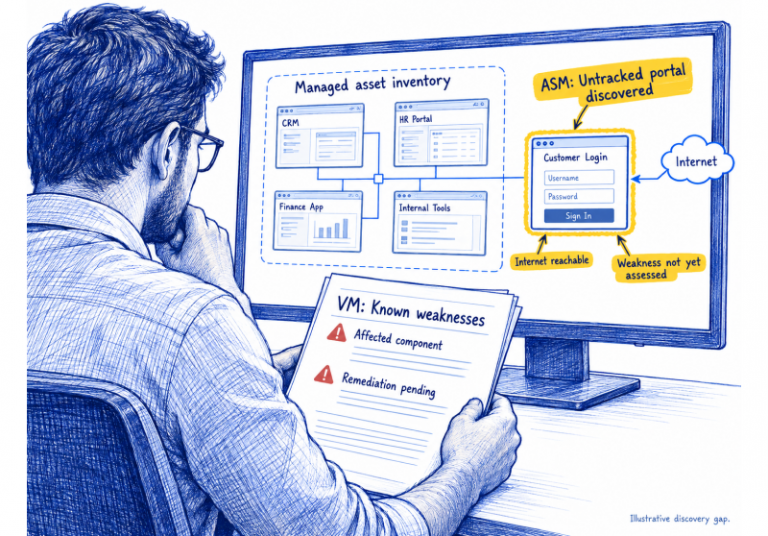
- Increased risk exposure from systems falling outside the scope of visibility
- Manual reconciliation between tools that don’t talk to each other
- Duplicate work to meet overlapping regulatory requirements
Hybrid integration turns these challenges into opportunities. It allows organizations to use what they already have, automate what’s possible, and gain insight across the board—instead of waiting for a full cloud migration that may never come.
It’s Not About More Tools—It’s About Smarter Connections
The point of hybrid GRC isn’t to bolt on more tools or build one more spreadsheet. It’s to create a layer of intelligence over your existing infrastructure that connects the dots across cloud, on-prem, and everything in between.
That’s what true hybrid GRC integration delivers—and it’s what platforms like SPOG.AI are purpose-built to provide.
Key Features to Look for in Hybrid GRC Tools
If your infrastructure spans both cloud and on-premises systems, your GRC tools need to be as flexible and adaptable as your environment. Not every GRC platform is built for this kind of complexity, so it’s critical to know what features truly matter when evaluating a tool that claims to support hybrid environments.
Here’s what to look for—beyond the buzzwords.
1. Multi-Environment Integration
A true hybrid GRC solution should connect to cloud platforms, on-prem servers, legacy systems, and everything in between. That means supporting modern APIs and less glamorous inputs like PowerShell scripts, file drops, manual logs, or exported spreadsheets. If a tool can only “see” half your stack, it can’t manage your risk.
2. Flexible Evidence Collection
Look for a platform that can collect, organize, and normalize evidence across different formats and sources. Whether it’s an S3 bucket, a shared drive, an email inbox, or a local server folder, the tool should pull it in—automatically if possible—and make it audit-ready without hours of manual work.
3. Unified Control Mapping
Controls don’t live in one place. A solid hybrid GRC tool should let you map requirements across multiple systems—cloud security controls, on-prem policies, custom scripts—into a single framework. This makes it easier to demonstrate compliance, track gaps, and avoid duplication.
4. Role-Based Dashboards and Reporting
Your CISO doesn’t need the same data as your compliance manager or your internal auditor. A strong GRC platform should offer role-specific views—strategic for leadership, operational for compliance teams, and technical for engineers—so each stakeholder sees what’s relevant to them.
5. Workflow Automation That Works in Hybrid Environments
Automations shouldn’t break just because part of your infrastructure is behind a firewall. Look for GRC tools that can trigger alerts, kick off workflows, or escalate issues whether the signal comes from a cloud-native SOC or a legacy access management system.
6. Real-Time Visibility (Not Just for the Cloud)
It’s one thing to have real-time visibility into your AWS or Azure resources. It’s another to get that same clarity into a legacy application or internal network. The best hybrid tools don’t stop at the edge of the cloud—they surface insights from your entire environment.
7. Scalability Without Requiring a Full Rebuild
Hybrid infrastructure is dynamic. A platform worth investing in should adapt as your architecture changes—whether you’re migrating, refactoring, or just layering in new tools. You shouldn’t have to reimplement your entire GRC program every time your infrastructure evolves.
The bottom line? The best hybrid GRC tools don’t try to force everything into a cloud-native box. They meet your systems—and your teams—where they are, and help you bring structure, clarity, and automation to the messy middle.
Next time you evaluate a GRC solution, don’t just ask, “Can it do cloud?”
Ask, “Can it do my environment?”
Best Practices for Implementing Hybrid GRC Integrations
Hybrid GRC integration is not a plug-and-play project—it’s a foundational effort that connects risk, compliance, and IT across your full technology landscape. Whether you’re just starting or refining your approach, following key best practices ensures the outcomes are scalable, secure, and aligned with business goals.
Here’s how to do it right:
1. Assess Your Current IT and Compliance Environment
Before you integrate anything, take inventory—honestly.
- What systems are in the cloud?
- What’s still on-premises (and likely to stay there)?
- Where does compliance evidence live today—dashboards, file shares, spreadsheets, inboxes?
- Which teams handle which controls?
- What’s already automated, and what’s still manual?
This step is essential. Without a clear understanding of your current state, you risk building around assumptions instead of reality. This assessment forms the blueprint for meaningful GRC integration—not just technical, but operational.
2. Prioritize Integration Points and Data Flows
Not all systems or workflows need to be connected at once.
Focus on the integration points that:
- Involve sensitive data
- Affect audit outcomes
- Are high-friction for your teams
- Contain repetitive, manual steps
For example: Automating access reviews or evidence collection from a legacy HR system may create more value than trying to immediately sync a low-risk SaaS tool.
Prioritize based on risk, compliance impact, and operational benefit. Think of it as building “connective tissue” between what matters most.
3. Ensure Security and Data Privacy Across Environments
Hybrid environments mean different systems, with different protocols and exposure levels. As you integrate:
- Use encryption and secure data transport between cloud and on-prem
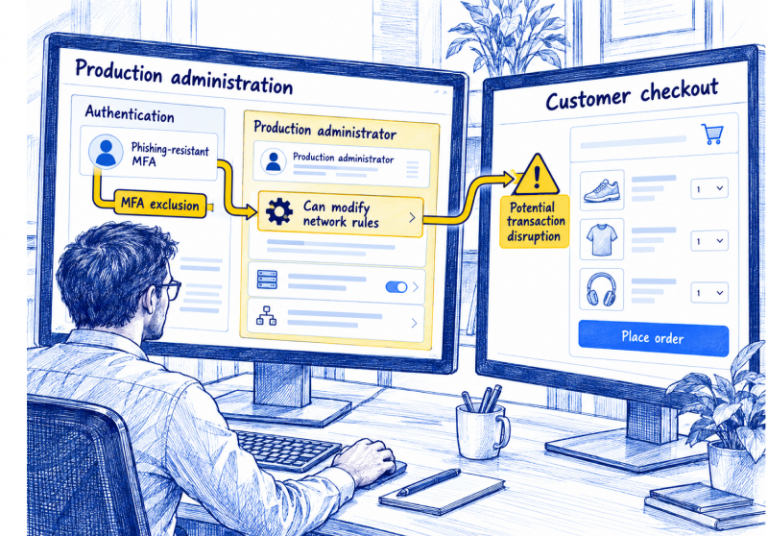
- Ensure granular access controls are in place, especially for evidence stores
- Audit data movement—who accessed what, when, and from where
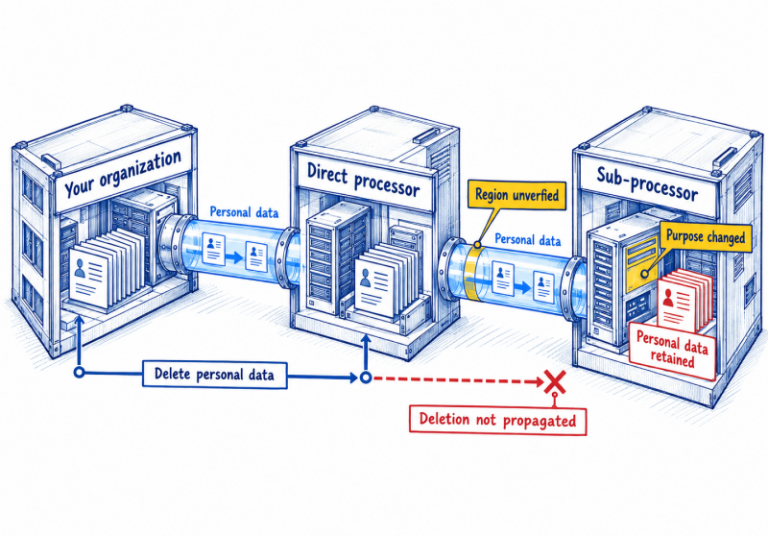
- Maintain compliance with privacy regulations (GDPR, HIPAA, etc.), especially when integrating systems that store personal or regulated data
Security can’t be an afterthought. Your GRC platform should work with your security architecture—not around it.
4. Plan for Change Management and Stakeholder Engagement
New tools and processes won’t stick unless the right people are involved. That includes:
- Compliance teams who understand the control frameworks
- IT teams who maintain the infrastructure
- Risk managers who depend on visibility
- Executives who expect insights—not noise
- And auditors who will ultimately ask, “Show me the evidence.”
Bring these stakeholders into the conversation early. Clarify the “why” behind hybrid GRC: less manual work, more accurate audits, better risk awareness.
Set realistic expectations: not everything will be integrated on day one. But with the right buy-in, the organization will align around a smarter, more resilient approach to governance and compliance.
Bottom line: Hybrid GRC isn’t about perfect control. It’s about practical visibility and meaningful automation—delivered across a patchwork of systems that aren’t going away anytime soon.
Start where you are. Build what matters. Scale when ready.
How SPOG.AI Simplifies Hybrid GRC
Hybrid GRC doesn’t have to be hard—it just has to be designed for the real world.
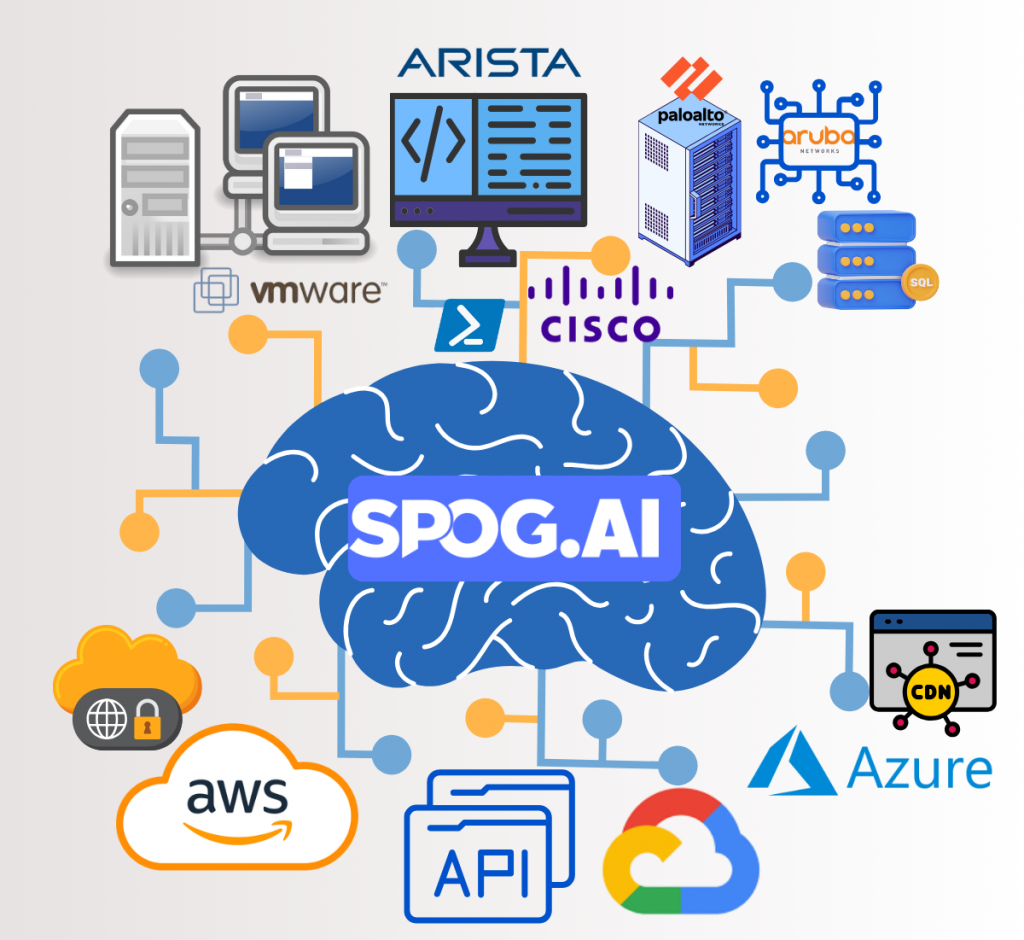
At SPOG.AI, we built our platform for the complexity that most organizations are actually working with: cloud services, legacy systems, disconnected workflows, and growing regulatory demands. Instead of forcing everything into a cloud-native mold, SPOG.AI connects what you already have, and turns it into something cohesive, compliant, and actionable.
Here’s how:
Connects Cloud and On-Prem Systems Seamlessly
Whether your data lives in AWS, Azure, a private cloud, or an old server in a back room—SPOG.AI integrates with it.
We support both modern APIs and on-premises inputs like:
- PowerShell scripts
- Shared drives
- Manual exports
- Email-based workflows
This means you can bring legacy systems into your GRC program without rebuilding your tech stack.
Automates Evidence Collection Across Environments
SPOG.AI automates the gathering of compliance evidence from wherever it exists—cloud platforms, internal tools, network devices, and even spreadsheets. No more chasing screenshots or digging through inboxes.
All your evidence is centralized, structured, and audit-ready.
Normalizes Disparate Data into Unified Controls
With hybrid environments, control data comes in many shapes and formats. SPOG.AI translates these inputs into a consistent, unified control framework.
Whether you follow NIST, ISO, SOC 2, or a custom standard, SPOG.AI keeps your controls aligned across all systems.
Delivers Role-Based Dashboards and Insights
Everyone from the CISO to the compliance analyst to the auditor sees exactly what they need—nothing more, nothing less.
Dashboards are tailored by role, so each stakeholder gets relevant insights without drowning in data.
Drives Automation That Works Across Silos
Trigger alerts, launch workflows, escalate exceptions—all from one platform.
Whether the source is a cloud SIEM, a local log file, or a user-submitted request, SPOG.AI can respond intelligently and consistently.
Built for Flexibility, Designed to Scale
Your infrastructure isn’t static, and your GRC platform shouldn’t be either. SPOG.AI grows with you—whether you’re migrating to the cloud, expanding compliance programs, or automating new processes.
You don’t need to rip and replace your tools. You just need to connect them better.