Risk Management vs Compliance Management: Which Should Be Your Priority?
Stuck Between Risk and Compliance? That’s the Real Risk. Discover why treating them as rivals is holding your organization back—and how smart teams use both to fuel resilience and agility.
If you’re an explorer setting out into uncharted territory, what would you need?
A map, to guide you along proven paths. A compass, to help you find your way when the landscape changes. Now imagine setting off with just one of those tools.
That’s the dilemma many organizations face when weighing compliance management against risk management.
On the surface, they seem like separate disciplines—each with its own teams, tools, and objectives. However the truth is:
Risk and compliance aren’t competing priorities. They are complementary forces.
The reality is, you need both. And more importantly, you need them working together.
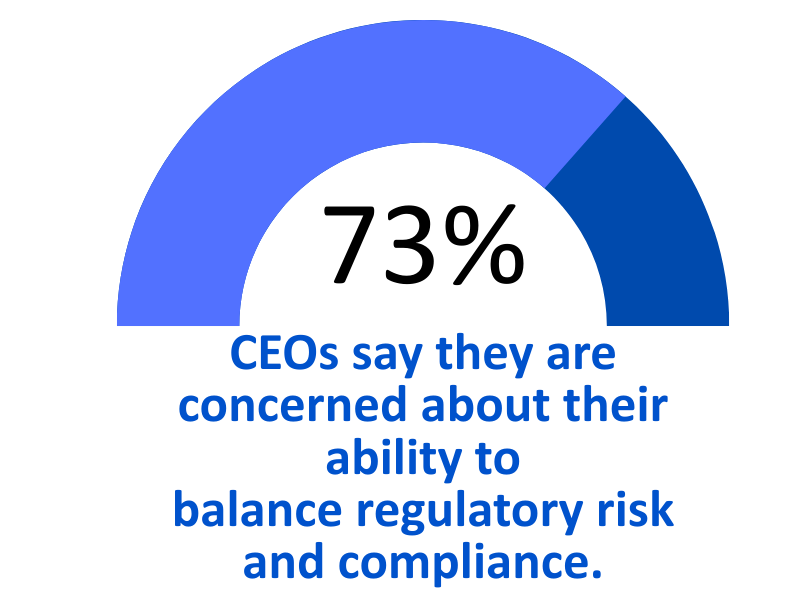
According to a recent report by Diligent, 73% of CEOs say they are concerned about their ability to manage increasing regulatory risk, while also citing disruption and cyber threats as top concerns.
This reflects a growing recognition: risk and compliance can’t be siloed—they must be aligned.
One protects your organization from external consequences. The other prepares it for internal and external uncertainty.
When integrated properly, risk and compliance don’t just prevent failure. They enable smart growth, strategic decision-making, and operational agility.
Key Differences Between Risk Management and Compliance Management
While risk management and compliance management often operate side-by-side, they come from different schools of thought. One is rooted in strategy and decision-making under uncertainty, the other in rules, structure, and accountability. Both are essential—but they speak different languages.
Here’s how they differ in practice:
Aspect
Risk Management
Compliance Management
Primary Goal
Identify, assess, and manage potential threats and uncertainties
Ensure conformance to laws, regulations, and internal standards
Mindset
Strategic, forward-looking, control-oriented
Procedural, rule-following, structured
Focus
What could go wrong, and how can we reduce the impact?
What must we do to meet legal and regulatory obligations?
Compliance asks: “Are we doing what we’re required to do?”
Risk management asks: “What could go wrong—and are we prepared?”
Compliance ensures you don’t cross any legal or ethical boundaries. Risk management helps you anticipate and address threats that could derail your goals—even if they fall outside a regulatory checklist.
Where compliance is obligation-driven, risk is uncertainty-driven. One helps you avoid punishment. The other helps you avoid disruption.
Bottom line: Compliance gives you the right to operate. Risk management helps ensure you can continue to operate—sustainably and strategically.
Next, let’s explore where these two forces meet—and how smart organizations use that overlap to their advantage.
Where Risk and Compliance Overlap
Despite their differences, risk management and compliance management are deeply interconnected—and the best-performing organizations don’t treat them in isolation.
In fact, some of the most critical areas of governance sit right at the intersection of risk and compliance.
Key Areas of Overlap
1. Internal Controls
Controls are designed to reduce risk and ensure compliance. Whether it’s a financial control to prevent fraud or a cybersecurity policy to meet data privacy laws, controls often serve both functions simultaneously.
2. Policy & Procedure Development
Clear policies don’t just fulfill regulatory requirements—they also mitigate operational and reputational risks. A well-crafted policy is both a compliance tool and a risk management strategy.
3. Training and Awareness
Training programs that educate employees on regulatory obligations often include risk scenarios, decision-making under uncertainty, and ethical conduct—all blurring the lines between risk and compliance.
4. Incident Reporting & Monitoring
Whether it’s a data breach or a conflict of interest, both risk and compliance teams rely on systems to detect, report, and respond to events. Integrated platforms and shared dashboards enable faster responses and better insights.
5. Third-Party Risk
Regulators expect companies to manage the risks posed by vendors, partners, and suppliers. This is both a compliance mandate and a risk management necessity—one that requires ongoing due diligence, assessments, and monitoring.
6. Issue Management and Remediation
When something goes wrong—whether it’s a compliance breach or a risk event—the process for investigating, tracking, and resolving the issue often follows a shared path. Both risk and compliance teams need visibility into incidents, root causes, and remediation plans to ensure that issues are not only fixed, but prevented from recurring.
Why the Overlap Matters
When risk and compliance are aligned, organizations gain a holistic view of threats and obligations. They can make faster, smarter decisions, respond more effectively to crises, and demonstrate accountability to regulators, customers, and stakeholders.
Misalignment, on the other hand, leads to silos, duplicated effort, blind spots, and increased exposure—both legally and operationally.
The goal isn’t to blend the two disciplines into one—but to ensure collaboration, shared intelligence, and mutual reinforcement.
Striking the Balance: Why Both Matter
When it comes to risk and compliance, it’s not a matter of choosing sides—it’s about finding the right balance.
Focusing too heavily on compliance can create a box-checking culture—rigid, reactive, and resistant to change. Over-indexing on risk management without grounding in compliance? That can lead to blind spots, missteps, and regulatory trouble.
In today’s landscape—shaped by digital disruption, evolving regulations, and geopolitical uncertainty—you need both disciplines working in sync.
What Balance Looks Like in Practice:
Shared ownership between legal, audit, operations, and strategy teams
Integrated systems and data that bring risk and compliance insights into one view
Aligned objectives where compliance requirements inform risk posture, and risk appetite guides compliance priorities
GRC Technology platforms like Spog.ai that connect the dots, streamline controls, and surface insights across both domains
Moving Forward
The future of Governance, Risk, and Compliance (GRC) isn’t siloed—it’s intelligent, integrated, and insight-driven.
Whether you’re navigating regulatory complexity or preparing for the next major disruption, success won’t come from choosing risk over compliance—or vice versa. It will come from aligning the two to build trust, agility, and resilience.
Because in a world of constant change, the organizations that thrive aren’t just rule-followers or risk-avoiders.
They’re explorers—equipped with both a map and a compass.
Real-World Examples: When Imbalance Backfires
The failure to strike a balance between risk and compliance management isn’t just a theoretical concern—it’s played out repeatedly in high-profile corporate scandals. These stories serve as powerful reminders of what can go wrong when one side is overemphasized or neglected.
Wells Fargo: A Culture of Compliance on Paper, But Not in Practice
Wells Fargo’s 2016 fake accounts scandal is a textbook case of compliance failure.
Employees, under extreme sales pressure, opened millions of unauthorized accounts to meet quotas. Internally, policies existed—but they were poorly enforced. Compliance structures were in place, but risk signals were ignored or buried.
What went wrong? The company prioritized performance metrics and sales targets over actual compliance enforcement. The culture rewarded results, not accountability.
The fallout: $3 billion in fines and settlements, executive resignations, and irreparable reputational damage.
Lesson: A checkbox compliance program isn’t enough if risk signals are ignored and compliance isn’t actively integrated into everyday decision-making.
In 2018, Facebook faced global backlash after it was revealed that political consultancy Cambridge Analytica improperly accessed data from 87 million users via a third-party app. The platform allowed this access under loose oversight, assuming the risk was manageable.
What went wrong? Facebook adopted a growth-at-all-costs mindset. Data governance and user privacy were deprioritized in favor of platform expansion and third-party integrations.
The fallout: $5 billion FTC fine, CEO testimony before Congress, and a significant erosion of public trust.
Lesson: Risk management without strong compliance boundaries—especially in areas like data privacy—can lead to massive legal and regulatory consequences.
The Role of Technology in Bridging the Gap
Risk and compliance teams often work toward the same goals—protecting the organization, ensuring resilience—but they don’t always use the same tools or speak the same language. That’s where the right technology can make all the difference.
Modern GRC platforms are helping organizations bring these two functions together in practical, scalable ways. Platforms like Spog.ai are not just simplifying workflows—they’re creating a shared foundation where risk and compliance can operate in sync.
Better Visibility with Unified Data
Instead of piecing together spreadsheets, reports, and siloed dashboards, integrated platforms centralize information from across teams. Spog.ai brings risk registers, audit logs, compliance frameworks, and control activities into one place.
Everyone is working from the same up-to-date information. That leads to better decisions and fewer surprises.
Real-Time Monitoring and Intelligent Alerts
Compliance deadlines, emerging risks, control breakdowns—keeping track of everything manually is a losing battle. With automated monitoring, GRC platforms surface what matters, when it matters.
You don’t have to wait for an audit to discover issues. Problems are flagged early, so teams can respond before they escalate.
Integrated, Dual-Purpose Controls
Many controls serve both risk and compliance needs—but they’re often managed separately. Technology helps create shared control libraries that align to both regulatory requirements and enterprise risks.
Less duplication, fewer gaps, and a streamlined approach to control testing and assurance.
Automated Testing and Reporting
Preparing for audits or compliance reviews can be time-consuming. Platforms like Spog.ai automate control testing, evidence collection, and reporting so teams spend less time chasing data.
Teams focus on analysis and action—not paperwork.
AI That Adds Context, Not Just Speed
AI-driven platforms are becoming more than automation engines. They’re offering real insights—flagging anomalies, recommending improvements, and connecting the dots between risks, controls, and compliance gaps.
It’s not just faster—it’s smarter. You gain better insight into where you stand and what needs attention.
Conclusion: A Smarter Approach to Risk and Compliance
Risk and compliance aren’t boxes to tick—they’re building blocks of sustainable, responsible growth. When they operate in silos, organizations struggle with miscommunication, inefficiencies, and missed opportunities. But when they’re aligned, they create a stronger foundation for confident decision-making and long-term success.
The choice isn’t between avoiding penalties or navigating uncertainty—you need to do both. The real challenge is designing systems, workflows, and cultures that let risk and compliance inform one another in real time.
That’s why forward-thinking organizations are shifting away from fragmented GRC efforts toward integrated, tech-enabled ecosystems—where data flows freely, teams work collaboratively, and technology platforms bridge the gap between oversight and action.
So whether you’re exploring new markets, adopting new technologies, or responding to new regulations, make sure your organization is equipped with both a map and a compass.
Because the future belongs to those who don’t just protect the business—but guide it forward.