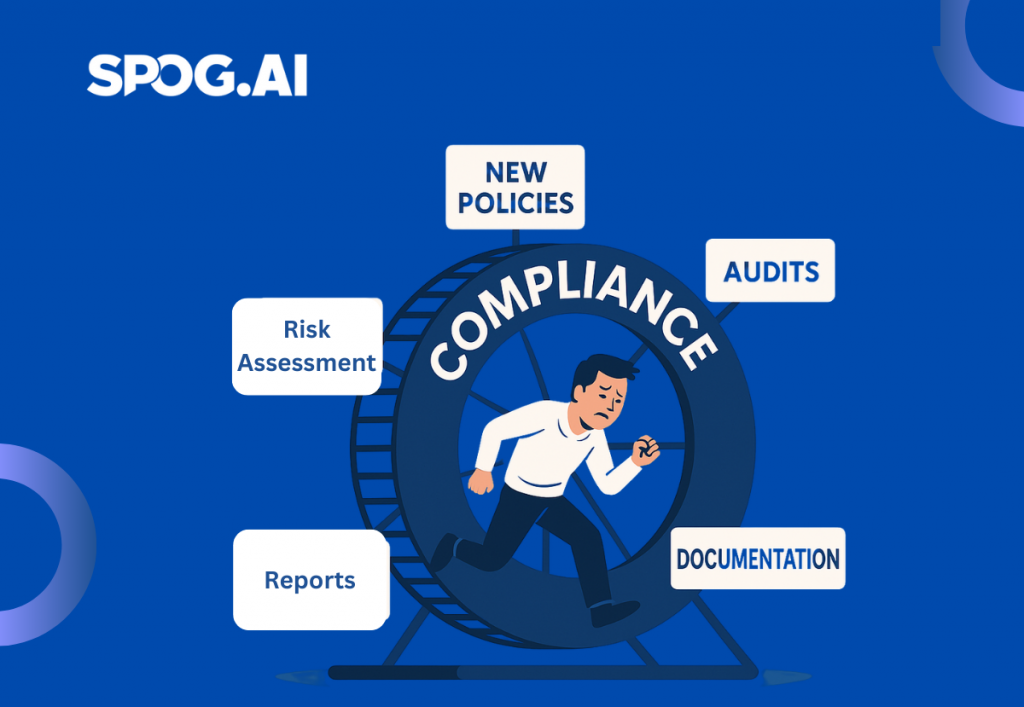
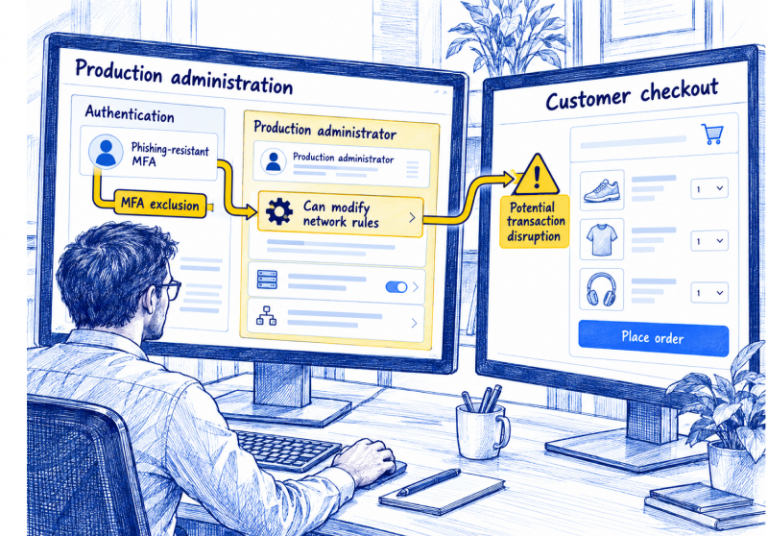
Compliance fatigue is real—and it’s putting your security at risk. When checklists replace critical thinking, organizations become vulnerable. Learn how to move beyond box-ticking and build a security culture that stays alert, engaged, and resilient.
Imagine walking into a fast food joint where the staff takes a rather lax approach to food safety and customer service:
The burgers were last inspected a few months ago, so they’re probably still good.
We clean the grill once a quarter—whether it needs it or not.
Our emergency food safety manual is in a drawer somewhere—locked, but don’t worry, we’re pretty sure it’s there.
The manager has accepted the risk of undercooked food because it speeds up service—besides, they’ve got a Food Safety Pro certification!
But don’t worry—the restaurant is fully compliant with the “Fast Food Hygiene Standards 2022.”
Would you feel comfortable eating there? Probably not.
You’d probably walk out, wondering how they manage to stay open. Yet, in the world of IT security and compliance, a similar mindset often creeps in when compliance fatigue sets in.
Just as the restaurant staff performs tasks out of routine rather than genuine care for food safety, employees facing compliance fatigue do the same with security protocols. They tick boxes, follow outdated procedures, and lose the sense of purpose behind their actions. Instead of seeing compliance as a way to ensure security, they view it as a bureaucratic hassle.
This phenomenon, known as complacency through repetition, is eerily similar to what happens when employees face compliance fatigue. When workers repeatedly perform the same tasks without understanding their impact, they become complacent. Over time, their focus shifts from protecting the organization to simply completing mandatory checklists.
A 2022 study by the Compliancy Group revealed that nearly 60% of compliance staff felt burned out. They blamed endless tasks and the constant pressure to avoid mistakes. This burnout makes compliance feel like a formality rather than a vital safeguard. When fatigue sets in, employees may treat security protocols as routine rather than essential, leaving organizations exposed to risks.
To protect data and systems, organizations need to understand compliance fatigue and its impact. It’s not enough to follow the rules mechanically. Teams must stay engaged, proactive, and focused on real security, not just passing audits.
Understanding Compliance Fatigue
Compliance fatigue happens when employees feel overwhelmed and disengaged due to repetitive and monotonous compliance tasks. It’s not just about being tired; it’s a mental state where people start seeing compliance as a burden rather than a critical security measure. This mindset shift can have serious consequences for organizational security.
Employees often face compliance fatigue when they repeatedly perform the same tasks without understanding their purpose or impact. When the focus shifts from protecting the organization to just ticking boxes, people lose motivation. Over time, they might cut corners, skip steps, or perform tasks mechanically, without truly engaging.
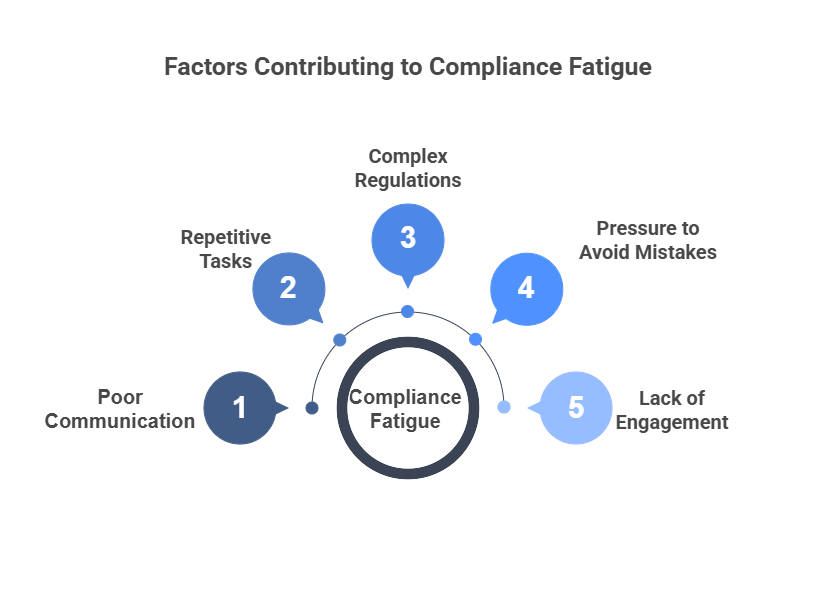
Several factors contribute to compliance fatigue:
Repetitive Tasks: When employees perform the same checks and fill out the same forms repeatedly, the tasks start to feel meaningless. Instead of seeing the bigger security picture, they focus on just getting through the day.
Complex Regulations: Many industries face an ever-evolving landscape of regulations. Keeping up with changes feels daunting, especially when new requirements seem more like paperwork than practical security measures.
Pressure to Avoid Mistakes: Compliance errors can lead to fines or data breaches. This pressure can make employees overly cautious, causing stress and burnout. Instead of being motivated to secure systems, they focus on avoiding blame.
Lack of Engagement: When organizations treat compliance as a mere formality, employees follow suit. They perform tasks out of obligation, not because they believe in their importance. This detachment weakens their commitment to security practices.
Poor Communication: When leaders don’t explain why compliance tasks matter, employees view them as disconnected from real-world security threats. Without context, people struggle to see the relevance of what they’re doing.
Compliance fatigue doesn’t just affect individual employees—it impacts the whole organization. When fatigue sets in, teams lose the proactive mindset needed to tackle emerging security threats. Instead of thinking critically, they become passive, performing tasks without questioning whether they make sense in the current context.
How Compliance Fatigue Undermines Security
Compliance fatigue doesn’t just impact employee morale; it directly compromises security. When employees feel overwhelmed by repetitive and monotonous tasks, they tend to disengage, leading to errors and oversight. This fatigue creates gaps in security practices that attackers can exploit.
1. Increased Human Error
When employees experience fatigue, their attention to detail slips. They might skip steps, overlook updates, or fail to document changes properly. For example, an IT administrator might forget to apply a crucial security patch because they view the update process as just another routine task. Even minor lapses like these can expose systems to cyberattacks or data breaches.
2. Reduced Vigilance
Fatigue causes employees to adopt a “check-the-box” mentality. Instead of carefully evaluating risks or following protocols, they rush through tasks to meet deadlines. In a security context, this means they might approve access requests without proper scrutiny or mark vulnerabilities as low priority without thorough assessment. This lack of vigilance leaves the organization vulnerable to insider threats and external attacks.
3. Outdated Security Practices
Compliance tasks often focus on maintaining standards rather than adapting to emerging threats. When employees feel fatigued, they are less likely to question outdated practices. They may continue to follow protocols established years ago without verifying their current relevance. As cyber threats evolve, sticking to outdated methods increases the risk of exploitation.
4. Weakening of Security Culture
When employees view compliance as a burden rather than a critical function, it weakens the organization’s security culture. Teams become more focused on avoiding penalties than genuinely securing systems. This attitude fosters a culture where security becomes secondary, increasing the likelihood of risky behavior and poor decision-making.
5. Increased Risk Acceptance
Fatigued employees might start to view certain risks as acceptable simply because they have become routine. For instance, they might ignore recurring vulnerabilities, thinking that since nothing has gone wrong before, nothing will go wrong now. This complacency can be disastrous when a known vulnerability finally gets exploited.
6. Disconnection from Real-World Threats
When compliance becomes routine, employees lose sight of why they perform these tasks. They see compliance as a bureaucratic hurdle rather than a means of protecting the organization. As a result, they might fail to recognize how a minor oversight could lead to a major security incident.
Take the 2017 Equifax data breach, which exposed the personal information of 147 million people, for example. Despite receiving a critical alert from the Department of Homeland Security about a vulnerability in the Apache Struts framework, Equifax’s IT team failed to apply the necessary patch.
Overwhelmed by routine updates and repetitive tasks, they treated the alert as just another checklist item rather than a critical security issue. This complacency, fueled by a compliance-focused rather than a security-focused mindset, allowed hackers to exploit the unpatched system for months, costing the company $1.4 billion and severely damaging its reputation.
Strategies to Combat Compliance Fatigue
To reduce compliance fatigue and protect organizational security, companies must rethink how they approach compliance tasks. Simply adding more procedures or reminders won’t solve the problem. Instead, organizations need strategies that make compliance more meaningful, manageable, and engaging.
1. Automate Routine Compliance Tasks
Automating repetitive tasks reduces the manual workload that often leads to burnout. Automated systems can handle patch management, log monitoring, and vulnerability scanning, allowing employees to focus on higher-level analysis and decision-making. By reducing the monotony of manual checks, automation keeps employees more engaged and less fatigued.
Action Steps:
Identify high-frequency compliance tasks such as patch management, log monitoring, and data backups.
Invest in automation tools that can handle these tasks efficiently.
Integrate automated systems with existing compliance frameworks to ensure seamless reporting and tracking.
Regularly audit automated processes to ensure accuracy and relevance.
2. Simplify Compliance Processes
Overly complex compliance frameworks contribute to fatigue. Simplifying these processes by eliminating redundant steps and consolidating related tasks can help. Use clear, concise checklists and integrate compliance into daily workflows rather than treating it as an add-on.
Action Steps:
Conduct a process audit to identify redundant or unnecessarily complicated steps.
Consolidate similar tasks to eliminate duplication.
Create clear, user-friendly checklists that combine multiple compliance requirements.
Use centralized dashboards to provide a clear overview of compliance tasks and their status.
3. Make Compliance Relevant and Purposeful
Employees disengage when they don’t understand why compliance tasks matter. Educate teams about the real-world risks associated with non-compliance. Use case studies, such as the Equifax breach, to illustrate the consequences of complacency. Make it clear that compliance is not just a requirement—it’s an essential part of security.
Action Steps:
Incorporate real-world case studies into training sessions to show the consequences of non-compliance.
Clearly explain how each compliance task contributes to the organization’s security and reputation.
Provide context during audits and evaluations, emphasizing the importance of accuracy and thoroughness.
Reward proactive compliance efforts to reinforce the value of careful work.
4. Foster a Security-First Culture
Shift from a compliance-driven mindset to a security-focused culture. Encourage employees to think critically about risks rather than just completing tasks. Create a culture where staff feel empowered to question outdated procedures and suggest improvements.
Action Steps:
Establish a clear connection between compliance and risk management during team meetings.
Encourage employees to suggest improvements to existing compliance processes.
Implement regular training sessions that emphasize critical thinking and proactive security practices.
Designate “Compliance Champions” within each team to advocate for best practices and keep morale high.
5. Support Employee Well-Being
Fatigue often stems from burnout. Addressing employee well-being through flexible schedules, mental health support, and reducing non-essential compliance tasks can make a significant difference. Encourage open communication so that employees can voice concerns without fear of repercussions.
Action Steps:
Implement flexible scheduling to reduce stress during peak compliance periods.
Provide mental health resources and training on stress management.
Conduct regular feedback sessions to understand employee concerns and improve processes.
Reduce non-essential compliance tasks where possible to minimize workload.
6. Integrate Compliance with Risk Management
When employees see compliance as part of risk management rather than a separate obligation, they engage more. Map compliance tasks to specific risks and outcomes. This approach helps employees see how their efforts directly protect the organization.
Action Steps:
Map each compliance task to a specific risk or potential outcome to show its importance.
Incorporate risk assessment into compliance checklists, prompting employees to think critically about potential threats.
Train employees to assess risks proactively rather than reactively.
Regularly update compliance processes to reflect the latest risk landscape and industry standards.
By implementing these strategies, organizations can transform compliance from a tedious routine into an integral part of security. Reducing fatigue not only improves morale but also enhances overall security posture by keeping employees engaged and vigilant.
Sustaining a Resilient Compliance Culture
Creating a culture that actively combats compliance fatigue requires ongoing effort and innovative strategies. Organizations must embed compliance into the everyday mindset rather than treating it as a separate, tedious task.
Here are three unique and dynamic ways to sustain compliance in the long run:
1. Adopt a Dynamic Risk Assessment Approach
Traditional compliance models often rely on static checklists and periodic evaluations. However, in today’s fast-paced threat landscape, this approach can leave organizations exposed to emerging risks. Instead, adopting a dynamic risk assessment model helps teams stay ahead by continuously evaluating potential vulnerabilities and adjusting strategies accordingly.
Static compliance practices fail to account for the ever-changing risk environment. Dynamic assessment allows organizations to adapt in real time, ensuring that compliance measures align with the latest threats.
Action Steps:
Implement Real-Time Threat Intelligence:
Integrate threat intelligence feeds with your compliance systems. These feeds provide continuous updates about new vulnerabilities, attack vectors, and security incidents in your industry.
Use automated tools that correlate threat data with your existing compliance controls, highlighting areas that need immediate attention.
Conduct Ongoing Risk Scoring:
Use risk scoring systems to prioritize vulnerabilities based on potential impact and likelihood.
Continuously update these scores as new data becomes available, ensuring that mitigation efforts target the most pressing risks.
Adopt a Continuous Improvement Mindset:
After addressing a risk, conduct a brief retrospective to understand why the vulnerability existed and how to prevent similar issues.
Document lessons learned and integrate them into training and procedural updates.
Leverage Predictive Analytics:
Use data analytics to predict potential compliance failures based on historical data and current trends.
This proactive approach helps identify patterns that may indicate future vulnerabilities, allowing for preventive action.
2. Visualize Compliance Outcomes with Unified Security Dashboards
Employees often struggle to see how their compliance efforts contribute to the organization’s overall security posture. A unified security dashboard that visualizes compliance data can bridge this gap, fostering a more engaged and informed workforce.
When employees see their compliance efforts reflected in real-time dashboards, they better understand the impact of their actions. Visualization makes compliance tangible, motivating employees to maintain high standards.
Action Steps:
Centralize Compliance Metrics:
Develop dashboards that integrate data from various compliance tools and monitoring systems.
Display key performance indicators (KPIs) such as patching status, incident response times, and user access compliance.
Highlight Success Stories:
Use the dashboard to showcase instances where compliance efforts prevented incidents or improved security metrics.
Include visual elements like graphs and progress bars to make achievements clear and encouraging.
Enable Customization for Different Roles:
Allow team members to customize dashboards to focus on metrics most relevant to their role (e.g., IT staff might prioritize patching data, while compliance officers focus on audit readiness).
Set Up Automated Alerts and Anomalies:
Integrate alert systems that notify employees when compliance metrics fall below acceptable levels.
Use anomaly detection to spot irregular patterns that could indicate a compliance issue or security threat.
3. Continuous Compliance Monitoring
Static compliance checks, typically conducted during audits or annually, leave significant gaps where threats can arise unnoticed. Continuous compliance monitoring closes these gaps by providing real-time insights into security and compliance status.
Threat landscapes change daily, and static assessments can miss critical updates. Continuous monitoring ensures compliance measures are consistently applied and automatically adjusted as needed.
Action Steps:
Implement Automated Monitoring Tools:
Deploy tools that continuously scan systems for compliance violations, such as unpatched software, unauthorized access, or outdated protocols.
Use these tools to track compliance metrics in real time, flagging non-compliance as soon as it occurs.
Integrate with SIEM (Security Information and Event Management) Systems:
Combine compliance monitoring with security event tracking to detect violations and potential breaches simultaneously.
Correlate compliance alerts with security incidents to assess whether non-compliance contributed to a threat.
Automate Remediation:
Set up workflows that automatically remediate minor compliance issues, such as reverting unauthorized configuration changes or triggering patch updates.
Ensure that critical issues still require manual approval, maintaining control over major security decisions.
Regularly Review Monitoring Effectiveness:
Periodically assess whether monitoring tools are capturing the most relevant data and updating compliance requirements as regulations evolve.
Include stakeholder feedback to ensure monitoring practices remain aligned with operational realities.
Conclusion
Compliance fatigue is a real and persistent challenge that threatens the security of organizations across industries. When employees see compliance as just another routine task, they lose the critical engagement needed to identify risks and maintain secure practices. This complacency can lead to severe consequences, as seen in high-profile breaches where fatigue played a significant role.
The goal is clear: shift compliance from a burdensome obligation to an integral part of everyday operations. When employees understand the value of their compliance efforts and see their impact, they become more invested in protecting the organization. By prioritizing engagement, transparency, and continuous improvement, companies can transform compliance fatigue into sustained vigilance and robust security.