Building a Risk-Aware Culture: The Human Element in Security
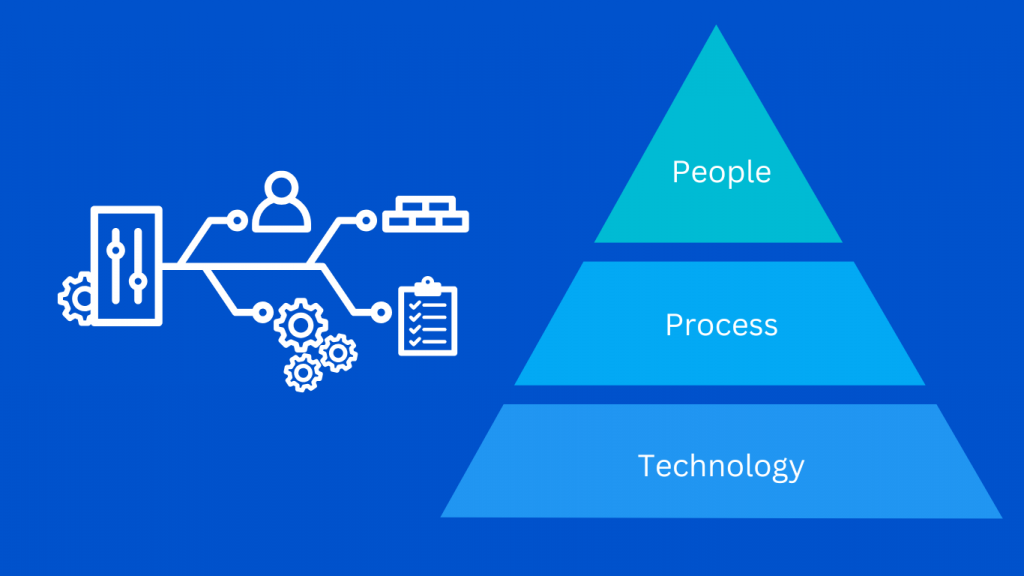
Protection starts with people. And, if you have not recognized this yet, you are overlooking the human element in security. In fact, humans are the weakest link in security, not technology alone. Thus, it all starts with people and building a risk-aware culture. Read on to turn your workforce into your strongest defense.
82% of data breaches involve a human element. That’s not a technical failure—it’s a people problem. You can have the best firewalls, AI-driven threat detection, and compliance frameworks in place, but if your employees don’t recognize risks, your security strategy is flawed.
Think about it. How many times have you clicked a link without verifying the sender? How often do employees ignore security alerts, assuming someone else will handle them? Cybercriminals aren’t just exploiting vulnerabilities in software—they’re taking advantage of human behavior.
A risk-aware culture isn’t about handing employees a rulebook or running a one-time training session. It’s about creating an environment where security is second nature. When people understand how their actions impact the bigger picture, they stop being the weakest link and start becoming the first line of defense.
This shift doesn’t happen overnight. It requires training that sticks, leadership that leads by example, and programs that engage employees at every level. And most importantly, it requires measurement. If you can’t track security awareness like any other business priority, it won’t improve.
So how do you build a security culture that works? Let’s break it down.
The Role of Employee Training in Risk Management
Security isn’t just about firewalls and encryption—it’s about people making the right decisions every day. Employees are often the first line of defense, yet they are also the most targeted by cybercriminals. Without proper training, they become the weakest link.
The problem? Traditional security training is failing. Annual compliance courses and generic PowerPoint presentations don’t engage employees or change behavior. Cyber threats evolve daily—your training must evolve with them.
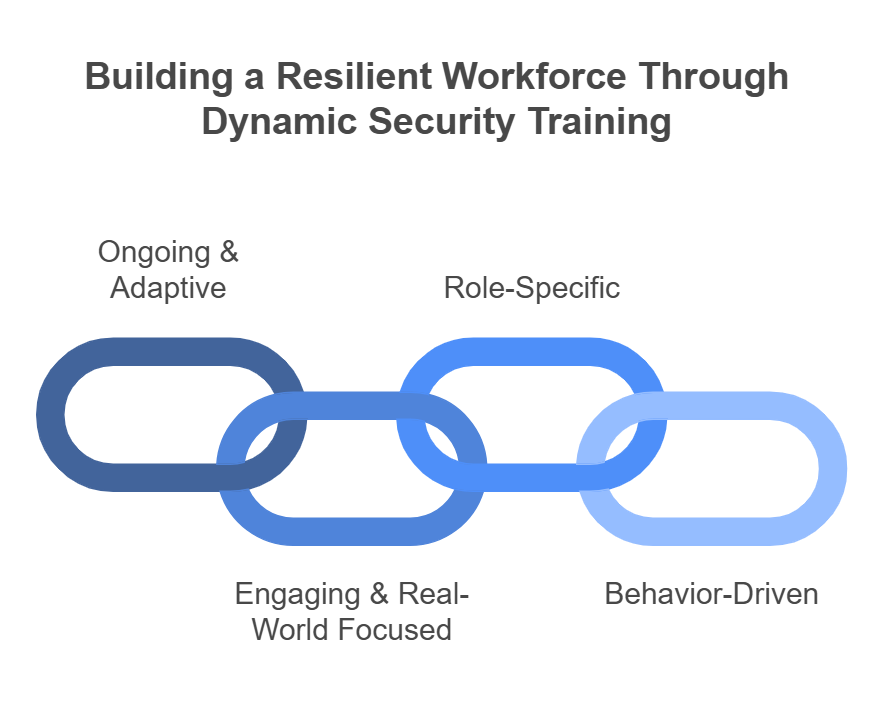
To be effective, security awareness must be:
Ongoing & Adaptive: Cyber threats don’t wait for yearly training. Employees need regular updates on new attack tactics, from AI-driven phishing scams to evolving ransomware techniques.
Engaging & Real-World Focused: People learn best through experience. Interactive simulations, phishing tests, and gamified training ensure employees recognize threats when they see them.
Role-Specific: Not all employees face the same risks. IT teams need in-depth technical awareness, while HR and finance teams must be hyper-aware of social engineering scams. Tailored training makes security relevant.
Behavior-Driven: Training shouldn’t just teach policies—it should shape security-first thinking. Employees must understand that their actions directly impact the organization’s security posture.
When security training is immersive and continuous, employees become active participants in risk management rather than passive recipients of rules. Organizations that implement frequent phishing simulations and interactive security programs see a 70% reduction in employees falling for phishing attacks.
The bottom line? Cybersecurity awareness must be built into the company culture, not treated as a compliance task.
Motivating Buy-In from Leadership and Frontline Staff
A risk-aware culture doesn’t happen by accident—it starts at the top. If leadership doesn’t prioritize security, employees won’t either. When security is seen as “just an IT problem,” it becomes an afterthought rather than a shared responsibility.
The challenge? Many executives view cybersecurity as a cost rather than a strategic investment. Frontline employees often see security policies as obstacles rather than protections. Without clear leadership commitment and staff engagement, security awareness efforts fall flat.
So, how do you drive real buy-in?
Getting Leadership on Board
Security must be embedded in business objectives, not just IT strategy. When executives understand how breaches impact financial stability, customer trust, and regulatory compliance, they are more likely to champion security initiatives. Security leaders must connect cybersecurity to business success—demonstrating how strong security enables innovation, protects brand reputation, and minimizes costly downtime.
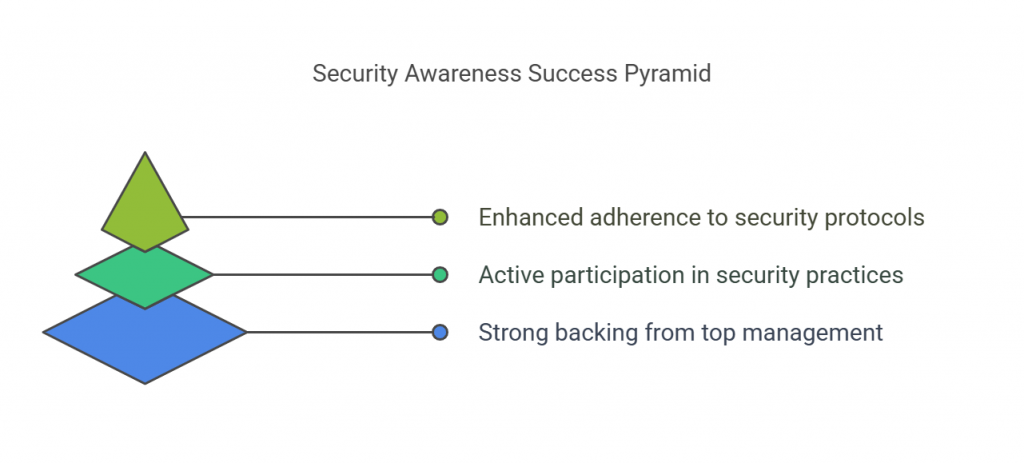
A culture shift starts with visible leadership participation. When executives complete security training, communicate security priorities, and reinforce policies in meetings, employees take security more seriously. If leadership treats security as optional, employees will too.
Engaging Frontline Staff
For employees, security training often feels like a chore—something to “get through” rather than actively engage with. To change that mindset:
Make security personal – Show employees how cybersecurity affects their personal and professional lives, from protecting company data to safeguarding their own online security.
Use real-world examples – Share stories of companies that suffered breaches due to human error. People relate to real consequences more than abstract threats.
Reward secure behaviors – Recognizing employees who report phishing emails or follow security protocols creates positive reinforcement and motivates others to follow suit.
Organizations with strong leadership support for security awareness experience an 85% improvement in employee security behavior.
The takeaway? Security isn’t just IT’s responsibility—it’s everyone’s job. When leadership prioritizes cybersecurity and employees see its value, security awareness becomes part of the organizational DNA.
Designing Effective Security Awareness Programs
Most security training programs fail not because the information is wrong, but because they’re boring, forgettable, and disconnected from real-world risks. If employees see security awareness as another box to check, they won’t internalize the behaviors needed to protect the organization.
A successful security awareness program isn’t just about delivering information—it’s about changing behaviors and making security an instinctive part of daily work. Here’s how to design a program that sticks:
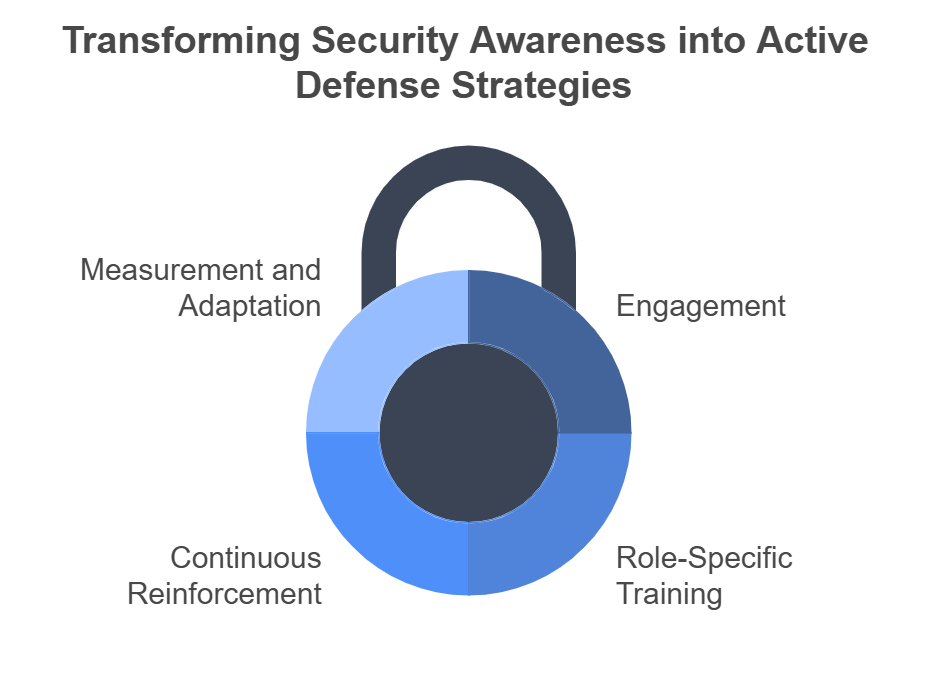
1. Make It Engaging and Interactive
Traditional training methods—long PowerPoint slides and dry compliance manuals—don’t work. Employees learn best through experience.
Gamify learning: Use quizzes, leaderboards, and rewards to encourage participation. Employees are far more likely to engage when training feels like a challenge rather than a chore.
Simulate real attacks: Regular phishing tests, social engineering simulations, and attack scenario exercises prepare employees for real-world threats.
Short, frequent lessons: Instead of overwhelming employees with long annual training sessions, break content into bite-sized, ongoing microlearning modules.
2. Tailor Training to Different Roles
A one-size-fits-all approach to security awareness is ineffective. Different teams face different risks.
IT & Security Teams: Need deep technical training on threat detection, incident response, and security configurations.
HR & Finance: High-risk targets for social engineering scams, payroll fraud, and identity theft.
Customer Support & Sales: Must recognize phishing attempts, fraudulent transactions, and social engineering techniques.
Customizing training to address specific risks for different roles ensures employees are prepared for the threats they actually face.
3. Reinforce Security Awareness Continuously
Security training shouldn’t be a once-a-year event. Cyber threats evolve daily—your training should too.
Use multi-channel reinforcement: Posters, internal newsletters, security reminders in emails, and interactive videos help keep security top-of-mind.
Encourage peer accountability: Create a network of Security Champions across departments who advocate for cybersecurity best practices.
Foster a “report-first” culture: Employees should feel safe reporting suspicious activity without fear of punishment. Quick response to reported threats builds trust and strengthens defenses.
4. Measure and Adapt for Continuous Improvement
Training effectiveness shouldn’t be assumed—it should be measured. Tracking key success metrics helps refine awareness programs for better impact.
Phishing test results: Monitor improvements in employees recognizing and reporting phishing attempts.
Engagement rates: Track participation in training programs and security initiatives.
Incident reporting trends: A rise in reported suspicious activity signals that employees are paying attention.
A well-designed security awareness program doesn’t just educate—it transforms employees into active defenders. When security knowledge becomes second nature, your organization becomes far less vulnerable to human-driven cyber threats.
Success Metrics for Culture-Based Security Initiatives
Building a risk-aware culture isn’t just about implementing training programs—it’s about measuring their effectiveness. If you can’t track progress, you can’t improve it. Many organizations roll out security awareness initiatives but struggle to gauge whether they are truly making a difference.
To ensure a security-first mindset takes root, organizations must track both qualitative and quantitative metrics to assess awareness, engagement, and behavioral change. Here’s how:
1. Phishing Simulation Results
One of the most telling indicators of security awareness is how employees respond to phishing attempts. Regular phishing simulations help measure:
📉 Click-through rates: How many employees still fall for simulated phishing attacks? 📈 Reporting rates: Are employees proactively identifying and reporting phishing emails?
✅ Success Metric: Organizations that conduct ongoing phishing simulations see a 70% decrease in employees clicking malicious links.
2. Incident Reporting Trends
Security-aware employees don’t just avoid risks—they actively help prevent them. A good security culture encourages proactive reporting of threats, suspicious emails, and policy violations.
📊 Increase in reported suspicious activity signals heightened vigilance. ⚠️ Decrease in unreported incidents indicates improved awareness and a stronger security-first mindset.
✅ Success Metric: A rise in reported threats without an increase in actual breaches is a sign that employees are paying attention.
3. Engagement & Compliance Rates
Measuring participation in security awareness programs reveals how invested employees are in cybersecurity. Track:
📌 Training completion rates – Are employees finishing required training? 📌 Knowledge retention – Do employees remember and apply security best practices? 📌 Security awareness surveys – How confident do employees feel in identifying risks?
✅ Success Metric: Organizations with strong security engagement programs see an 85% improvement in employee security behavior.
4. Time to Detect & Respond to Threats
A security-aware culture directly impacts response times to cyber threats. When employees recognize and act on risks quickly, organizations can mitigate potential damage before it escalates.
⏳ Mean Time to Detect (MTTD): How quickly are security threats identified? ⏳ Mean Time to Respond (MTTR): How efficiently are security incidents managed and contained?
✅ Success Metric: Companies that continuously track security awareness metrics experience a lower likelihood of experiencing a data breach.
Here’s a comprehensive table of success metrics for culture-based security initiatives:
Success Metric
What It Measures
Key Indicator of Success
Phishing Simulation Results
Employee ability to detect phishing attempts
Decrease in click-through rates, increase in reporting
Incident Reporting Trends
Employee vigilance in identifying threats
Increase in reported suspicious activity, fewer unreported incidents
Training Completion Rate
Participation in security programs
High percentage of employees completing required training
Knowledge Retention
Effectiveness of training programs
Improved quiz scores, ability to recall key security principles
Security Awareness Surveys
Employee confidence in recognizing risks
Positive change in survey responses over time
Mean Time to Detect (MTTD)
Speed of identifying security threats
Faster detection times leading to quicker response
Mean Time to Respond (MTTR)
Efficiency in handling security incidents
Reduced downtime, faster containment of threats
Password Hygiene Compliance
Adherence to strong password policies
Fewer instances of weak passwords, increased MFA adoption
Shadow IT Incidents
Unauthorized use of unapproved software or devices
Reduction in unapproved applications and services used
Policy Acknowledgment Rate
Employee awareness of security policies
Higher rate of policy sign-offs and acknowledgments
Secure Behavior Adoption
Employees following best practices (e.g., locking screens, reporting threats)
Increased adherence to daily security habits
Data Handling Compliance
Proper management of sensitive information
Fewer accidental data exposures or policy violations
Insider Threat Reports
Employee awareness of internal risks
Increase in proactive reporting of suspicious insider activity
Security Training Frequency
Consistency of security awareness efforts
Increase in ongoing training sessions and microlearning adoption
Policy Violation Rate
Frequency of non-compliance incidents
Decrease in violations of security policies and procedures
Final Thoughts: Embedding a Security-First Mindset
A truly risk-aware culture isn’t built overnight, nor is it sustained by a single training session or compliance requirement. It requires continuous reinforcement, leadership commitment, and real engagement at every level of the organization. Cybersecurity is not just an IT issue—it’s a business-critical function that impacts operations, financial stability, and brand reputation.
For organizations to shift from a compliance-driven approach to a culture-driven one, security must become second nature to employees. It should be as instinctive as locking a door when leaving the office.
Key Takeaways:
✔ Security training must be engaging, ongoing, and behavior-driven. Static, one-time training programs are ineffective. Employees need real-world, interactive learning to retain knowledge and act on it. ✔ Leadership buy-in is critical. If executives don’t prioritize cybersecurity, neither will employees. Security must be embedded in business decisions, not just IT policies. ✔ Awareness programs should be practical and tailored. A one-size-fits-all approach doesn’t work—role-based training ensures employees learn what’s relevant to them. ✔ Measure success with real data. If security culture isn’t being measured, it isn’t improving. Tracking phishing results, reporting trends, and response times ensures continuous progress. ✔ Security must become part of daily operations. From password hygiene to incident reporting, employees should feel empowered to own their role in protecting the organization.
SPOG.AI helps organizations close security gaps, automate compliance, and strengthen security culture with real-time data-driven insights.
Discover how SPOG.AI can transform your approach to security awareness and compliance. Let’s start building a workforce that’s not just aware of risks—but actively mitigating them.