IT GRC: Keep Accountability Intact When Technology Changes
IT governance, risk management, and compliance (IT GRC) should help a CISO answer a difficult operational question: when technology changes, do the business's risk decisions and control assurances still hold? A completed assessment cannot answer that question unless its scope, evidence and accountable owners remain relevant.
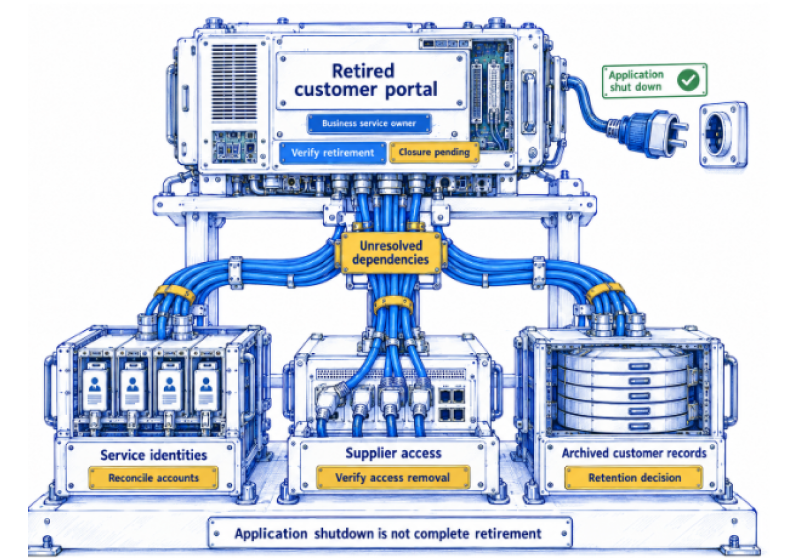
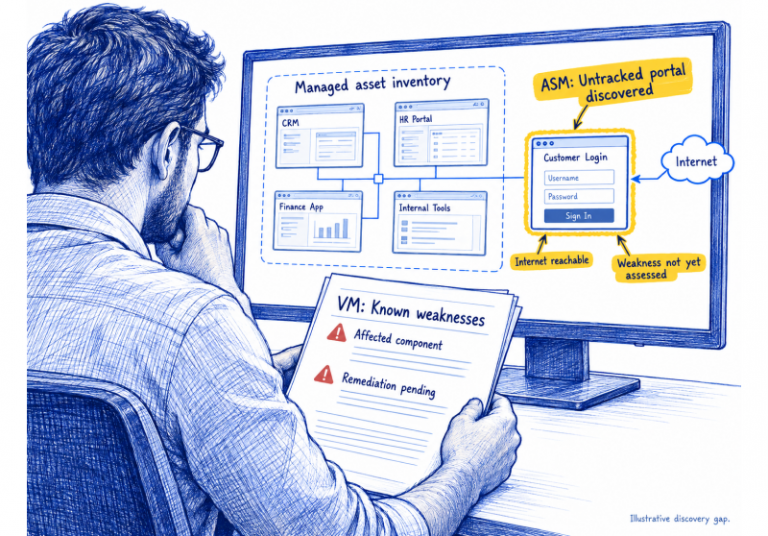
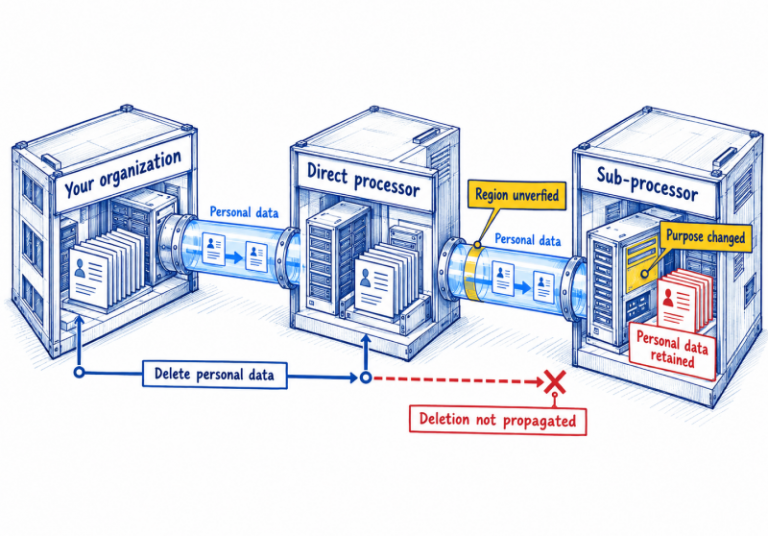
Consider retiring a customer portal. Engineering shuts down the application, procurement ends the supplier contract, and the project closes. Yet service identities, archived customer records and a support provider’s access may remain. Each team completed its assigned work; the organization still needs a decision about what remains exposed.
This illustrative scenario points to a practical test for IT GRC: can a material change travel from discovery through an authorized decision to verify closure without losing its business context?
What IT GRC must govern
Governance establishes decision authority and oversight. Risk management evaluates uncertainty against business objectives and chooses a response. Compliance determines whether applicable obligations are met and supported by evidence. These responsibilities interact, but a favorable control test does not settle every risk or legal question.
IT GRC includes technology operations, suppliers, service continuity and information handling. Cybersecurity GRC concentrates on security threats and controls within that wider scope. Security telemetry is valuable input, alongside contracts, operating records, business priorities and human judgment.
Recent guidance supports connecting these activities. NIST’s December 2025 revision of IR 8286A explains how cybersecurity risk scenarios and registers support enterprise risk communication. Its April 2025 incident response guidance, SP 800-61 Revision 3, places incident response within cybersecurity risk management using Cybersecurity Framework (CSF) 2.0. Neither publication makes every technology decision a security team’s responsibility.
For the retiring portal, the business service owner remains accountable for the outcome. Identity administrators, records managers and procurement supply different parts of the evidence. The CISO challenges security exposure and escalates decisions beyond delegated authority.
Build a decision record that survives the handoff
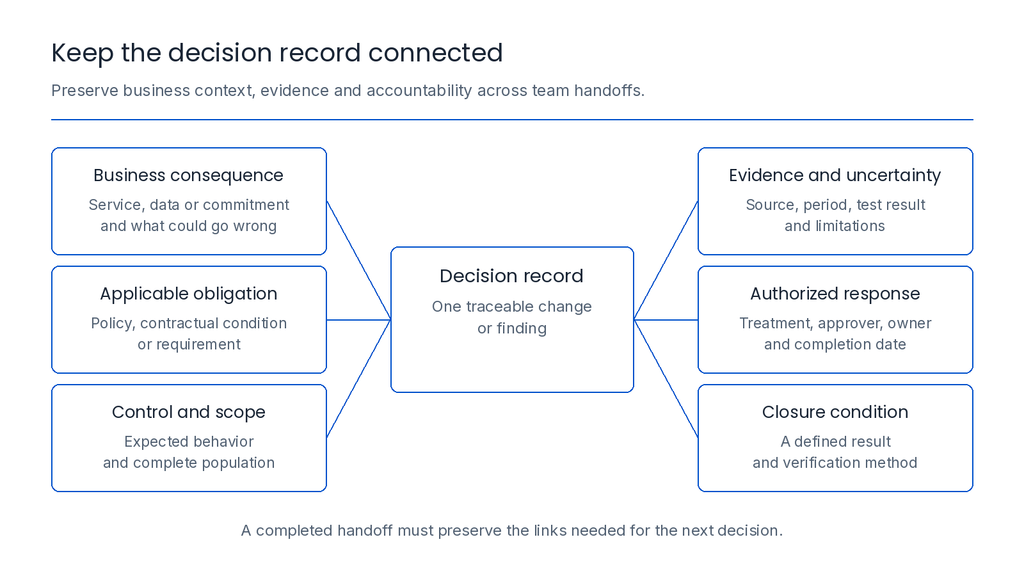
An IT GRC framework becomes useful when its records support actual decisions. For each material change or finding, keep a compact record with six connected elements:
Business consequence: the affected service, data or commitment, and what could go wrong.
Applicable obligation: the policy, contractual condition or requirement being assessed.
Control and scope: the expected behavior and complete population it should cover.
Evidence and uncertainty: the source, observation period, test result and limitations.
Authorized response: treatment, approver, operating owner and completion date.
Closure condition: what will be checked before assurance is restored.
These elements can live across existing systems if identifiers, ownership and links remain reliable. Creating another repository is unnecessary when the organization can trace the decision consistently.
IT GRC best practices start with evidence boundaries
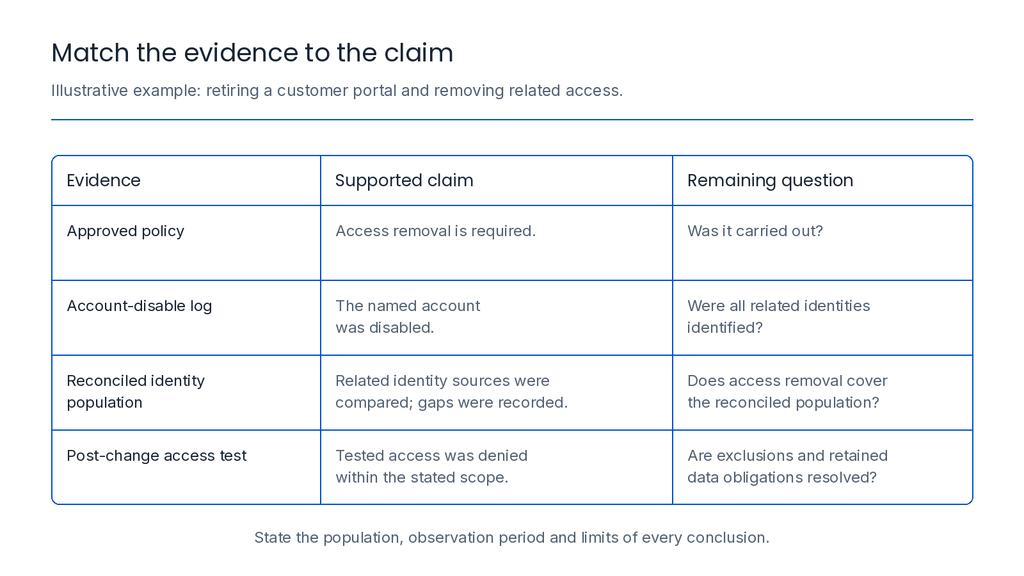
A policy states an expectation. A configuration shows a setting. An operating record shows an event. A test evaluates whether the control met its objective. The evidence needed depends on the claim being made.
For portal retirement, disabling a named service account proves a specific administrative action. It does not prove every related identity was found. Reconcile the application inventory, identity records and provider access list before claiming complete removal. Preserve unresolved discrepancies as findings with owners.
NIST SP 800-55 Volume 1, finalized in December 2024, provides guidance on selecting and evaluating measures of security policies, procedures and controls. Apply that discipline by defining what each metric measures before presenting its value.
The distinction changes reporting. Separate controls with a supported pass, a supported failure and insufficient evidence. An unavailable integration is an assurance gap; it is not automatically a control failure. Assign investigation and an interim risk decision where the consequence warrants one.
Map requirements without multiplying assurance claims
Choose requirements from actual obligations and objectives. NIST CSF 2.0 can organize cybersecurity outcomes; ISO/IEC 27001 specifies requirements for an information security management system. They serve different purposes. ISO’s July 2026 overview, ISO/IEC 27000, confirms that relationship without introducing a new edition of ISO/IEC 27001.
If ISO 27001 certification or a SOC 2 examination is planned, confirm the applicable scope and evidence expectations with the assessor. Mapping a control to several requirements does not establish that its evidence satisfies each one. AICPA’s May 2026 peer review guidance reinforces the importance of engagement quality and professional judgment in SOC 2 work.
Reuse evidence where the objective, population and period match. Where they differ, retain the additional test or review. For portal records, approved retention and restricted access address different questions; neither authorizes deletion by itself.
Make decision authority explicit
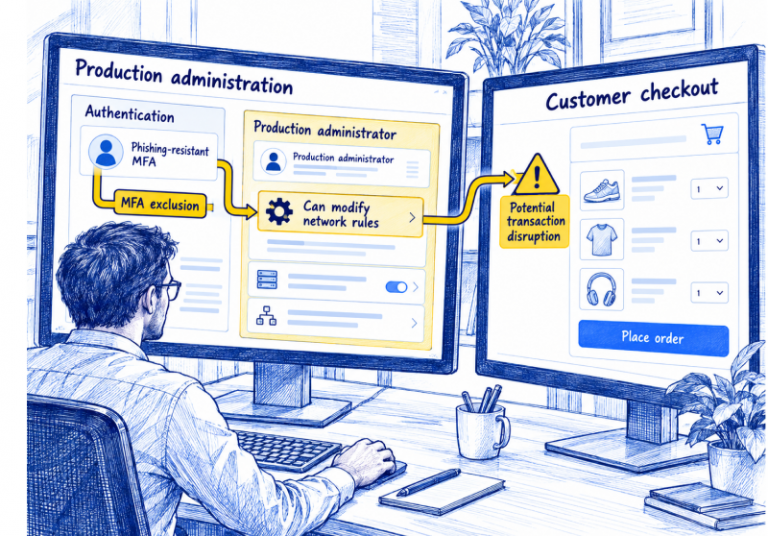
A RACI matrix identifies who is Responsible, Accountable, Consulted and Informed. Supplement it with approval limits. A control operator may disable access; that person may lack authority to accept unresolved data exposure or change a contractual commitment.
Keep risk acceptance separate from control status. An approved exception should retain its affected scope, rationale, compensating measures, expiry and reassessment triggers. Acceptance does not turn failed or unverified controls into passing controls, and internal approval does not remove an applicable legal obligation.
For an exception involving retained portal data, name the records custodian and the authority responsible for retention instructions. Record where the data resides, who can access it and which review remains outstanding. Security can restrict access while another team resolves the retention question. The record should preserve both actions and avoid implying that access restriction settles lawful retention.
Set escalation rules before a deadline is missed. Specify the consequence that requires immediate review, the authority reached when the assigned approver is unavailable, and the interim protections the operating owner can implement. Test this route during the pilot.
Reassessment should follow material changes as well as a calendar. A newly identified provider account, changed retention instruction or relevant threat intelligence may invalidate the retirement decision. Define who reviews such triggers and how urgent decisions reach the appropriate authority.
Automate collection, then verify closure
Continuous Control Monitoring (CCM) can support recurring checks where reliable operational data exists. Collection frequency should follow the control’s behavior and consequence. Monitoring must also identify stale inputs, missing populations and broken collection paths.
SPOG.AI’s discussion of continuous control monitoring provides related context. Its May 2026 platform announcement describes connecting cyber risk, control validation, compliance evidence and operational workflows. Organizations still define their own decision authority and acceptance criteria.
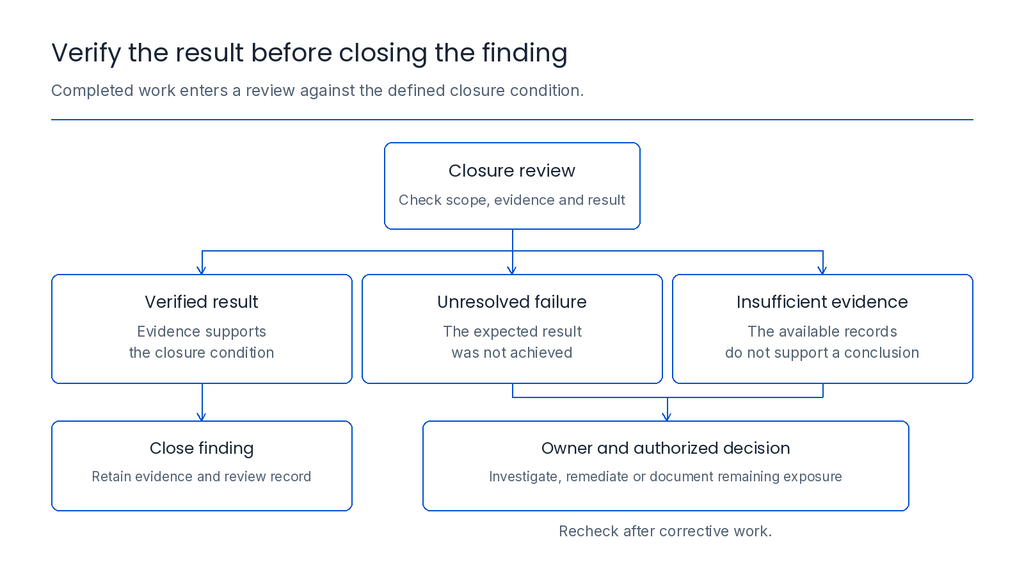
Close a finding when the specified result is verified. In the portal scenario, a reviewer might reconcile identities, verify denied access and confirm the agreed handling of retained records. If part of that work remains unresolved, record the remaining exposure and decision instead of closing the entire finding because the implementation ticket is complete.
Report decisions that need attention
Executive reporting should show affected services, material consequences, decisions awaiting approval and overdue actions. Include evidence coverage and significant uncertainty beside control results. Track the time from a material signal to an authorized response and from implementation to validation.
SPOG.AI’s article on keeping risk registers connected to current evidence explores the value of linking risk context and ownership. For this operating model, the register should expose unresolved decisions and assumptions, with enough detail to revisit them.
Test one change before expanding the program
Select a recently changed service and trace its decision record across business, technology and compliance teams. Check whether the affected population was identified, evidence supports the claimed result, and someone authorized any remaining exposure. Fix the broken handoff, then apply that improvement to the next service. That gives IT GRC a concrete operating test.
Frequently asked questions
Information technology governance, risk management, and compliance. It connects technology oversight, risk decisions and evidence of meeting applicable obligations.
IT GRC covers broader technology operations and obligations. Cybersecurity GRC focuses on security risks and controls within that context.
An executive sponsor sets authority. Business risk owners make delegated decisions; operational owners run controls; GRC coordinates methods and oversight.
Choose according to applicable obligations, business objectives and assurance needs. A framework selection should explain the decisions it supports.
A defined objective, validated scope and suitable test evidence support a conclusion for the stated population and observation period.
It means the conclusion is unverified. Investigate the evidence gap and assess its consequence before determining the control’s actual condition.
Yes, but validate each mapping. Differences in scope, objective or evidence period may require additional tests.
Reassess after material changes, relevant incidents or new information that affects exposure, impact or control assumptions, alongside scheduled reviews.
Workflow automation can route and record approvals. Acceptance must follow the organization’s authorized decision process and applicable obligations.
When a recheck supports the defined closure condition. Completed work alone does not demonstrate that the intended control outcome was achieved.
With 8.5+ years in B2B SaaS, I’ve led demand generation and GTM initiatives across global markets (US, UK, Europe, Africa), helping companies move from fragmented marketing efforts to structured, revenue-focused growth engines.