Cybersecurity
Cybersecurity Risk Scoring: Make the Score Decision-Ready
A cybersecurity risk score should explain why an exposure matters and what action it requires. Learn how to...
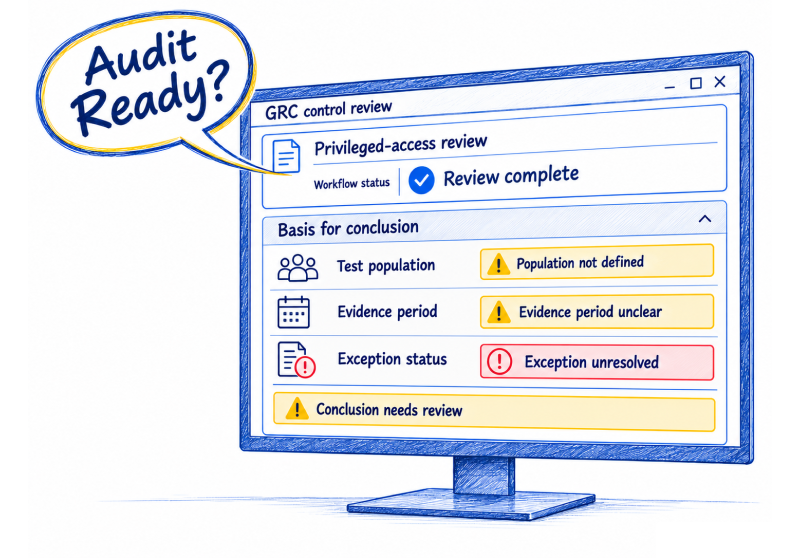
When evaluating a GRC platform for audit quality, separate what software can demonstrate from what auditors must judge. A platform can organize control records, evidence and review tasks; it cannot make an audit high quality by itself. Audit quality also depends on auditor competence and independence, the method used, and professional judgment. Software can support that work, not replace it.
For buyers assessing audit quality in compliance software, the practical question is whether the platform helps the right people test the right scope, evaluate vendor claims and preserve decisions through a future platform change. Set acceptance criteria and run a realistic demonstration instead of counting features.
Audit readiness means the team has prepared records and access for a review. Audit quality is broader: auditors must be competent and independent, follow an appropriate methodology, and apply professional judgment. A platform cannot guarantee any of those conditions or determine whether an auditor’s conclusion is correct.
The platform can make its own contribution visible. It should help an authorized reviewer see what the organization intended to test, what fell in scope, how a vendor or control owner handled exceptions, and whether records remain accessible. Evaluate these as procurement requirements, not as a substitute for your auditor’s standards or approval.
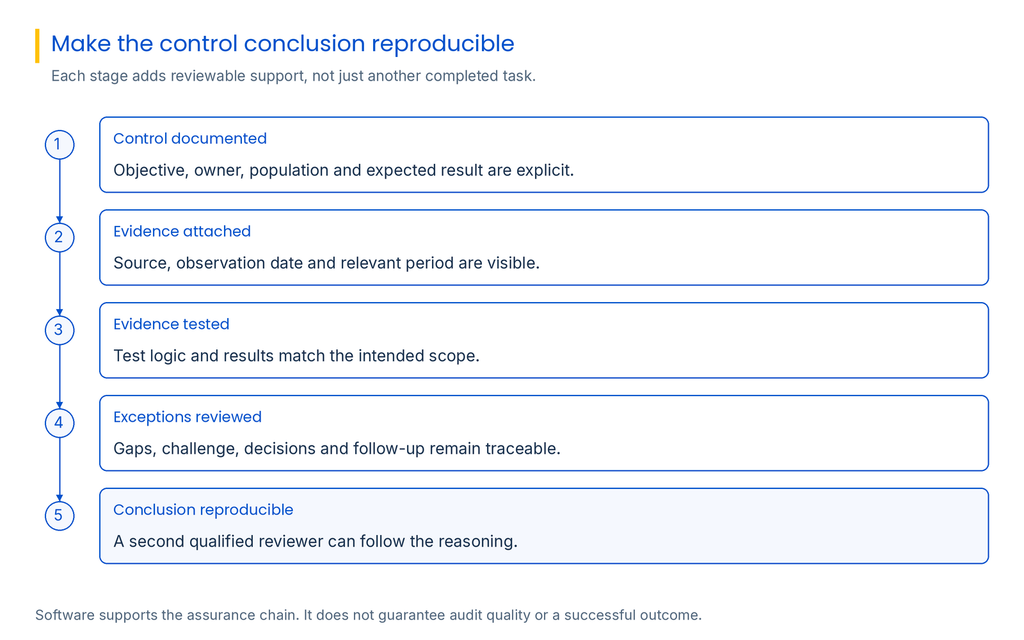
Choose one assurance task the platform must support. Write down the expected population, evidence period, pass criteria, exception path, decision owner and export needed at exit. Then label each requirement as critical or desirable. These criteria make audit quality in compliance software testable: a feature earns credit only when the vendor demonstrates it against your scenario and your team can verify the result.
For example, if access review scope spans an identity provider and production cloud accounts, the acceptance criteria should require a way to reconcile both populations, distinguish approved exceptions from unexplained gaps, preserve review history, and export the records in a usable form. Avoid a broad checklist where “integration available” counts as proof that data arrives correctly or meets your review needs.
Use an illustrative population of 100 privileged accounts drawn from the identity provider and production cloud. Ask the vendor to configure the review live, with your team observing. The purpose is to test buying criteria with a real workflow, not to grade the fictional company’s security program.
Require the vendor to state the systems, accounts, period and pass condition before showing a dashboard. In this example, 100 accounts are expected in scope; each must have an owner and a current review outcome. The platform must show how accounts were identified and how duplicates, non-human accounts and approved exclusions are handled. If the scope is incomplete, the result must remain incomplete rather than display a green pass.
The fictional test returns 94 accounts meeting the review criteria, four documented exceptions approved by the right authority, and two unresolved gaps. A convincing demonstration keeps these outcomes distinct. It links the exceptions to their rationale and review date, assigns the two gaps to owners, records the reviewer’s decision, and preserves the original result after remediation and re-test.
The vendor should be able to show what changed, who approved it, and which accounts were retested. A disqualifying response is to mark the task “complete” because a file was uploaded, count exceptions as passes without explanation, or replace the failed result with a later green status. The platform need not decide whether the risk is acceptable; it must let your authorized people record and inspect that decision.
Have someone who did not configure the demo explain the result from the stored record. Can they identify the test scope, outcome categories, decision authority, open actions and export location without the salesperson narrating? If not, the demo has shown a presentation, not an operable buyer requirement.
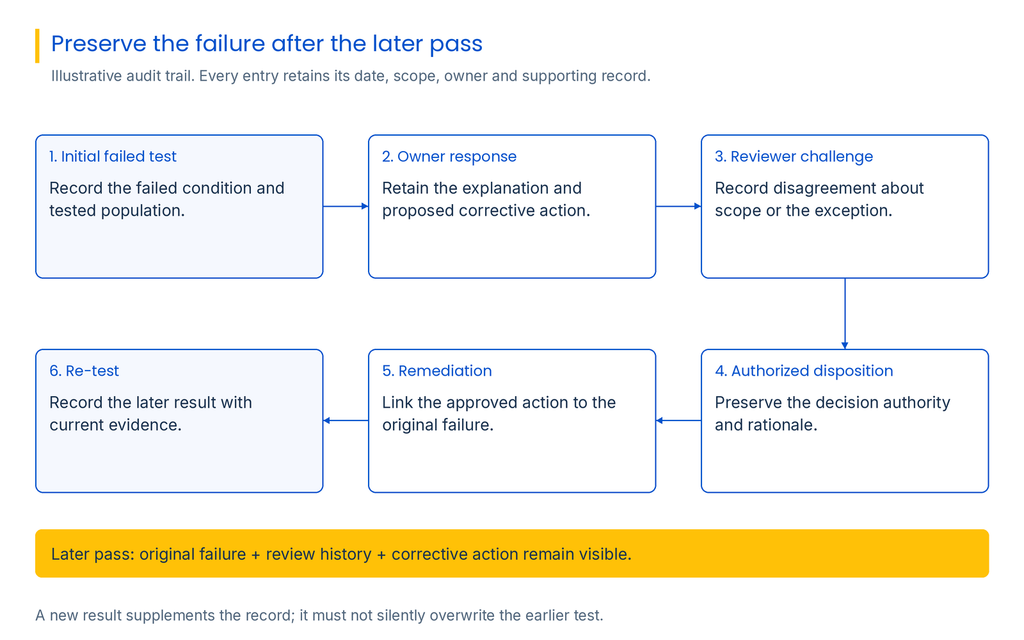
Score each critical item as demonstrated, partly demonstrated or not demonstrated. Ask for the recorded result, not a verbal assurance. A critical gap should be a gating issue or an explicit procurement exception with a named owner and remediation date; a strong integration catalogue should not offset a missing export or erased test history.
| Buying criterion | Evidence required to accept |
|---|---|
| Scope and control objective | Population, period and pass criteria are explicit |
| Mixed test outcomes | Passes, approved exceptions and unresolved gaps remain distinct |
| Review and remediation | Decisions, owners, actions and re-tests remain linked |
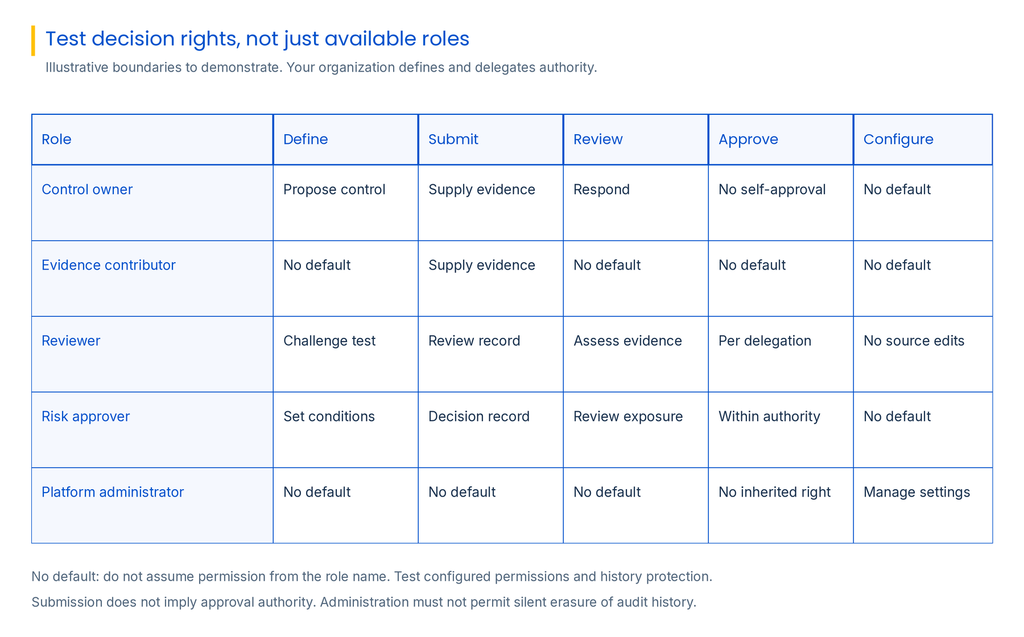
| Access boundaries | Submit, review, approve and administer permissions are testable |
| Independent review | A second user can explain the result without the presenter |
| Exit readiness | Export includes records, history and metadata in a usable format |
For the contract and order form, translate critical acceptance criteria into specific commitments where appropriate: what export formats are available, what history and metadata they include, how long records remain available, how deletion is handled, and what transition support is included. Confirm whether material integration changes or product retirements trigger notice. Product demonstrations are not contractual promises unless the agreement makes them so.
Test audit data portability during the evaluation: ask the vendor to export the scenario and inspect the files: can your team retain the control definition, population, evidence references, review decisions, exceptions, remediation and re-test history? Are timestamps and owners preserved? Can the package be understood outside the platform, and does it include records needed for an auditor handoff?
Then match the answer to contract terms for retention, retrieval, deletion and transition. Avoid assuming that a PDF report is a complete audit record. If the organization cannot retrieve decision history when the contract ends, it may have a continuity problem even if day-to-day use is smooth.
Set no-go criteria before the final vendor meeting. For example, a product should not pass selection if it cannot distinguish the four approved exceptions from the two unresolved accounts, if one role can submit and approve its own exception, or if the export drops the original failed result. Those weaknesses affect the reliability of the assurance record and need a credible remedy before contract signature.
Some gaps may be acceptable with a documented workaround. A manual source reconciliation may be reasonable for a small, stable population if the organization owns the check, records its method and tests it periodically. The procurement record should state the limitation, compensating step, owner and review date. This prevents a partial demo result from quietly becoming an assumed capability after implementation.
SPOG connects requirements, controls and operational evidence so teams can relate GRC decisions to the current state of the enterprise. Its Governance, Risk & Compliance solution provides the GRC context; its Continuous Control Monitoring solution connects defined controls with operational evidence to assess coverage and effectiveness, surface material gaps and drive accountable remediation.
For this buying decision, put SPOG through the same acceptance test as any platform: confirm that the source connections, scope, exception handling, permissions and export meet your requirements. The product pages describe the solution areas; your team should verify the relevant workflow in a scoped demonstration.
A GRC platform can support audit quality when its contribution is measurable: a defined scope, visible outcomes, accountable review, controlled access and an export your organization can retain. It cannot replace auditor independence, competence or judgment. Before committing, run one realistic scenario, record which acceptance criteria passed, and make retention and exit terms explicit. That gives procurement a defensible basis for choosing—and a clearer record of what the platform does not decide.

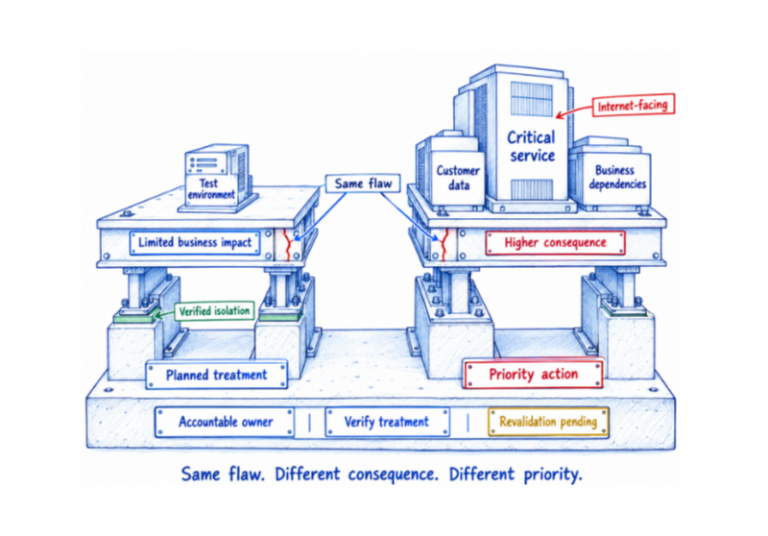
A cybersecurity risk score should explain why an exposure matters and what action it requires. Learn how to...
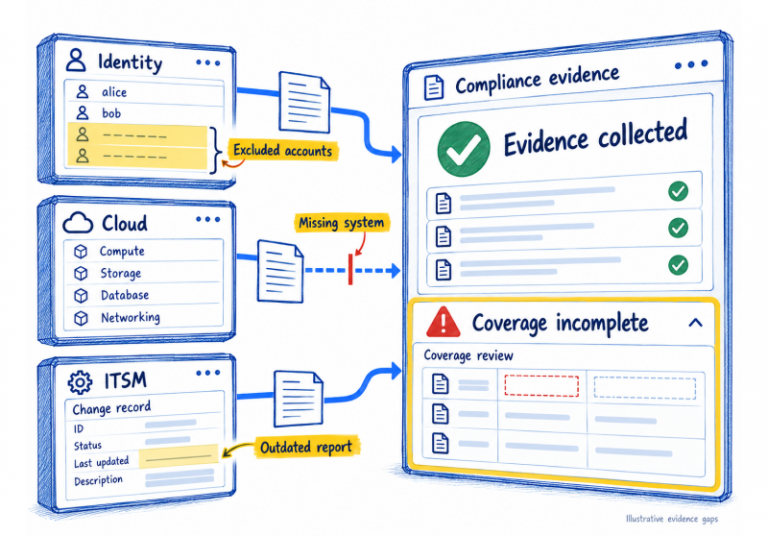
Automated evidence can save teams from repeated exports and audit-week searches. But capture is only the start: the...
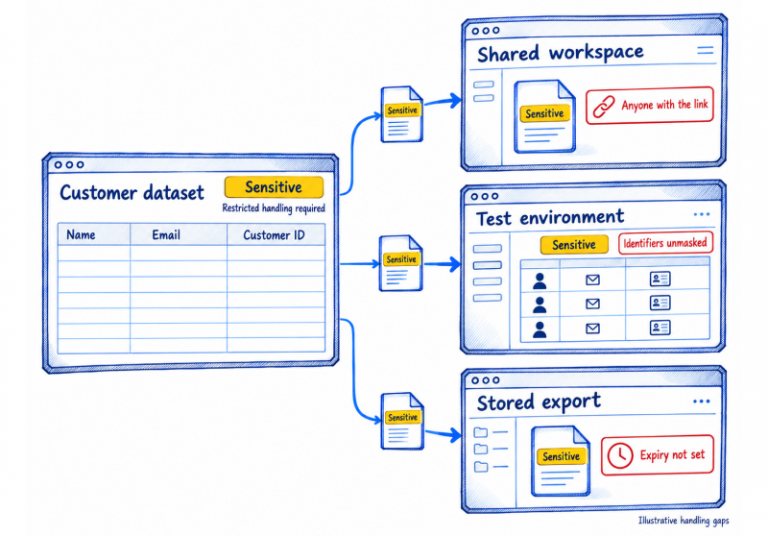
Define labels that guide access, sharing and disposal. This article explains how to apply them across data copies,...