Frameworks
Getting Started With Cyber Risk Quantification: Key Concepts Explained
Cyber risk quantification expresses possible cyber losses in numerical terms, often money, for a defined scenario and period....
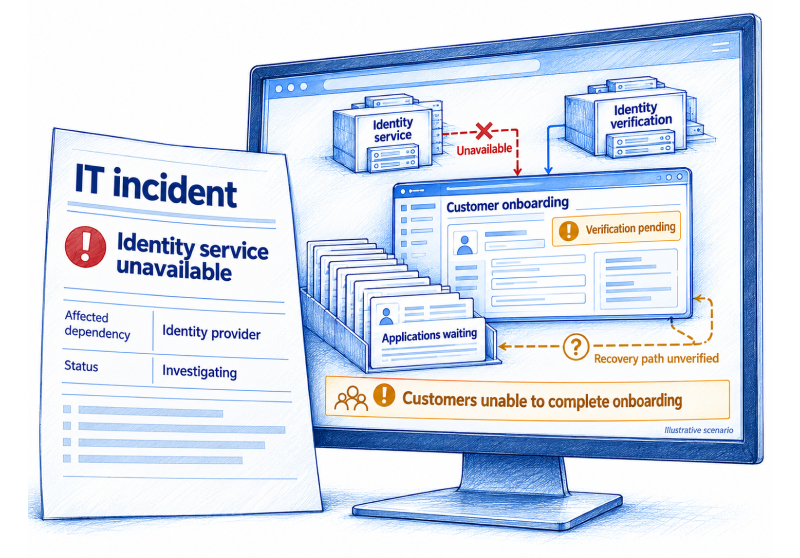
Translate technical findings into business consequences. A control weakness becomes more meaningful when the report explains which service depends on it, what could be disrupted and who must respond. Connecting technology dependencies to business impact helps leaders assess why a finding matters and what decision it requires.
Keep material limitations visible in every view. Share sensitive system detail externally only when authorized, involving legal, privacy or contract owners where needed.
IT risk management starts with business capability
A technology inventory is necessary, but it is not a risk view. This inventory tells you what exists. It may not tell you which customer, financial, operational, or regulatory outcome would be affected if an identity provider became unavailable, a data feed lost integrity, a vendor released a compromised update, or a cloud configuration drifted.
IT risk management should connect three things: the capability the organization needs to deliver, the technology and external dependencies that support it, and the conditions that could interrupt or undermine it. This shifts attention from counting assets to understanding how failure travels.
For example, an online order capability may rely on identity and access management, a cloud-hosted application, a payment processor, a customer-data platform, and a network provider. Each component can be healthy in isolation while the overall capability remains fragile. A dependency map makes those relationships reviewable.
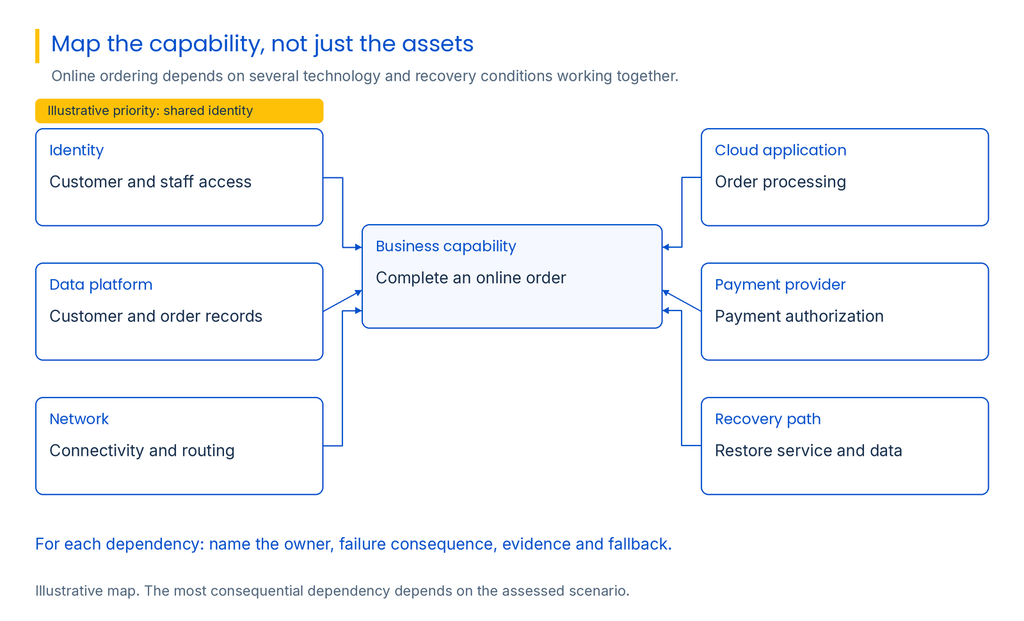
Keep the map maintainable and decision-focused. Start with one high-value capability, then record dependency owners, failure consequences, available evidence, and fallback options. Disagreement about scope often signals an ownership or architecture-documentation gap, not a need for another risk score.
A practical IT risk taxonomy helps teams spot omissions. Group risks by failure condition and business effect, then use categories to route expertise and report patterns. Useful groupings include:
Categories can overlap: a compromised vendor update may affect integrity, availability, and confidentiality. Use labels to reveal patterns, while keeping the event and business effect central.
Verizon’s 2026 Data Breach Investigations Report analyzed incidents from November 2024 through October 2025. In its dataset, exploitation of vulnerabilities accounted for 31% of breaches, making it the leading initial access vector; third-party involvement appeared in 48% of breaches. These are dataset findings, not an organization-specific forecast. They prompt a practical question: which externally maintained or internet-reachable components could materially affect our operations?
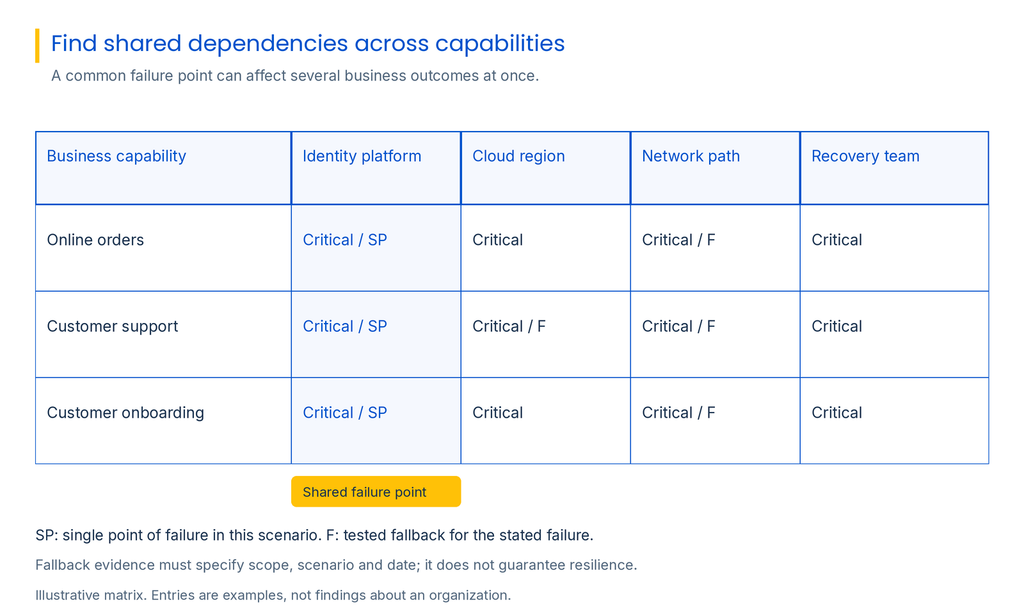
Risk registers often capture individual systems or vendors, while exposure may sit across them. Several capabilities can rely on the same identity platform, cloud region, network, code repository, or administrator group. That shared dependency creates concentration risk: one failure can affect many outcomes.
Compare capabilities against dependencies and failure conditions to find correlated exposure and missing or untested fallbacks. The goal is to show which common dependencies create concentration risk, not to assign one score to the entire estate.
An IT risk assessment depends on evidence and its limits. A report that backups exist, access is restricted, or a supplier has an assurance report is an input, not proof the outcome will hold under the scenario being considered.
For each material dependency, test what the evidence establishes: Does a restore test match the capability’s recovery needs? Does an access review include non-human privileged accounts? Does supplier assurance cover the product and period in scope? Can responders act on the relevant alert?
NIST’s IR 8286 series connects cybersecurity risk information with enterprise risk discussions. Its 2025 revision supports scenario-based assessment and communication of impact for prioritization. Preserve technical detail while stating the business consequence, such as delayed transactions, unreliable records, unavailable operations, or an unmet obligation.
For regulated services, map material dependencies to the obligations and business commitments they support. Keep evidence traceable to system, scope, period, owner, and test; record exceptions and related decisions. This links an obligation to the technology condition and evidence without treating a policy or supplier report as proof of operating effectiveness.
Avoid false precision. Use stable high/medium/low criteria for triage. Quantitative estimates can compare investments when loss assumptions and ranges are defensible. Neither method removes uncertainty: show what is known, assumed, and likely to change the decision.
An IT risk program is useful when findings shape design, funding, procurement, operations, or resilience. Review at architecture approval, material change, vendor selection or renewal, major incident, end-of-support planning, and introduction of new data or AI use.
Use those reviews to ask four concrete questions:
Accept residual exposure only with approval from the risk owner or delegated authority. Record the affected capability, rationale, assumptions, safeguards, and review or expiry date. Acceptance does not waive a legal or regulatory obligation.
Assign an owner and decision date. Keep the IT risk view focused on portfolio trade-offs; use existing processes for approvals and work tracking.
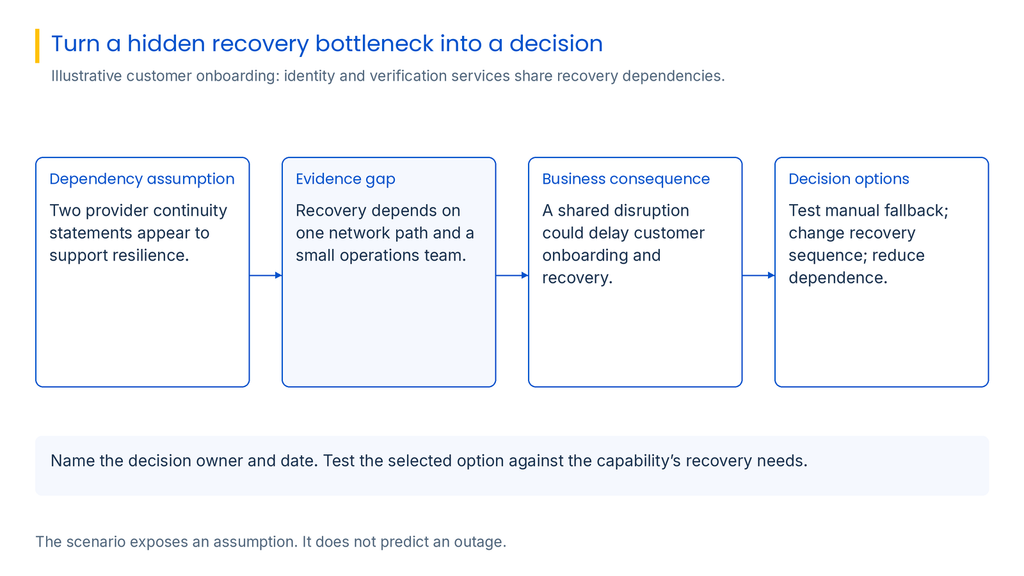
Illustrative scenario: Customer onboarding depends on a cloud identity platform and an identity-verification provider. Both have continuity statements, but restoring either depends on the same network path and small operations team. The apparent redundancy hides a recovery bottleneck. The organization could test a manual fallback, change the recovery sequence, or reduce the dependency. The scenario exposes an assumption; it does not predict an outage.
IT risk decisions need a traceable connection between requirements, control performance and operational action. SPOG.AI’s GRC solution connects requirements, controls and evidence to support risk and compliance decisions. Its Continuous Control Monitoring solution helps teams assess control coverage and effectiveness, while IT & Operations supports governed workflows for carrying decisions into operational work.
Together, these capabilities help teams review control evidence, identify gaps and coordinate responses across connected systems. The organization remains responsible for defining critical business capabilities, assessing dependencies, judging evidence sufficiency and authorizing risk decisions. Architecture review, business impact analysis and supplier due diligence provide essential context for those judgments.
Effective IT risk management connects business capabilities to the systems and external dependencies that support them. It makes potential failure paths visible and tests whether evidence supports the organization’s assumptions about safeguards and recovery.
Start with one critical capability. Map its dependencies, identify shared failure points and verify whether fallback arrangements can work under the same disruption. Use the findings to make a concrete portfolio decision: strengthen safeguards, reduce concentration, fund recovery or accept a defined exposure through the appropriate authority. Revisit that decision when dependencies, control evidence or business priorities change.

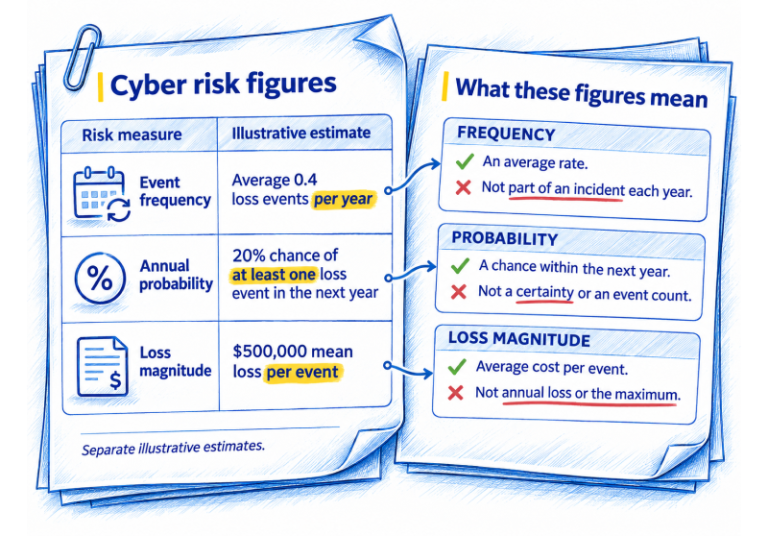
Cyber risk quantification expresses possible cyber losses in numerical terms, often money, for a defined scenario and period....
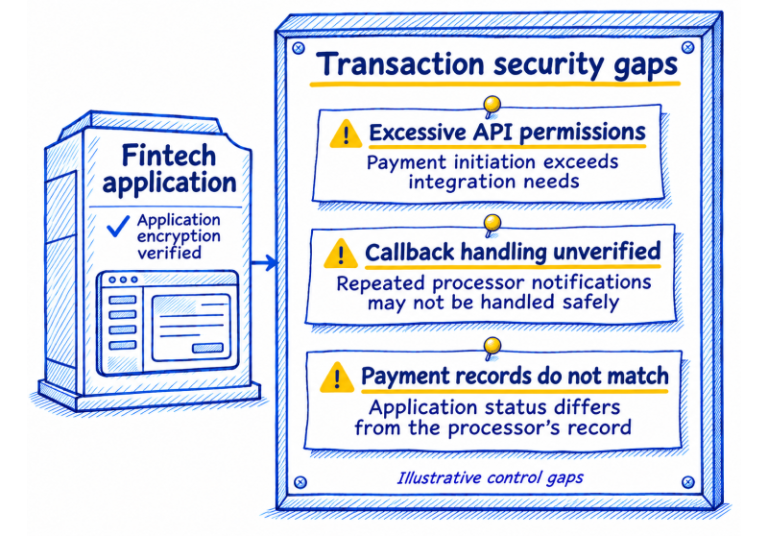
Fintech startup security must protect money, identity and financial data across live workflows enterprise buyers depend on. A...
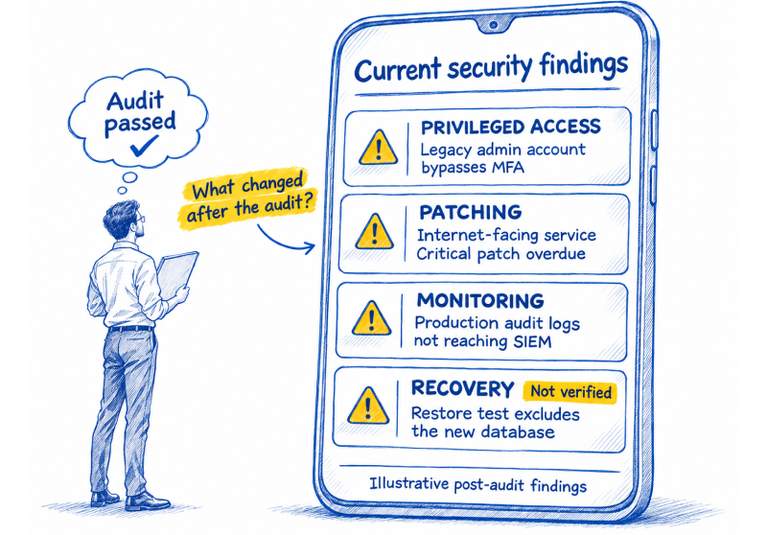
Balancing security and compliance to prevent cyberattacks requires more than passing an audit or buying another security tool....