Dynamic Risk Assessment: Keep Cyber Risk Decisions Current as Conditions Change
Cyber risk changes when the conditions behind an assessment change. Dynamic Risk Assessment connects material changes in assets, threats and controls to existing risks, helping teams revisit treatment and acceptance decisions before the next scheduled review.
Cyber risk is constantly evolving as assets, vulnerabilities, threats, controls, identities and business dependencies change. The conditions that define an organization’s exposure today may not be the same tomorrow.
Yet many organizations still assess cyber risk periodically, creating a static view of an inherently dynamic environment. What is needed is a shift toward Dynamic Risk Assessment: reassessing risk when the conditions influencing it materially change, rather than waiting for the next scheduled assessment.
The Gap Between Assessments
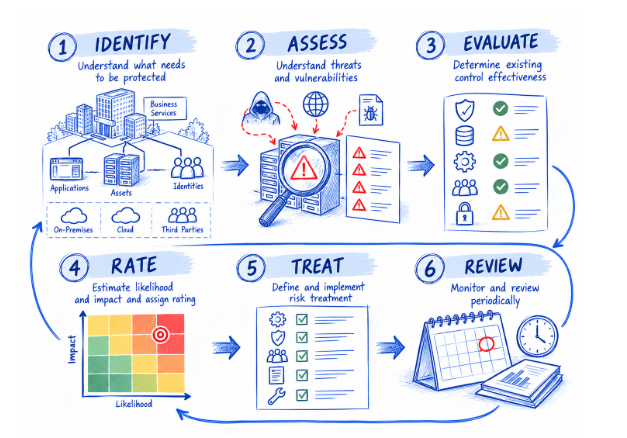
Traditional cyber risk management follows a familiar cycle: identify assets, assess threats and vulnerabilities, evaluate controls, estimate likelihood and impact, assign a risk rating, define treatment and review it at a scheduled interval.
The process remains valid. The problem is what happens between assessments.
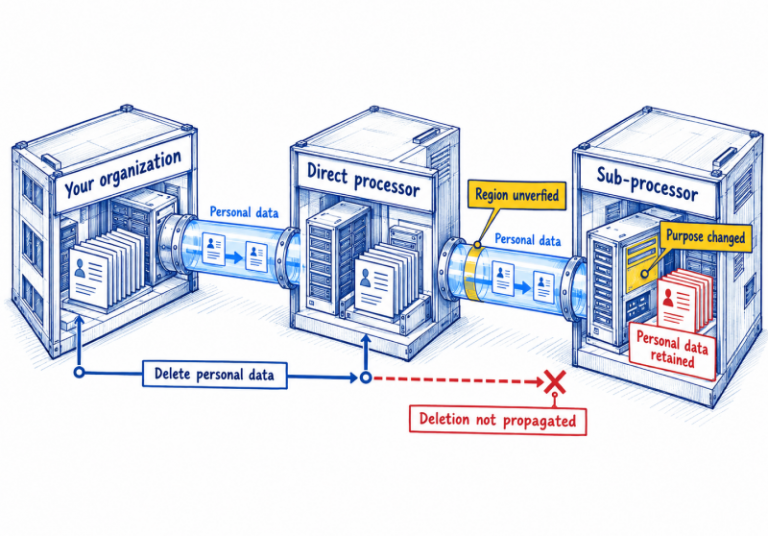
A new vulnerability can become actively exploited, an internal asset can become internet-facing, a security control can fail, privileged access can change or a critical third party can be compromised. None of these events waits for the next quarterly or annual review.
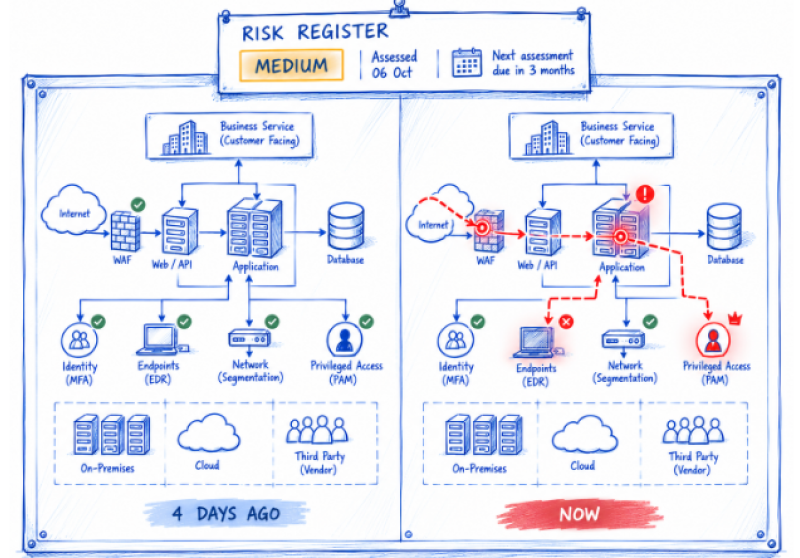
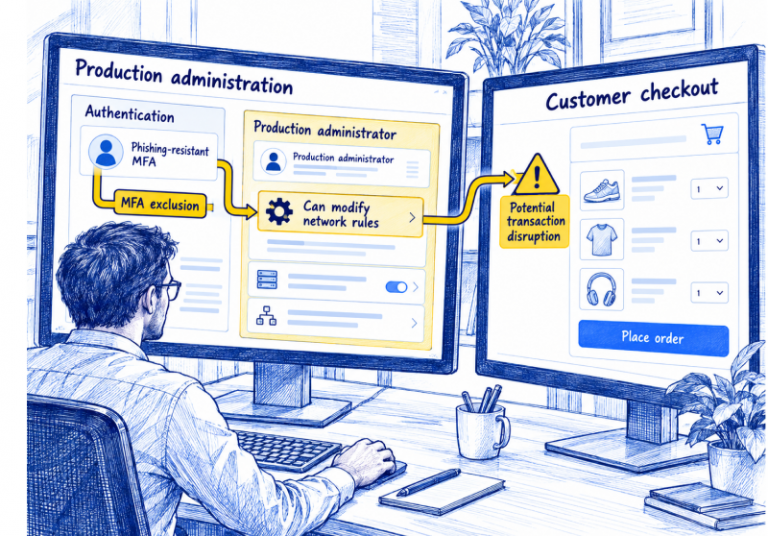
Consider a customer-facing application assessed today as Medium Risk. Its vulnerabilities are understood, MFA is enabled, endpoint protection is healthy and network controls are functioning. Three weeks later, a vulnerability affecting the application becomes actively exploited. A configuration change then exposes another service, an EDR agent stops reporting and a privileged service account is subsequently added.
The original assessment was not necessarily wrong. The conditions supporting it changed. Unless those changes trigger reassessment, however, the risk register may continue to show Medium Risk even though the environment is materially different.
This is context drift. It means organizations need to look beyond when a risk was last assessed and understand what has changed since that assessment, and whether the change is significant enough to reconsider the existing risk decision.
From Risk Reviews to Risk Triggers
If risk can change between assessments, the next question is how an organization knows when reassessment is actually required. This is where Risk Triggers become important.
A Risk Trigger is a material change in the conditions supporting an existing risk assessment. It could be active exploitation of a vulnerability, a critical asset becoming internet-facing, failure of a preventive or detective control, a privileged-access change, a third-party incident, emergence of a new attack path or evidence that an assumed control is no longer effective.
This introduces a change-driven mechanism alongside the traditional review cycle:
Not every change should become a Risk Trigger, and not every Risk Trigger means that risk has increased. A new vulnerability on an isolated development asset may have little effect on business risk, while a single configuration change on an internet-facing critical system could materially alter exposure.
The challenge is therefore not simply detecting change. It is determining which risks are affected and whether the change is material.
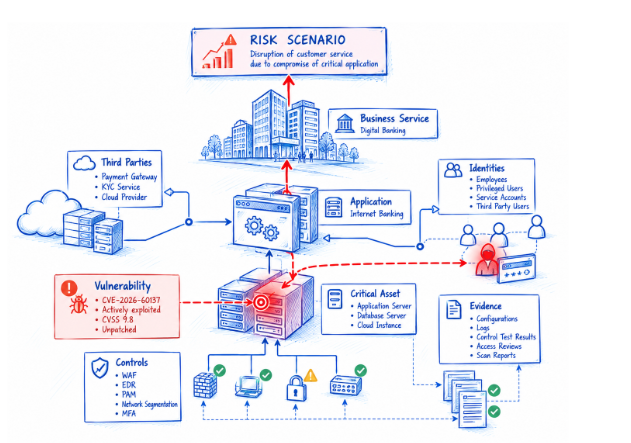
That requires understanding the relationships behind the risk: how a business service depends on applications and assets, which vulnerabilities affect those assets, which identities can access them, which controls protect them, which third parties support them and what evidence demonstrates that those controls remain effective.
Without these relationships, organizations see events. With them, they can understand which events matter to risk.
Reassess the Decision, Not Just the Score
Once a material change has been connected to an existing risk, the purpose of reassessment is not simply to generate another score. It is to determine whether the existing risk decision still makes sense.
Suppose a risk has an inherent rating of High and a residual rating of Medium because MFA reduces the probability of unauthorized access, PAM restricts privileged activity, EDR provides detection and network segmentation limits exposure. The Medium rating is based on the assumption that these controls are present and effective.
If MFA coverage deteriorates or segmentation changes, the issue is not that a calculation needs to run again. The basis on which management accepted the residual risk has changed.
This is why Dynamic Risk Assessment is not Continuous Risk Scoring.
Continuously ingesting data and recalculating a score every few minutes may create a more frequently changing number, but it does not necessarily create better risk intelligence. Thousands of new vulnerability findings may have little impact on a particular business risk, while one control failure on a critical system may materially change it.
Dynamic Risk Assessment therefore needs to answer a more useful set of questions: What changed? Which risks are affected? Is the change material? Does the existing treatment or acceptance decision still make sense? And what evidence supports the new conclusion?
The outcome is not simply a new score. It could be accelerated remediation, a new control, reprioritization of treatment, reconsideration of an exception, escalation to another owner or confirmation that the existing decision remains appropriate.
The Risk Register Becomes a Living System
This changes the role of the risk register. Instead of only recording risk decisions, it needs to remain connected to the conditions and evidence supporting them.
Traditionally, the risk register records the result of an assessment: the risk rating, owner, treatment, acceptance, exception and next review date. In a dynamic model, those decisions remain connected to the environment they represent.
Consider an accepted risk. Management may have accepted the exposure because the affected system was internal, exploitation was unlikely and compensating controls were effective. The exception may remain formally valid for another six months.
But if the system subsequently becomes externally accessible and active exploitation emerges, should the organization wait for the exception to expire?
The review date may not have arrived, but the conditions supporting the exception may already have expired.
A living risk register should therefore be capable of identifying when a material change affects an existing risk and bringing that decision back for consideration. Risk acceptance, treatment priority and residual risk can then evolve with the environment rather than remaining static until the next scheduled review.
This also makes the process explainable. Leadership, auditors and regulators should be able to see what changed, which risk was affected, what evidence triggered reassessment and why the resulting decision was made.
Human Judgment Still Matters
A living risk system does not mean that every decision should be automated.
Technology is well suited to monitor large, interconnected environments, correlate changes, identify affected risks and detect when the assumptions supporting an assessment may no longer hold. AI can increasingly help interpret these relationships and distinguish potentially material changes from operational noise.
But whether the organization accepts the resulting exposure, changes treatment or invests in another control remains a management decision.
The role of automation should therefore be to bring the right risk, with the right context and current evidence, to the right decision-maker at the right time. That is a much more meaningful role for AI in GRC than simply generating another risk score.
From Periodic GRC to Continuous Risk Intelligence
Annual assessments, quarterly reviews and formal risk workshops will remain important. Dynamic Risk Assessment does not replace them. It adds the ability to respond when material changes occur between them.
That represents a broader evolution in cyber risk management. The traditional model asks what the risk was when it was assessed. A dynamic model also needs to understand what has changed, which risks are affected and whether those changes require a new decision.
Doing this at scale requires security telemetry, asset intelligence, vulnerability data, identity context, control validation, business context, third-party information and GRC workflows to stop operating as separate worlds. They need to become connected evidence supporting the same risk picture.
At SPOG.AI, this is how we are thinking about the evolution toward Continuous Risk Intelligence: connecting risks with the assets, vulnerabilities, controls, identities, business services, third parties and evidence that influence them, so material changes can trigger reassessment rather than waiting for the next review cycle.
Because ultimately, a risk assessment has value only while the assumptions behind it remain true. Cyber risk doesn’t wait for the next assessment. Our understanding of risk shouldn’t have to either.
Frequently Asked Questions
Dynamic risk assessment revisits an existing cyber risk when its underlying conditions materially change. It helps organizations reconsider treatment, priorities and risk acceptance between scheduled reviews.
Potential triggers include active exploitation of a relevant vulnerability, a critical system becoming internet-facing, changed privileged access, a control failure or a third-party incident. Reassessment is warranted when the event materially affects the assumptions supporting an existing risk decision.
Continuous risk scoring updates a numerical rating as inputs change. Dynamic risk assessment examines whether those changes affect a specific risk and whether its treatment or acceptance remains appropriate. Its outcome may be corrective action, escalation or confirmation that the current decision still holds.
No. Scheduled reviews remain useful for examining the broader risk picture and identifying gaps that monitoring may miss. Dynamic risk assessment adds a change-driven review process for material developments between those assessments.
Yes, if the conditions supporting acceptance materially change. For example, an internal system becoming externally accessible may invalidate assumptions behind the approval. Review the affected exposure and compensating controls, then ask the authorized decision-maker whether acceptance remains appropriate.
Product Leader – GRC & Regulatory Technology | Building Scalable Risk, Compliance & Data Platforms for Global Enterprises
I am a Product Leader in Cyber GRC and Regulatory Technology with 13+ years of experience building enterprise-grade platforms across risk, compliance, vulnerability management, and global regulatory reporting. I specialize in transforming complex regulatory and cyber risk requirements into scalable, intuitive, and intelligent products. My work spans U.S. federal regulations (CFR, FR, U.S. Code), global reporting mandates (MAS, APRA, SAMA, ADF, FRY 9C, COREP/FINREP), and cybersecurity standards, including ISO 27001, NIST, PCI...