For VARs, system integrators, and MSPs delivering enterprise security solutions.

Expand Your Security Portfolio
Position operational governance as a strategic enterprise solution beyond point GRC or compliance tools.

Unlock Recurring Revenue
Deliver continuous compliance, exposure management, and governance services as subscription led offerings.

Differentiate in Enterprise Deals
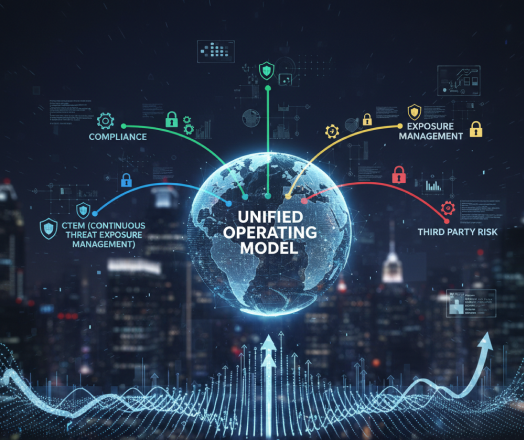
Lead with a unified operating model that integrates ITSM, ITOM, risk, and compliance into one platform.

Design Enterprise Security Operating Models
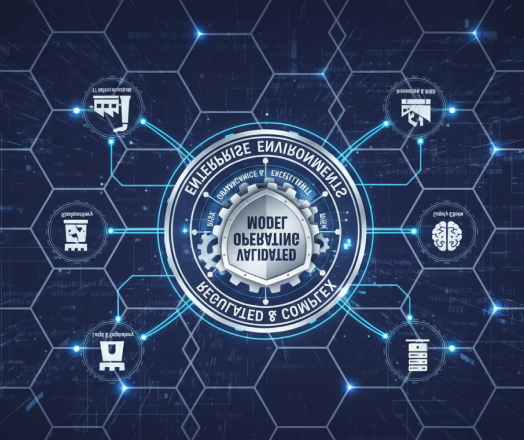
Help customers transition from fragmented controls to structured, continuously validated governance frameworks.

Deliver Implementation with Confidence
Leverage pre built integrations and validated workflows to reduce delivery risk and accelerate time to value.

Strengthen Board Level Reporting
Enable customers to present measurable control maturity and risk visibility backed by real evidence.
We don’t disrupt your stack. We make it smarter!
Ready to Partner
with us ?
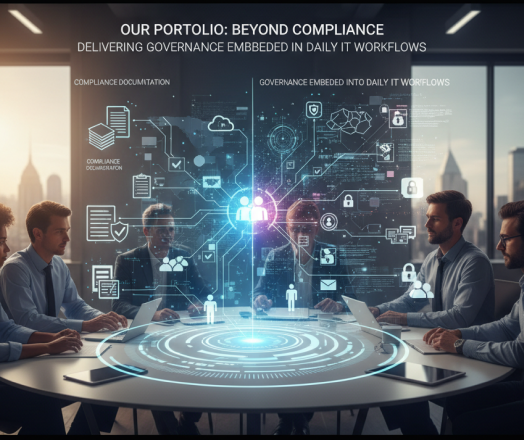
SPOG.AI is the operational layer that unifies ITSM, ITOM, CTEM, exposure management, TPRM, and continuous compliance. It embeds governance into daily IT workflows to deliver continuous control assurance.
Book a conversation to explore how to expand your security services portfolio with SPOG.AI.
Frequently Asked Questions
Quick answers on how our platform unifies compliance, risk, and IT operations.
The SPOG.AI Partner Program is a structured ecosystem designed for resellers, system integrators, consultants, technology partners, and BPOs who aim to leverage SPOG.AI's AI capabilities for their clients. Partners earn revenue share, access co-marketing funds, receive dedicated enablement, and unlock deal registration privileges — all designed to make selling SPOG.AI simple and profitable.
You could send the deal/opportunity details to partners@spog.ai. Once a deal is registered and approved, SPOG.AI's direct sales team will not compete on that account for about 90 days. This protects your investment in building the relationship and ensures you receive full revenue share credit on the deal — even if SPOG.AI support is involved in closing it.
Absolutely. Co-hosted webinars and events are one of the most effective pipeline-generation activities in our program.
Please write to partners@spog.ai or your Partnership Manager.
It’s the practice of constantly checking systems and processes against compliance requirements in real time. Instead of periodic audits only, SPOG keeps an ongoing watch on your controls and policies to catch compliance issues immediately.
Regulations and risks change quickly, and periodic checks can miss issues in between. Continuous monitoring ensures you’re always aware of compliance gaps or violations as they happen, reducing the chance of surprises, fines, or security incidents.
SPOG continuously scans for policy violations or control failures across your on-prem and cloud environments. If something falls out of compliance, it triggers an instant alert on your dashboard, so you can address it right away and keep audits streamlined.
SPOG can be configured to watch controls for common standards like ISO 27001, RBI Guidelines, SEBI Circulars, IDRAI and NPCI Requirements ,SOC 2, PCI DSS, HIPAA, and others. It maps your internal controls to these requirements, giving you continuous assurance that you meet the frameworks relevant to your business.
By collecting evidence and checking controls all the time, you’re essentially always audit-ready. Teams don’t have to scramble before an audit because SPOG has already logged compliance data and can generate up-to-date reports, making the audit process far less painful.
Yes. Catching issues early avoids expensive fines and remediation later on. It also cuts down the manual effort spent on big periodic reviews, saving staff time and resources that would otherwise go into lengthy audit prep work.
Compliance managers, security teams, and IT ops all benefit from real-time compliance visibility. From auditors to executives, everyone gains confidence knowing the organization’s compliance status is under constant watch and control.
SPOG uses automation and integrations to enforce compliance. It ties into your cloud platforms, security tools, and IT systems, continuously checking configurations and settings against your policies and standards, and alerting you to any drift.
Yes. You can generate real-time compliance reports and complete audit trails with a click. Because SPOG logs changes and issues as they happen, the reports are always current, helping you demonstrate compliance to auditors or management at any time.
It closes gaps between security and compliance by catching misconfigurations or control failures before they lead to breaches. In short, continuous monitoring ensures your security measures are always active and aligned with required standards, reducing overall risk.
SPOG includes a full service desk solution—covering incident management, request tracking, change management, and more. It provides an integrated ticketing system where users can report issues and IT teams can track, prioritize, and resolve them in one place.
SPOG unifies ITSM with IT operations and risk management on one platform. Unlike standalone help desk tools, SPOG’s single interface brings together incident tickets, monitoring alerts, and even compliance data, so IT teams have full context while working on issues.
Yes. SPOG is designed to integrate with popular ITSM and help desk tools, or it can replace them entirely. It can sync tickets and data with your existing systems to ensure a smooth transition and a unified workflow without disrupting your operations.
By consolidating alerts and tickets, SPOG helps IT teams identify root causes faster. Everyone sees the same real-time data, and features like automated notifications, playbooks, and analytics help resolve incidents quickly with less back-and-forth.
Yes. SPOG has built-in change management workflows so you can plan, approve, and track IT changes. Because it’s in the same platform as your incidents and assets, change implementation is more coordinated and less risky.
Absolutely. SPOG provides a user-friendly self-service portal where employees can find solutions or request services without always contacting IT. This empowers users to resolve common issues on their own and helps reduce the overall ticket volume.
SPOG offers dashboards and analytics for your service desk. It tracks key metrics like response times, ticket backlog, and resolution rates, giving IT leaders insight into performance and areas that need improvement.
Yes, it’s built for scale. SPOG supports multiple support teams and departments with role-based access and separate queues if needed. Each team can manage its own tickets and service requests, while leadership gets an overview of all IT services in the organization.
SPOG follows industry-standard ITSM practices (like ITIL) in its process design. Its incident, problem, and change workflows align with common best practices, so teams will find the platform familiar and compliant with established service management guidelines.
SPOG is cloud-based and intuitive, so teams can get started quickly. Our team will help with onboarding and integrating your existing data, meaning you can start managing tickets in SPOG with minimal disruption to your operations.
SPOG covers key IT Operations Management functions such as infrastructure monitoring, event management, asset management (CMDB), and automated runbooks. It lets ops teams monitor system health, manage incidents, and automate routine tasks all from one console.
SPOG aggregates data from your various monitoring systems (cloud services, on-prem servers, network tools, etc.) into a single pane of glass. Instead of juggling multiple dashboards, your team can see all alerts and performance metrics in one unified view, correlated for faster analysis.
Yes. By providing early warnings and centralized visibility, SPOG helps you catch issues before they become outages. Its analytics highlight anomalies or degrading performance, and integrated playbooks guide your team to respond quickly and reduce downtime when something goes wrong.
It means SPOG provides one unified interface for all your IT operations data. Your team can view server and application status, network health, and even related service desk tickets on one screen, improving situational awareness and eliminating the need to switch between tools.
When an incident occurs, SPOG brings together the monitoring alert, the relevant service ticket, and any runbook instructions in one place. This gives operators all the context they need to diagnose and fix the issue faster, without hunting through different systems.
Yes. SPOG includes a configuration management database (CMDB) and asset management features to keep an inventory of your hardware, software, and cloud resources. This helps you track dependencies and understand the impact of any incident or change on other assets in your environment.
Absolutely. SPOG supports automated workflows and runbooks to handle repetitive tasks like restarting services, scaling resources, or sending notifications. By automating these low-level tasks, it ensures quick, consistent responses and frees up your team for more complex work.
SPOG centralizes all alerts and uses on-call scheduling with multi-channel notifications (email, SMS, chat apps, etc.) to ensure the right people are alerted at any hour. This means your team can respond to critical issues around the clock, with all information available in one platform.
Yes, through its dashboards SPOG shows trends in system performance and resource usage over time. These insights help your IT team predict capacity needs, identify recurring issues or bottlenecks, and make informed decisions to prevent future problems.
By consolidating tools and automating processes, SPOG reduces the time and effort needed to manage IT operations. Teams spend less time switching between systems or compiling data manually, and more time proactively improving stability and responding to issues, which drives greater efficiency and reliability.
It’s the process of evaluating and monitoring the security and compliance of external vendors, partners, or suppliers. Essentially, you assess how well a third-party safeguards data and meets your requirements before onboarding and throughout the relationship.
Vendors often have access to sensitive systems or data, so their security issues can become your issues. Managing vendor risk is crucial to prevent breaches through third parties, ensure they meet your compliance standards, and protect your business from disruptions or reputational harm.
SPOG streamlines vendor risk management by centralizing all your vendor evaluations, questionnaires, and risk scores in one place. It automates the collection of security documents or responses from vendors, tracks their compliance status, and continuously monitors each vendor’s risk level over time.
Continuous vendor monitoring means keeping an eye on your vendors’ risk postures in real time, not just doing annual check-ups. SPOG does this by using intelligence feeds and automated checks to alert you if a vendor’s security rating drops, if they suffer a breach, or if they fall out of compliance at any point.
Yes. SPOG can pull in external data like cyber risk ratings, threat intelligence, and financial health indicators for your vendors. This means you get a fuller picture of each vendor’s risk – from security vulnerabilities and breach reports to signs of financial instability or regulatory violations.
With SPOG, vendor risk is assessed continuously, but you can set formal review intervals based on risk level (for example, quarterly for high-risk vendors, annually for low-risk). The key is that even between these reviews, SPOG will alert you to any significant changes in a vendor’s risk profile right away.
SPOG helps you track and enforce the security and compliance requirements you’ve set for vendors. It keeps a record of each vendor’s certifications and agreed controls, and will remind you (and them) if anything is missing or if a required control fails to meet your policy, so you can address it promptly.
If SPOG detects a major change – say, a data breach at the vendor or a sudden drop in their security score – it will immediately alert your team. You can then investigate and take action (for example, reaching out to the vendor for details or temporarily limiting their access) to protect your organization.
Typically, risk management or third-party risk teams, procurement departments, and security/compliance officers use SPOG for vendor assessment. It gives all stakeholders a unified view of vendor risk, so everyone from IT security to legal is on the same page regarding which vendors are safe and which need attention.
It replaces spreadsheets and endless email questionnaires with an integrated system. You can send vendors standardized assessment forms through SPOG, automatically score their responses, track remediation tasks, and see all your vendors’ risk status on one dashboard – making the whole process faster, more organized, and transparent.