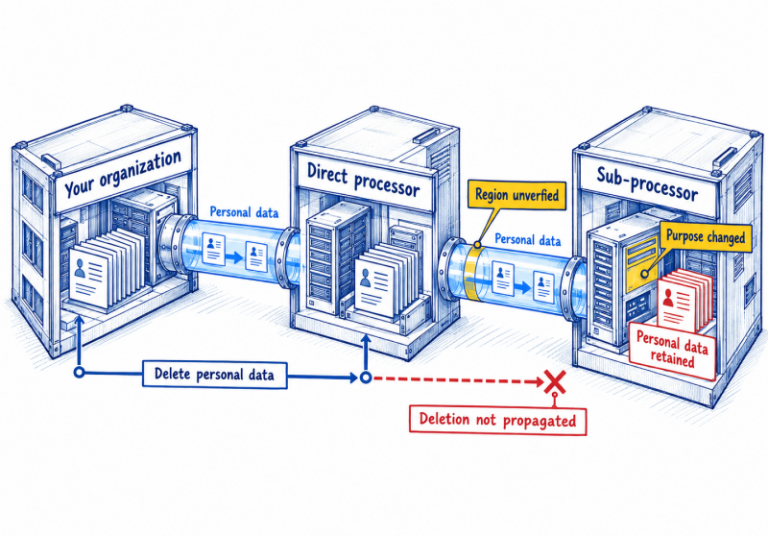
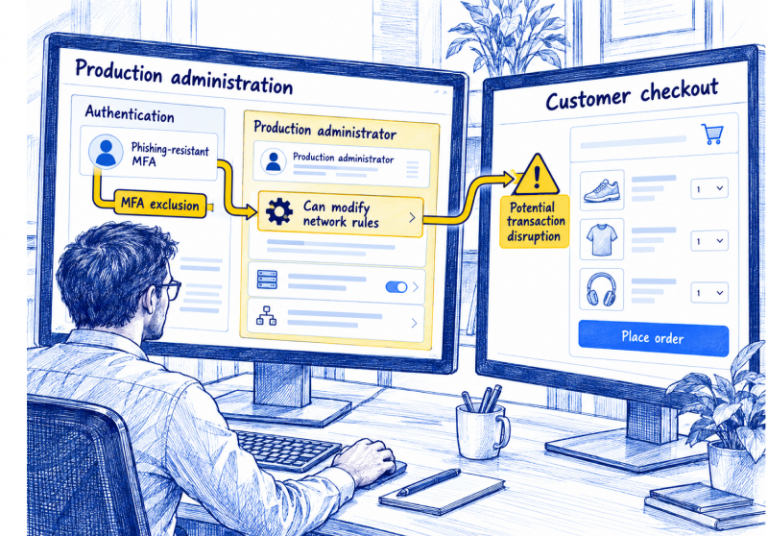
What makes insider threats especially dangerous is their ability to bypass perimeter defenses. These actors already have legitimate access to networks, applications, and information — making their behavior harder to detect until it’s too late.
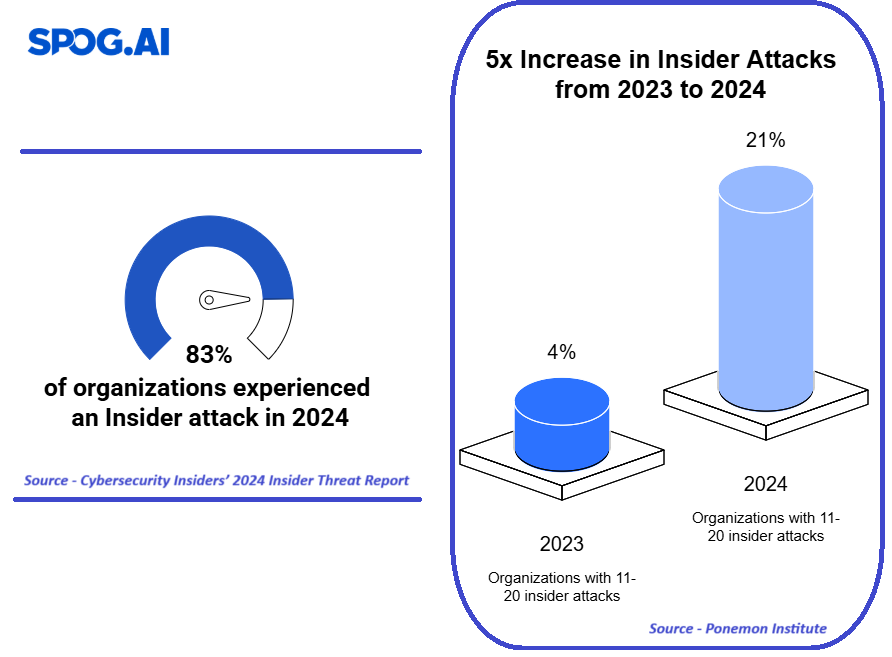
According to Cybersecurity Insiders’ 2024 Insider Threat Report, 83% of organizations experienced at least one insider attack in the last year. Even more alarming, organizations that reported 11–20 insider attacks rose fivefold — from just 4% in 2023 to 21% in 2024.
Whether driven by personal gain, human error, or carelessness, insider threats can lead to data breaches, IP theft, regulatory fines, and long-term reputational damage. And with the rise of hybrid work, remote access, and third-party ecosystems, the risk is more complex than ever.
In this article, we’ll explore the top 10 early warning signs of insider threats — so your team can recognize the red flags, respond in real-time, and stay one step ahead.
What Are Insider Threats?
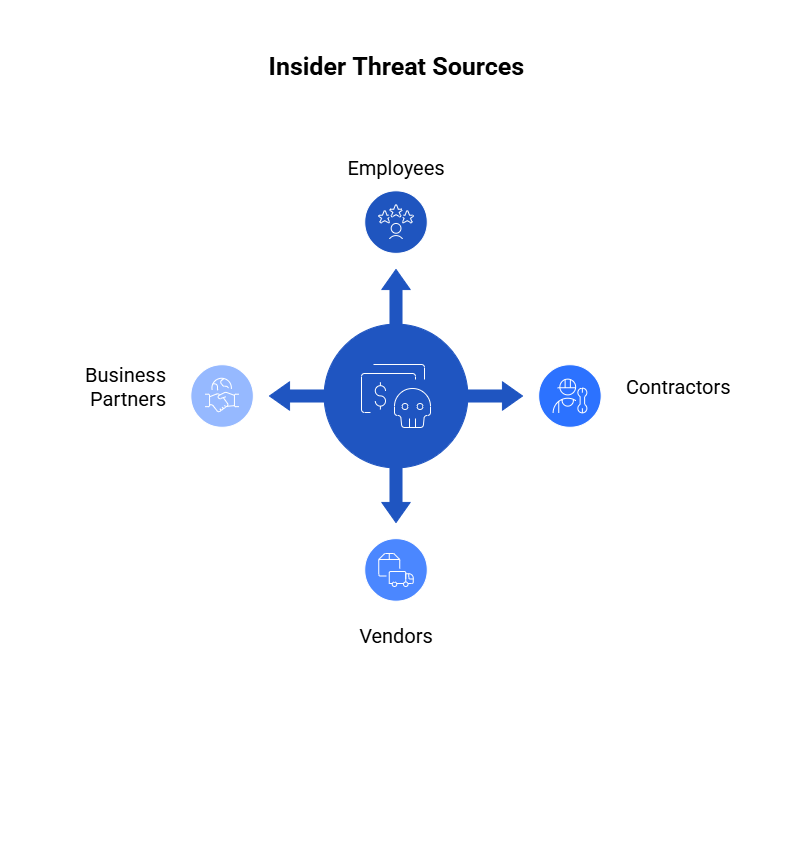
Insider threats refer to security risks that originate from within an organization — often from individuals who already have authorized access to systems, networks, or data. These individuals can include employees, contractors, vendors, or business partners who misuse their access either intentionally or accidentally.
Malicious vs. Negligent Insiders
There are two primary types of insider threats:
1. Malicious Insiders
These are individuals who deliberately exploit their access to harm the organization. Motivations often include:
- Financial gain
- Revenge or dissatisfaction
- Espionage or sabotage
For example, an employee who steals customer data before leaving for a competitor is considered a malicious insider.
2. Negligent or Careless Insiders
These insiders don’t intend harm but put the organization at risk through careless behavior. This includes:
- Falling for phishing attacks
- Mishandling sensitive information
- Ignoring security policies
A common case: an employee sending a confidential file to the wrong recipient — a mistake, but one that could trigger a serious data breach.
In February 2024, a contractor working with a U.S. federal agency was arrested for exfiltrating classified defense-related documents over several months. The insider, who had access to sensitive intelligence due to their clearance, used encrypted USB drives and personal email to leak documents to unauthorized third parties abroad.
The breach went undetected until an anomaly in access logs — showing repeated downloads outside business hours — triggered an internal review. By then, highly sensitive data had already been leaked.
This incident not only led to national security concerns but also exposed significant gaps in insider monitoring and privileged access oversight within the public sector.
Why Early Detection of Insider Threats Matters
Detecting insider threats before they escalate is one of the most powerful ways to prevent catastrophic damage — but it’s also one of the most difficult. Unlike external attackers, insiders operate from a position of trust, making their behavior harder to flag through traditional perimeter-based security tools.
The Cost of Late Detection
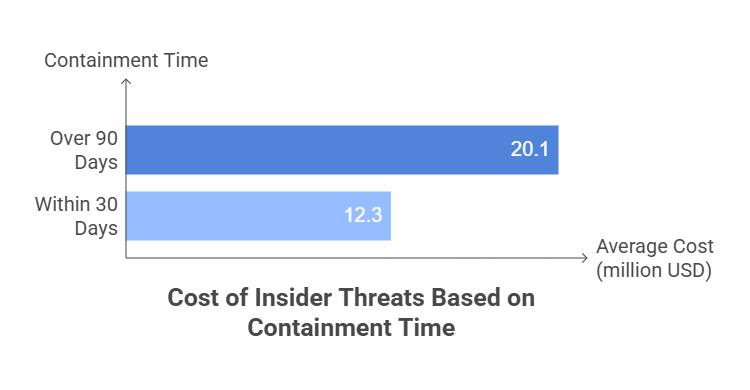
The impact of insider threats can be staggering when not identified early. According to the Ponemon Institute report, organizations that take more than 90 days to contain an insider incident spend an average of $20.1 million — 63% more than those who respond within 30 days.
Late detection can lead to:
- Sensitive data exfiltration
- Loss of intellectual property
- Regulatory fines and legal consequences
- Reputational fallout that erodes customer trust
Why Prevention Isn’t Enough
Even with strong prevention protocols in place — like access controls, encryption, and DLP systems — insider threats can still slip through. Many begin with seemingly harmless behavior that gradually escalates, such as excessive access requests, shadow IT usage, or changes in behavior after an HR issue.
This is why proactive monitoring and behavior analytics are essential — not just to stop insider threats, but to detect patterns and intervene early.
💡 “You can’t stop what you can’t see.” The earlier you detect subtle indicators, the faster you can prevent them from turning into costly breaches.
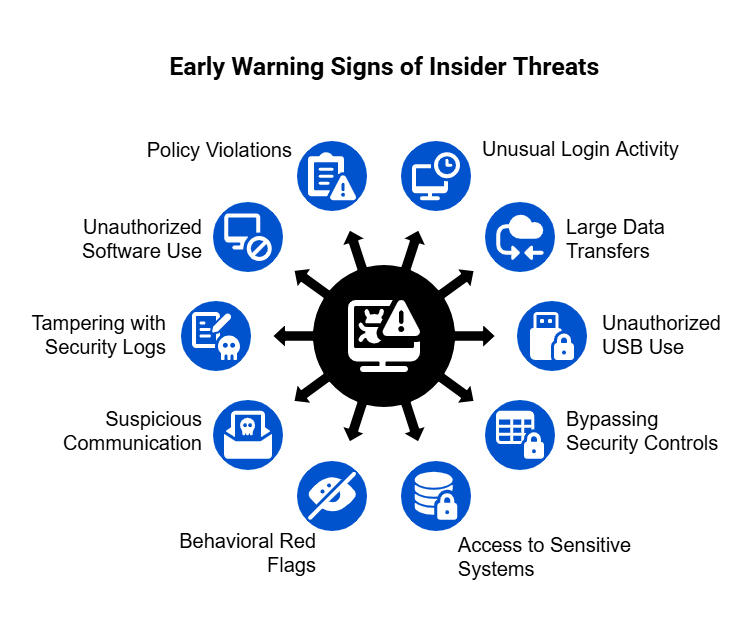
Top 10 Early Warning Signs of Insider Threats
Insider threats rarely happen without warning. More often than not, subtle signs emerge well before a breach occurs. Identifying these indicators early is critical for proactive threat detection and incident prevention.
Here are the top 10 early warning signs that may signal a potential insider threat within your organization:
1. Unusual Login Activity
- Accessing systems at odd hours, especially outside normal business schedules
- Login attempts from unfamiliar IPs, devices, or geographic locations
- Frequent failed login attempts indicating potential credential testing
🔍 What to watch for: Weekend or late-night logins, especially from personal or unregistered devices.
2. Large or Unusual Data Transfers
- Downloading massive volumes of data without business justification
- Accessing sensitive files not related to one’s role
- Uploading data to unauthorized cloud services or external storage
🔍 What to watch for: Spikes in file access or use of file-sharing tools like Dropbox or Google Drive outside company policy.
3. Use of Unauthorized USB Devices
- Plugging in external storage devices or mobile phones
- Bypassing endpoint controls to transfer data offline
🔍 What to watch for: USB device insertion logs or sudden data transfer spikes on monitored endpoints.
4. Attempts to Bypass Security Controls
- Disabling antivirus or endpoint protection tools
- Trying to escalate privileges without approval
- Using unsanctioned apps or VPNs to mask activity
🔍 What to watch for: Application whitelisting violations or command-line attempts to stop security processes.
5. Frequent Access to Sensitive Systems Not Tied to Job Role
- Accessing restricted HR, finance, or source code repositories without justification
- Reviewing sensitive client or executive data without request
🔍 What to watch for: Lateral movement in systems and out-of-role access frequency.
6. Behavioral Red Flags and Disengagement
- Sudden drop in performance or missed deadlines
- Open frustration with leadership, HR disputes, or job dissatisfaction
- Isolation from team or reluctance to collaborate
🔍 What to watch for: HR incident reports coupled with unusual system activity.
7. Communication with Suspicious External Parties
- Contact with competitors, unknown email addresses, or suspicious domains
- Using encrypted or self-destructing messaging apps for work-related communication
🔍 What to watch for: Outbound traffic to flagged domains or email forwarding to personal accounts.
8. Tampering with Security Logs or Monitoring Tools
- Attempting to delete or modify audit trails
- Accessing logs without authorization
- Disabling alerts or logging features
🔍 What to watch for: Gaps in log continuity or unexpected access to logging systems.
9. Shadow IT or Use of Unauthorized Software
- Downloading and using apps not approved by IT
- Creating backdoor access or private communication channels
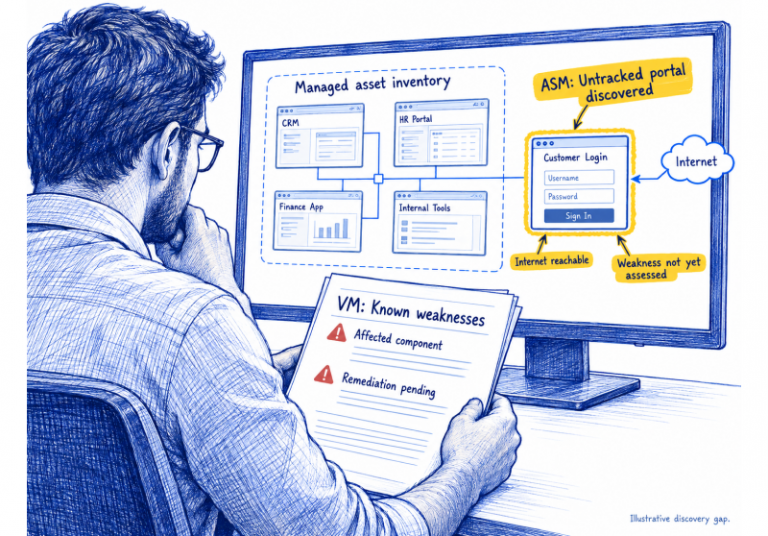
🔍 What to watch for: Devices or apps that don’t appear in the asset inventory.
10. Repeated Policy Violations or Non-Compliance Behavior
- Ignoring mandatory security training or updates
- Multiple infractions across data handling, password use, or device policy
🔍 What to watch for: Users with a pattern of minor violations that could escalate over time.
How to Detect Insider Threats Before It’s Too Late
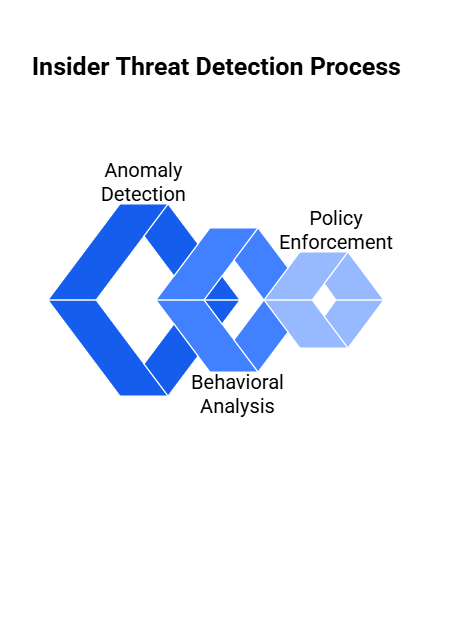
Detecting insider threats effectively requires a multi-layered approach — not just technology, but also a deeper understanding of user behavior and the enforcement of clear policies. Here’s how organizations can structure their detection strategy across three essential layers:
Layer 1: Technology & Infrastructure
The foundation of insider threat detection is built on visibility. Organizations need to monitor user activity across endpoints, applications, and cloud services in real time. This includes:
- Tracking login behavior, file access patterns, data transfers, and USB/device usage
- Using analytics to detect anomalies — such as large downloads, access outside working hours, or activity from unusual locations
- Aggregating and analyzing data through centralized platforms or security tools
Solutions like SPOG.AI help consolidate signals from multiple systems, offering a unified view that highlights potential threats early — often before they escalate.
Layer 2: Behavioral Monitoring & Contextual Insight
Technology alone isn’t enough. Insider threats are often identifiable through subtle changes in user behavior long before an incident occurs. Key practices include:
- Establishing normal behavioral baselines (e.g., typical access times, data usage) and flagging deviations
- Monitoring high-risk users (e.g., those with privileged access or recent HR incidents) more closely
- Assigning dynamic risk scores based on behavioral trends and known risk factors
This layer is where behavior analytics and insider risk scoring become valuable. Instead of treating all violations equally, organizations can prioritize threats with context — understanding why a user’s actions matter, not just what they did.
Layer 3: Policy Enforcement & Governance
Detection is only effective if backed by strong policy enforcement. Organizations must ensure that security rules are clear, consistently applied, and adaptable. This includes:
- Enforcing least-privilege access and removing unused or excessive permissions
- Automating compliance checks and alerting on violations of internal security policies
- Educating employees regularly on data handling, acceptable use, and reporting protocols
- Setting up workflows to respond quickly when risks are detected (e.g., flag, restrict, escalate)
Tools like SPOG.AI can support this by linking behavioral insight to policy violations, helping teams not only detect risks but also understand their root cause and respond appropriately.
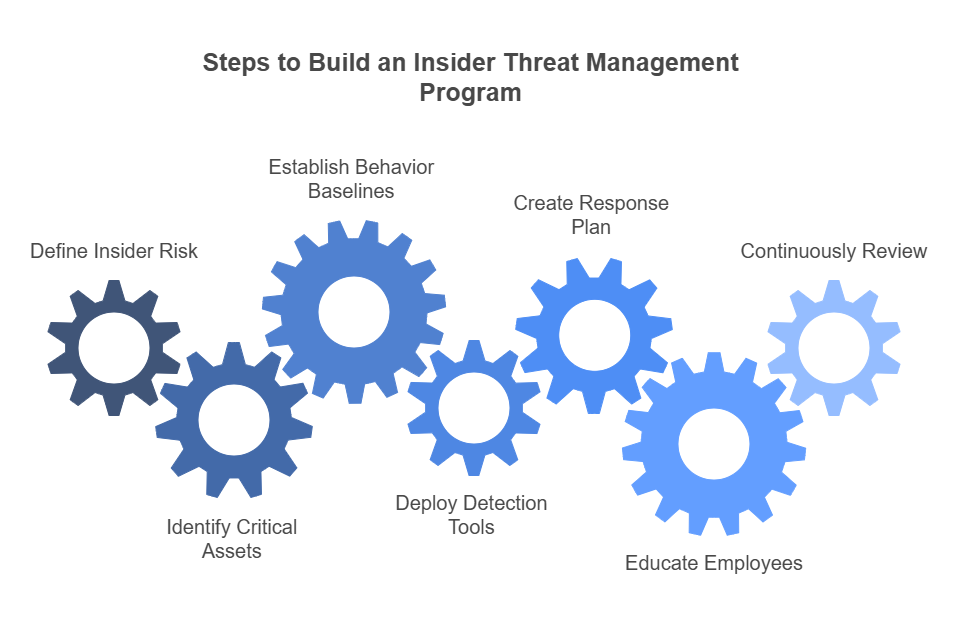
Steps to Build an Insider Threat Management Program
Creating a robust insider threat program isn’t just about deploying new tools — it’s about aligning people, processes, and technology around a proactive risk management strategy. Whether you’re starting from scratch or enhancing an existing setup, here are the essential steps to build an effective insider threat program:
1. Define What Insider Risk Means for Your Organization
Not all insider threats are created equal. Start by clearly identifying what constitutes “insider risk” within your business environment. This can include:
- Malicious actions (e.g., data theft, sabotage)
- Negligent behavior (e.g., accidental sharing of sensitive info)
- Unintentional misuse (e.g., shadow IT, misconfigured access)
Tip: Involve stakeholders from security, HR, legal, and compliance to align definitions and risk tolerance.
2. Identify and Prioritize Critical Assets
Determine what needs the most protection:
- Sensitive customer data
- Intellectual property (IP)
- Financial and HR systems
- Proprietary source code or algorithms
Tip: Use data classification frameworks to label assets based on sensitivity and business impact.
3. Establish Baselines for Normal Behavior
Behavioral analytics relies on understanding what’s normal. Use monitoring tools to establish:
- Typical login hours
- Common file access patterns
- Approved applications and tools
Tip: This baseline will serve as a reference point to detect anomalies and potential threats.
4. Deploy the Right Detection and Monitoring Tools
To monitor and respond effectively, integrate tools like:
- UEBA for behavior modeling
- DLP for monitoring data movement
- IAM/PAM for enforcing access control
- SIEM/SOAR for incident triage and response
Tip: Platforms like SPOG.AI can centralize visibility and risk scoring across these functions.
5. Create a Response Plan for Insider Incidents
Even with strong detection in place, insider incidents can occur. A response plan should include:
- Escalation paths for alerts
- Isolation and access restriction protocols
- Legal and HR involvement for investigation
- Communication procedures (internal + external if needed)
Tip: Include insider threat scenarios in your incident response playbooks.
6. Educate Employees and Build a Security-Conscious Culture
Employees are both your biggest risk and best defense. Deliver:
- Regular training on data handling and insider threat awareness
- Simulated phishing or policy violation tests
- Confidential reporting mechanisms for suspicious behavior
Tip: Reinforce that monitoring is about protection — not surveillance.
7. Continuously Review, Adapt, and Improve
Threats evolve, and so should your insider threat program. Perform regular audits and update your tools, policies, and training to match emerging risks.
Tip: Use metrics like number of alerts, time to resolution, and user compliance rates to measure effectiveness.
Conclusion
Insider threats are no longer rare anomalies — they’re a persistent and growing risk that every organization, regardless of size or industry, must address. Whether stemming from malicious intent, negligence, or human error, the consequences of insider activity can be severe.
But insider threats are not unbeatable. With a layered strategy that combines visibility through technology, context from behavioral analysis, and enforceable security policies, organizations can move from reactive defense to proactive risk management.
The key is early detection. By recognizing subtle warning signs, establishing baseline behaviors, and continuously monitoring access and activity, security teams can intervene before small anomalies become serious incidents.
Ultimately, managing insider threats is about more than catching bad actors — it’s about creating a secure, accountable, and resilient environment where trust and oversight go hand in hand.