Many companies see compliance as a burden. They treat it as an afterthought, something to manage only when necessary. But that mindset is risky and costly.
The numbers tell the story.
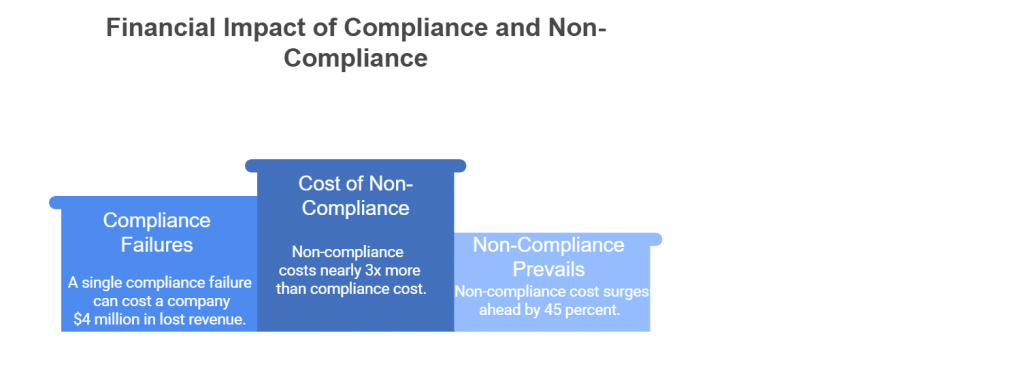
The average cost of compliance is $5.47 million, while the cost of non-compliance is nearly three times higher, reaching $14.82 million.
In the last decade, non-compliance costs have jumped by 45 percent.
A single compliance failure can cost a company $4 million in lost revenue.
GDPR fines alone start at $11 million or 2 percent of annual revenue, whichever is greater.
Relying on luck is not a strategy. When compliance failures happen, the financial damage is far greater than the cost of doing things right from the start. But compliance does not have to be an expensive, manual task.
Real-time compliance monitoring is changing the game. It shifts compliance from a last-minute effort to a proactive strategy that saves money, reduces risks, and protects brand reputation.
The question is not whether compliance is necessary. It is how businesses can turn it into an advantage instead of a liability.
This article will explain how compliance maturity links to financial benefits. It will explore the return on investment (ROI) of real-time compliance, share case studies of companies that saved millions, and show how businesses can build a strong case for continuous compliance monitoring.
Linking Compliance Maturity to Financial Benefits
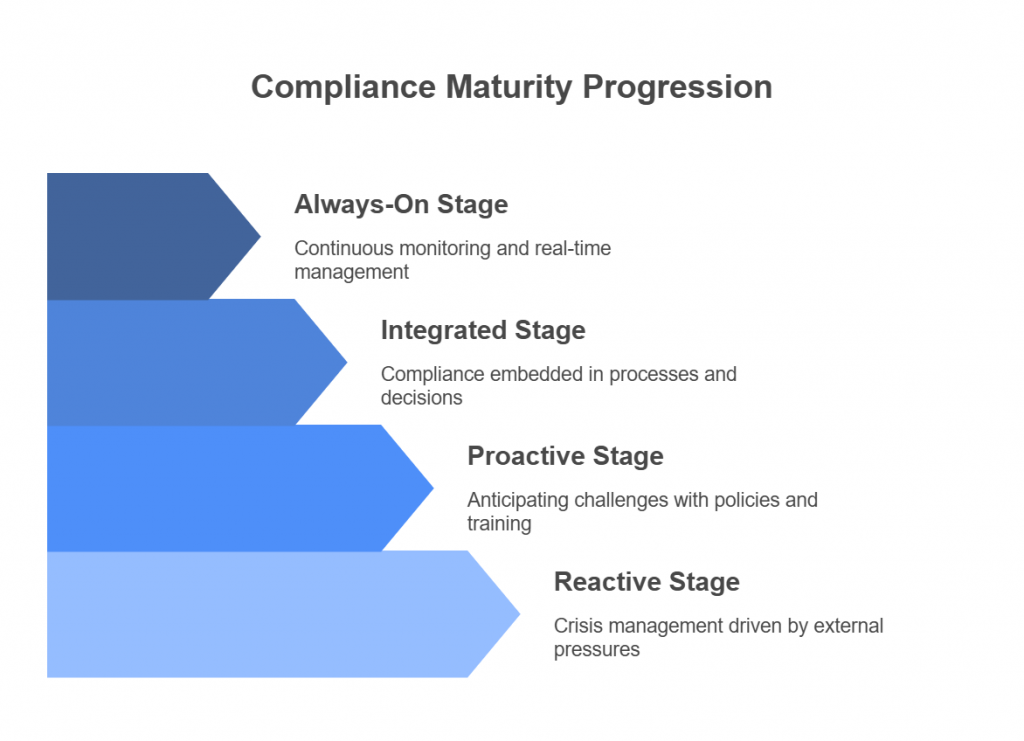
The more proactive your compliance approach, the greater the financial upside.
Organizations that elevate their compliance programs often experience significant financial and operational advantages. A mature compliance function not only mitigates risks but also drives value across the business.
Key Benefits of Advanced Compliance Maturity:
Cost Reduction: Implementing robust compliance frameworks can lead to substantial savings by avoiding fines and penalties. For instance, the 2008 financial crisis highlighted that failures in compliance led to fines and losses exceeding $300 billion for financial institutions.
Operational Efficiency: Advanced compliance programs streamline processes, reducing redundancies and enhancing productivity. This efficiency allows organizations to allocate resources more effectively, focusing on strategic initiatives rather than remedial actions. Research shows that organizations centralizing their compliance programs can cut administrative overhead by as much as 20%.
Enhanced Reputation: Companies with strong compliance records build trust with stakeholders, including customers, investors, and regulators. This trust can translate into increased business opportunities and a competitive edge in the market.
Several prominent financial institutions have faced significant repercussions due to inadequate compliance practices, underscoring the critical importance of robust regulatory adherence.
1. Equifax Data Breach
In September 2017, Equifax experienced a massive data breach affecting approximately 150 million customers. The breach exposed sensitive information, including credit card numbers, Social Security numbers, and personal details. Investigations revealed that Equifax failed to install a critical security patch, lacked proper network segmentation, and did not encrypt usernames and passwords. These compliance failures led to a $700 million fine and severely damaged the company’s reputation.
2. Capital One Cyber Incident
In March 2019, Capital One suffered a data breach compromising 100 million customer records. The breach exposed account numbers, Social Security numbers, names, addresses, phone numbers, and birthdates. The incident was attributed to a misconfigured firewall on an Amazon cloud server, highlighting lapses in network security compliance.
3. First American Financial Corporation Exposure
In May 2019, First American Financial Corporation discovered that a web design flaw left 885 million customer records exposed from 2003 to 2019. The flaw allowed unauthorized users to access sensitive data, including bank account numbers and statements, mortgage and tax records, Social Security numbers, wire transaction receipts, and driver’s license images. This incident underscored the importance of secure web application design and regular compliance audits.
These examples illustrate that failure to adopt and maintain rigorous compliance practices can lead to substantial financial penalties and damage to a company’s reputation. Implementing robust compliance frameworks is essential to mitigate such risks and ensure the integrity of financial operations.
The ROI Metrics of Real-Time Compliance
Compliance is often seen as a cost, but when done right, it delivers measurable financial benefits. Companies that invest in real-time compliance monitoring reduce regulatory risks, streamline operations, and improve brand trust. The return on investment (ROI) can be seen in three key areas: cost savings, operational efficiency, and brand protection.
1. Cost Savings: Reducing Fines and Legal Expenses
Regulatory penalties for non-compliance are skyrocketing, and businesses that fail to adhere to data protection laws, financial regulations, and industry standards face massive fines. By proactively monitoring compliance in real time, organizations can detect issues early and avoid violations before they escalate into costly penalties.
For example, Amazon was fined $877 million under GDPR for improper data processing practices. Similarly, British Airways faced a $230 million fine for failing to protect customer data. Both companies could have mitigated these fines by strengthening their compliance oversight and implementing real-time monitoring systems.
Traditional compliance processes are often manual, time-consuming, and expensive. Real-time compliance monitoring replaces outdated methods with automation, AI-driven analytics, and real-time alerts, leading to:
Faster audit preparation – Companies with real-time compliance tracking reduce audit prep time by up to 40%, eliminating last-minute document scrambles.
Lower administrative costs – Automating evidence collection and compliance reporting saves thousands of work hours annually.
Proactive risk mitigation – Real-time alerts allow organizations to correct compliance issues before they escalate, preventing downtime and business disruptions.
A great example is JPMorgan Chase, which invested over $11 billion in compliance and risk management automation. The result? A more efficient compliance framework, reduced legal exposure, and stronger operational resilience.
3. Brand Protection: Enhancing Customer Trust
Compliance isn’t just about following regulations—it’s about protecting customer trust and brand reputation. When companies suffer compliance failures, they don’t just pay fines; they lose consumer confidence, which can have a long-term financial impact.
After its data breach affecting 147 million people, Equifax’s stock price dropped 35% in just one week, and the company faced $1.4 billion in settlements. On the flip side, companies like Apple and Microsoft, which prioritize data protection and transparent compliance, have strengthened consumer trust, leading to higher customer retention and increased revenues.
The Bottom Line
Companies that invest in real-time compliance:
Save millions in regulatory fines
Reduce operational costs through automation
Protect their brand from reputational damage
Compliance isn’t just a defensive strategy—it’s a smart financial move. Businesses that prioritize compliance maturity gain a competitive edge, operational efficiency, and long-term cost savings.
ROI Metric
Description
Financial Impact
Reduced Regulatory Fines
Early detection and correction of compliance violations help avoid costly penalties.
Companies save millions in potential fines (e.g., Amazon’s $877M GDPR fine could have been avoided with better compliance monitoring).
Lower Legal Expenses
Proactive compliance prevents lawsuits and legal disputes related to data breaches and regulatory failures.
Businesses cut legal costs by 30-50% when compliance issues are addressed before escalation.
Faster Audit Preparation
Automated tracking of compliance documentation eliminates last-minute scrambling and reduces manual work.
Reduces audit preparation time by 40%, saving labor costs.
Companies save thousands of work hours annually, reducing compliance costs by 50%.
Improved Risk Mitigation
Real-time alerts enable organizations to fix compliance issues before they escalate into major problems.
Lowers the risk of regulatory actions and prevents revenue losses from business disruptions.
Brand Protection & Customer Trust
Strong compliance frameworks enhance credibility, leading to greater customer retention and investor confidence.
Avoids stock price drops after compliance failures (e.g., Equifax’s stock fell 35% in one week after its data breach).
Increased Revenue Opportunities
Compliance maturity improves eligibility for certifications (e.g., ISO 27001, SOC 2) and partnerships.
Companies secure more deals and gain a competitive edge in regulated industries.
Case Studies: How Real-Time Compliance Drives Cost Savings and Risk Reduction
Many organizations learn the true cost of compliance failures the hard way—through regulatory fines, lawsuits, operational disruptions, and reputational damage. However, companies that proactively invest in real-time compliance monitoring benefit from reduced financial risks, streamlined operations, and strengthened customer trust.
The following case studies highlight the financial and operational impact of both compliance failures and proactive compliance measures, demonstrating why real-time compliance is a necessary investment rather than a cost burden.
1. GEICO and Travelers: The High Cost of Cybersecurity Compliance Failures
In 2024, New York State fined auto insurers GEICO and Travelers a combined $11.3 million after hackers exploited weaknesses in their online quoting tools, exposing personal data of over 120,000 individuals.
Financial Impact:
GEICO’s breach affected 116,000 people, exposing driver’s license numbers and dates of birth due to weak access controls.
Travelers’ breach impacted 4,000 individuals, resulting from stolen login credentials used to exploit their system.
Both companies violated New York’s stringent cybersecurity laws, leading to heavy regulatory fines and reputational damage.
With real-time monitoring and automated compliance controls, they could have prevented unauthorized access, detected unusual login behavior, and reduced financial penalties.
2. Sellafield Nuclear Site: Compliance Negligence Leads to Security Risks
In 2024, Sellafield, a UK-based nuclear site, was fined nearly £400,000 for failing to maintain adequate cybersecurity protections for four years. A regulatory investigation revealed that:
75% of the site’s servers were vulnerable to cyberattacks due to outdated security protocols.
Sensitive nuclear security data was at risk of exposure, posing a potential national security threat.
The site failed to implement required compliance measures, leading to severe penalties and public scrutiny.
Financial Impact:
Sellafield’s negligence not only led to hefty fines but also triggered a loss of public and government trust, which could affect future funding and contracts.
Real-time compliance monitoring, automated threat detection, and continuous audits could have identified vulnerabilities early, preventing regulatory action and securing critical national infrastructure.
3. MOVEit Data Breach: The Cost of Poor Vendor Compliance
In 2023, a critical vulnerability in the MOVEit file transfer software was exploited by cybercriminals, impacting thousands of organizations and nearly 100 million individuals worldwide. Victims included:
The BBC
British Airways
U.S. Department of Energy
Hackers exploited a zero-day SQL injection flaw that allowed them to exfiltrate sensitive data from companies using the MOVEit system. The attack spread across multiple industries, highlighting the risks of poor third-party compliance monitoring.
Financial Impact:
Companies affected faced lawsuits, regulatory investigations, and reputational damage.
Several GDPR-related fines and data protection penalties were issued across multiple regions.
Organizations relying on third-party vendors must implement real-time compliance tracking for vendor security, ensuring continuous risk assessments and timely patching of vulnerabilities.
4. T-Mobile: Investing in Compliance After Multiple Breaches
T-Mobile has been repeatedly targeted by cyberattacks, suffering multiple data breaches affecting millions of customers. In response, the company reached a settlement with the FCC in 2024, agreeing to:
Invest $150 million in cybersecurity improvements.
Implement enhanced compliance measures, real-time monitoring, and automated security controls.
Financial Impact:
Previous breaches cost T-Mobile hundreds of millions in fines and legal settlements.
By investing in real-time compliance, T-Mobile is proactively reducing future financial losses and regulatory risks.
Companies that fail to prioritize compliance early will eventually be forced to invest in security improvements—but only after suffering major financial and reputational damage.
Key Takeaways: Why Real-Time Compliance is Essential
Ignoring compliance leads to major financial losses. Fines, lawsuits, and operational disruptions cost companies millions—or even billions—in damages.
Cybersecurity failures are preventable with real-time compliance. Organizations that monitor security risks continuously and automate compliance checks significantly reduce financial exposure.
Proactive compliance saves money in the long run. Companies like JPMorgan Chase and T-Mobile are now investing in compliance before breaches occur, avoiding expensive crisis responses.
Vendor compliance is just as important as internal compliance. The MOVEit breach proved that organizations must monitor third-party security risks as rigorously as their own systems.
Compliance is no longer just about avoiding fines—it’s about ensuring business survival. Companies that invest in real-time compliance today will save millions, strengthen customer trust, and gain a competitive edge tomorrow.
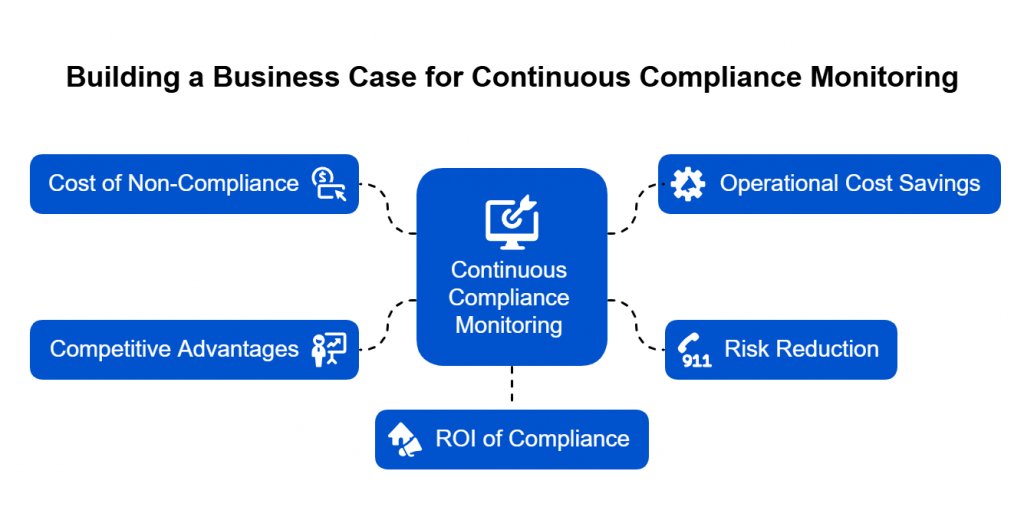
Building a Business Case for Continuous Compliance Monitoring
Compliance is often viewed as a necessary cost, but in reality, it is a high-ROI investment that protects companies from financial losses, operational risks, and reputational damage. However, many organizations struggle to secure budget and executive buy-in for continuous compliance monitoring. To justify this investment, businesses need to demonstrate the tangible financial benefits of real-time compliance.
Quantify the Cost of Non-Compliance
Executives respond to numbers and financial risk assessments. To secure buy-in, highlight the actual cost of non-compliance compared to the investment in compliance monitoring.
The average cost of non-compliance is $14.82 million, while the average cost of compliance is only $5.47 million, a nearly threefold difference.
GDPR fines start at $11 million or 2 percent of annual revenue for violations related to data protection failures.
Cybersecurity breaches cost companies an average of $4 million per incident, excluding reputational damage and lost business.
Actionable Tips:
Gather and present industry-specific compliance fine data to make the case relevant to your business sector.
Use real-world examples of companies that faced penalties to emphasize the financial risks of non-compliance.
Create a risk matrix comparing compliance investment costs vs. potential fines and legal costs.
Demonstrate Operational Cost Savings
Real-time compliance reduces labor-intensive manual processes and optimizes operational efficiency. Compliance teams often spend hundreds of hours gathering evidence for audits, monitoring risks, and generating reports. Automation eliminates this burden.
A 40 percent reduction in audit preparation time with automated tracking.
A 50 percent decrease in compliance management costs by streamlining risk assessments and reporting.
Thousands of work hours saved annually, allowing employees to focus on strategic initiatives rather than reactive compliance tasks.
Actionable Tips:
Conduct an internal time and cost audit to measure how many hours compliance teams spend on manual tasks.
Identify bottlenecks in audit preparation and reporting, then show how automation can reduce effort.
Use compliance automation case studies to illustrate cost savings and operational benefits.
Emphasize Risk Reduction and Incident Prevention
Executives want to avoid financial losses, not just comply with regulations. The biggest risk isn’t failing an audit; it is facing a data breach, legal action, or brand damage.
Equifax’s 2017 data breach cost the company $1.4 billion in settlements and regulatory fines.
British Airways’ GDPR fine was $230 million due to weak cybersecurity controls.
T-Mobile was forced to invest $150 million in cybersecurity improvements after repeated breaches.
Actionable Tips:
Identify company-specific vulnerabilities and show how real-time compliance monitoring mitigates them.
Use benchmarking data to compare your organization’s compliance risk posture to industry peers.
Highlight the cost of reputation damage from compliance failures and the long-term revenue impact.
Highlight Competitive and Revenue Advantages
Strong compliance is not just about risk management; it can also drive business growth. Many companies require proof of compliance before signing contracts or partnering with vendors.
ISO 27001, SOC 2, and GDPR certifications increase market trust and help businesses secure larger enterprise contracts.
Companies with strong compliance records close deals faster, as they don’t face additional scrutiny from regulators or partners.
Financial institutions like JPMorgan Chase and Microsoft have used compliance as a competitive advantage to win customers in regulated industries.
Actionable Tips:
Compile a list of compliance certifications that align with your business objectives and demonstrate their revenue potential.
Identify customer requirements for compliance, especially for enterprise and government contracts.
Show how competitors have used compliance as a market differentiator to win deals.
Gather before-and-after data to showcase cost savings, risk reduction, and revenue growth.
Present success stories in a clear and compelling format, such as infographics or executive briefs.
Show the ROI of Continuous Compliance
A strong compliance monitoring system delivers measurable financial returns by:
Avoiding multi-million-dollar fines from regulatory violations.
Reducing compliance management costs through automation.
Protecting brand reputation and customer trust, leading to higher revenue retention.
Preventing cybersecurity breaches, saving millions in remediation costs.
Actionable Tips:
Create a ROI projection model estimating the savings from compliance automation.
Develop a cost-benefit analysis comparing compliance investment vs. potential regulatory fines.
Use real-world financial data to back up your ROI claims.
Compliance as a Business Asset
Compliance is no longer just about staying within legal boundaries; it is about financial protection, operational efficiency, and business growth. Companies that proactively invest in continuous compliance monitoring gain a competitive edge, save millions in fines, and reduce their cybersecurity risks.
Executives need to see compliance not as an expense but as an asset. A strong business case for compliance should focus on:
Reducing financial risk by avoiding fines, lawsuits, and breaches.
Improving efficiency by cutting audit costs and reducing manual work.
Driving growth by winning contracts and building customer trust.
Actionable Tips:
Position compliance as a value driver rather than a cost center.
Align compliance initiatives with business goals and revenue opportunities.
Show how compliance contributes to long-term sustainability and profitability.
The choice is simple: Invest in compliance now or pay the price later.
Implementing Real-Time Compliance Monitoring: Taking Action Now
Compliance is no longer just about avoiding fines or passing audits. It is a critical business function that reduces financial risk, increases operational efficiency, and strengthens customer trust. Companies that embrace real-time compliance monitoring position themselves for long-term success by mitigating regulatory risks, automating compliance tasks, and improving overall security.
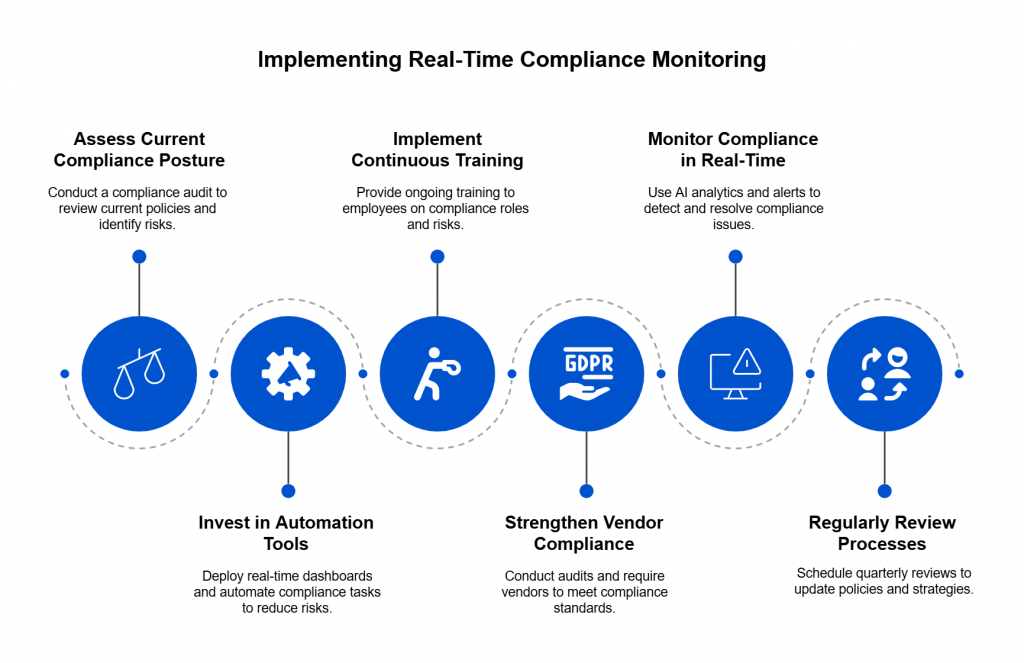
To move from a reactive to a proactive compliance approach, organizations must take practical steps to integrate real-time compliance into their business strategy.
Assess Your Current Compliance Posture
Before implementing real-time compliance monitoring, organizations must first evaluate where they stand. Conducting an internal compliance assessment helps identify gaps, inefficiencies, and risks that could lead to regulatory violations.
Conduct a compliance audit to review current policies, procedures, and controls.
Identify high-risk areas where non-compliance is most likely to occur.
Benchmark compliance efforts against industry standards and regulatory requirements.
Assign a compliance team or external auditor to perform a compliance gap analysis and create an improvement plan.
Invest in Compliance Automation and Monitoring Tools
Manual compliance processes are costly, inefficient, and prone to errors. Companies that use automation and real-time monitoring tools drastically reduce their risk exposure while cutting compliance costs.
Deploy real-time compliance dashboards to track key compliance indicators.
Automate audit logs, evidence collection, and reporting to eliminate manual tasks.
Integrate compliance software with existing security and IT systems for seamless risk management.
Research and invest in compliance automation solutions that align with your industry regulations and business needs.
Implement Continuous Compliance Training
Regulatory requirements are constantly evolving, making ongoing employee training and awareness programs essential. Employees must understand their role in maintaining compliance and how to recognize compliance risks.
Provide mandatory compliance training for employees handling sensitive data.
Create a culture of compliance where employees are encouraged to report risks or concerns.
Use real-life case studies of compliance failures to highlight the consequences of non-compliance.
Establish a regular compliance training program and require employees to complete annual refresher courses.
Strengthen Vendor and Third-Party Compliance
Many compliance failures occur due to third-party vendors that lack strong security and data protection controls. Businesses must ensure that vendors, partners, and contractors also meet regulatory standards.
Conduct compliance audits of third-party vendors before signing contracts.
Require vendors to comply with industry standards such as ISO 27001, SOC 2, and GDPR.
Implement real-time vendor monitoring tools to track compliance performance.
Establish a vendor risk management program to assess, monitor, and enforce compliance requirements for third parties.
Monitor Compliance in Real-Time
Real-time compliance monitoring allows companies to detect and resolve issues before they escalate into regulatory violations. Organizations should shift from periodic compliance checks to continuous monitoring.
Use AI-powered compliance analytics to detect potential risks.
Set up automated alerts and notifications for non-compliance events.
Establish reporting frameworks to ensure compliance data is always up to date.
Implement real-time monitoring dashboards to provide visibility into compliance status across departments and systems.
Regularly Review and Improve Compliance Processes
Compliance is an ongoing process, not a one-time initiative. Organizations must regularly update policies, refine workflows, and adapt to new regulations to maintain compliance.
Schedule quarterly compliance reviews to assess progress and adjust strategies.
Stay updated on new regulations and industry best practices.
Conduct annual compliance risk assessments to proactively address emerging threats.
Create a compliance roadmap with clear milestones, ensuring continuous improvement.
Final Thought: Compliance is a Competitive Advantage
Organizations that invest in real-time compliance monitoring gain more than just regulatory protection. They unlock financial savings, improved operational efficiency, and stronger customer trust.
The choice is clear: companies can either invest in proactive compliance today or pay the price of non-compliance tomorrow. By implementing real-time monitoring, automation, and continuous training, businesses can stay ahead of regulatory risks, avoid costly fines, and build a more resilient organization.
Now is the time to take action. Is your organization ready to make compliance a strategic advantage?