Introduction: The Breach That Wasn’t Loud — Until It Was
No alarms. No ransom notes. Just a quiet, persistent signal that something isn’t quite right.
A login attempt from an unusual IP.
A credential still active six months after a contractor’s last engagement.
An API that no one monitors anymore—but still returns live data.
These aren’t hypotheticals. They’re the early warning signs behind some of the biggest security failures we’ve seen. From insurance giants to crypto platforms, the breaches that end up in headlines often start with the smallest of oversights.
Take Max Financial’s 2025 incident. No malware, no public leak—just unauthorized access, discovered not by a dashboard or SOC alert, but through an anonymous tip. That single missed signal set off forensic investigations, regulator reports, and sector-wide scrutiny.
This is the reality many organizations live in today—especially in sectors like BFSI where complexity, vendor sprawl, and sensitive data collide.
Silent threats cost the most—not because they’re sophisticated, but because they’re subtle.
They hide in plain sight. And by the time they reveal themselves, the damage is already done.
In this article, we’ll explore how these quiet threats unfold, why they’re often missed, and what organizations must do to detect and act on them—before they escalate into something much louder.
The Nature of Silent Threats
Not every breach comes wrapped in ransomware or flagged by an intrusion detection system. Many of them start with what feels like routine noise—low-priority alerts, overlooked logs, or forgotten credentials that no longer “belong” to anyone.
These are silent threats: conditions within your environment that are benign until they’re not. They don’t trigger panic. They don’t set off alarms. But they quietly increase your exposure over time, often unnoticed until someone external connects the dots before you do.
Common Silent Threats in Modern Environments
- Dormant Credentials:
Former employees, third-party vendors, or interns who once had access—still do. Especially in complex IAM environments where deprovisioning is manual or delayed.
- Unmonitored APIs:
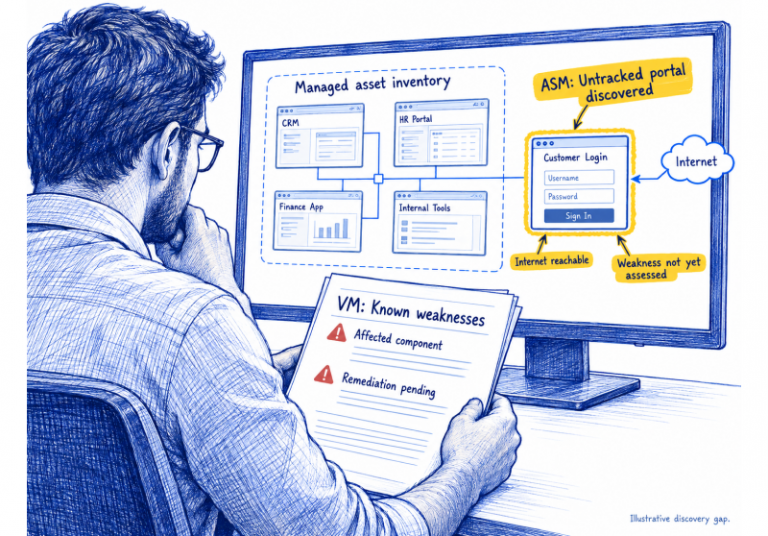
Integrations created for one purpose, left operational long after the project ended. These endpoints often return sensitive data without rate limits or proper authentication.
- Stale Cloud Storage:
Old S3 buckets or public folders left open “temporarily,” holding production logs, scanned IDs, or customer documents long forgotten by the original owner.
- Excessive Permissions:
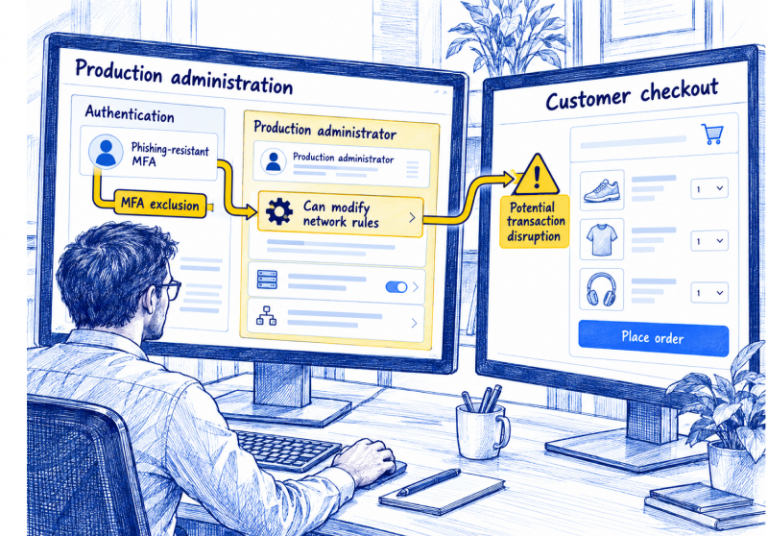
Admin-level access granted “just for onboarding” or “for troubleshooting” that’s never scaled back.
- Missed Log Signals:
Anomalous logins. Lateral movement from unexpected service accounts. These signals exist—but live in noisy dashboards or siloed systems where no one’s connecting them to risk.
Why They’re Missed
- They don’t look urgent.
There’s no breach banner, no red alert. Just subtle deviations—blips in a dashboard no one is actively reviewing.
- Responsibility is unclear.
Security assumes it’s IT’s job. IT thinks the developer owns it. The developer left two quarters ago.
- Tooling outpaces process.
Organizations may have invested in detection and response platforms—but without context or correlation, signals become background noise.
From Signal to Spill: How Small Gaps Become Big Incidents
Every major breach has a moment—the point where it could have been stopped. But often, that moment is buried deep in logs, hidden in expired access lists, or quietly flowing through an unsecured API.
These aren’t advanced threats. They’re administrative oversights, process gaps, and assumptions that no one questions until it’s too late.
Let’s break down how these missed signals escalate into material consequences.
1. Ignored Log Activity
- What happens:
Unusual login behavior—repeated failed attempts from offshore IPs, logins outside normal business hours, or use of deprecated service accounts.
- Why it’s missed:
Logs exist, but no one’s reviewing them regularly. Alerts are either too broad or tuned down to avoid noise. There’s no business context layered in to flag what’s actually risky.
- What it leads to:
Weeks or months of undetected access, often with privilege escalation—by the time someone looks, data has already been exfiltrated.
2. Credentials That Outlast Contracts
- What happens:
A contractor finishes a 6-month project. Their account remains active for 6 more. Or a third-party integration account is still enabled even after the vendor relationship ends.
- Why it’s missed:
Deprovisioning is manual. IAM systems aren’t integrated across business units. No one “owns” vendor lifecycle management from a security perspective.
- What it leads to:
An attacker reuses stolen credentials. Or, an ex-employee logs in using cached access, unintentionally or maliciously exposing systems.
3. Misconfigured or Forgotten APIs
- What happens:
An internal API created for a one-off campaign is left exposed, unauthenticated, and capable of returning sensitive data.
- Why it’s missed:
APIs aren’t cataloged centrally. Security isn’t part of the deployment checklist. No routine review of publicly accessible endpoints.
- What it leads to:
Silent data leakage—PII, financial details, or authentication tokens accessed without anyone knowing. Often discovered externally.
4. Public-Facing Storage Buckets
- What happens:
A cloud storage bucket created for sharing internal docs is misconfigured as public, exposing files via a simple URL.
- Why it’s missed:
The person who created it didn’t realize the default settings. No scanning is in place for misconfigurations. The bucket name isn’t even in the CMDB.
- What it leads to:
Leaked policyholder data, customer records, or internal documents being indexed by search engines—or scraped by threat actors.
Each of these examples starts with something small—so small it’s easy to justify postponing action.
But threats compound. And when signals are ignored, the consequences get exponentially worse—not just in terms of financial cost, but in brand trust, regulatory scrutiny, and customer confidence.
Why Security Teams Miss These Signals
It’s tempting to believe that missed signals are the result of understaffed teams or lack of tooling. But in many cases, the root cause isn’t absence—it’s overload, siloes, and false confidence in processes that haven’t been tested.
Let’s explore the real-world reasons why silent threats slip through the cracks.
1. Too Much Noise, Not Enough Signal
Most organizations have log data. Many have detection tools. Some have both feeding into a central SIEM or XDR. But the volume is overwhelming.
- Security analysts are flooded with alerts, the vast majority of which are either benign or irrelevant.
- Over time, teams tune down alert sensitivity, just to stay sane.
- Subtle but important anomalies—like a dormant user suddenly logging in—get buried.
Outcome: The real warning signs get treated like background noise.
2. Disconnected Systems, Disconnected Context
Access logs live in one platform. Asset inventories in another. Business impact assessments in yet another.
- No single system connects identity, asset, vulnerability, and business value.
- A system might flag a high-risk login—but not that the asset being accessed contains customer PII or is externally exposed.
Outcome: The alert gets triaged without urgency because the context is missing.
3. Policies That Are Documented, Not Practiced
Every organization has policies: breach response plans, access revocation protocols, logging standards. But:
- These are often checked during audits, not rehearsed in real life.
- When an incident hits, teams scramble—unsure who owns what, how to escalate, or when to notify regulators.
Outcome: By the time a response comes together, the window for containment has passed.
4. Assumptions About Ownership
Security assumes IT is watching the API.
IT thinks the vendor is responsible.
The vendor’s contract expired last quarter.
- Ownership of assets, logs, and credentials is rarely revisited after a project ends.
- Cross-functional blind spots mean no one’s truly accountable for dormant risk.
Outcome: Silent threats persist—not because they’re hidden, but because no one thinks they’re theirs to address.
5. Trust in Tools Without Operational Alignment
Organizations invest heavily in detection and monitoring platforms—but underinvest in the people and processes needed to operationalize them.
- Alerts are generated, but not reviewed in time.
- IAM tools track access, but offboarding processes are still manual.
- Scanners find exposed buckets, but remediation workflows are missing.
Outcome: Tools perform as designed—but there’s no closed loop between detection and response.
The problem isn’t that security teams don’t care.
It’s that the environment they operate in is full of gaps between awareness and action.
What Needs to Change
If most breaches begin with subtle signals, then the answer isn’t just to detect more—it’s to respond smarter. That requires more than upgrading tools or throwing alerts into a dashboard. It means changing how teams think, act, and coordinate around risk.
Here’s what that shift looks like in practice:
1. Filter Less, Prioritize Better
The problem with most security alerts isn’t that there are too many—it’s that they’re not ranked by context.
- Move beyond raw severity scores. Prioritize based on asset sensitivity, exposure, and business impact.
- Surface alerts tied to public-facing systems, sensitive data zones, or high-privilege accounts first—even if they appear “low” on the CVSS scale.
- Connect your alerts to enriched asset intelligence: what the system does, who owns it, and what data it touches.
Don’t just reduce noise—raise the volume on what matters.
2. Enforce Identity and Access Hygiene
Access is the silent thread that connects nearly every breach scenario: a credential left active, a permission never revoked, a token that doesn’t expire.
- Automate access reviews—especially for third-party users and integrations.
- Enforce MFA universally and treat privileged accounts with tiered monitoring.
- Use just-in-time access wherever possible.
- Tie IAM controls into onboarding and offboarding workflows—not as an afterthought, but as a design feature.
If someone shouldn’t be in, don’t rely on policy—build systems that enforce it.
3. Monitor With Context, Not Just Coverage
It’s not about collecting more data—it’s about correlating what you already have.
- Map detection systems to business-critical assets, not just infrastructure.
- Align monitoring with actual risk exposure—e.g., external APIs, data flows, and integration points.
- Make logs actionable: tie anomalies back to user identities, asset ownership, and access histories.
Good logs tell you what happened. Great logs tell you why it matters.
Practice the Breach Before It Happens
Most breach response failures aren’t technical. They’re behavioral.
- Run simulation drills where the trigger is subtle—e.g., unusual file access, rogue API calls.
- Include not just tech teams, but Legal, PR, Compliance, and Exec leadership.
- Rehearse cross-functional response flows, not just technical remediation.
When it’s real, you’ll need clarity in minutes—not alignment in hours.
5. Redesign for Resilience, Not Just Recovery
- Classify and minimize sensitive data—you can’t leak what you don’t store.
- Define breach notification thresholds ahead of time (CERT-In, DPDP, IRDAI, SEBI).
- Treat trust as a design principle: assume breach, limit blast radius, and harden high-value assets by default.
Resilience means expecting signals to be missed—and building systems that contain the impact when they are.
Conclusion: You Don’t Need to See Flames to Smell Smoke
Most breaches don’t arrive with alarms blaring. They creep in quietly—through stale credentials, overlooked alerts, or exposed endpoints no one remembered to secure.
And by the time they make noise, it’s not detection—it’s damage control.
What makes these incidents costly isn’t just what’s lost—it’s that so many of the signals were there all along. They just weren’t connected. Or noticed. Or acted upon.
This is the uncomfortable truth for many organizations:
You had the tools. You had the logs. You even had the policies.
But when the signal came, no one recognized it for what it was.
The lesson here isn’t to be paranoid—it’s to be prepared. Silent threats will always exist in complex systems. But how you respond depends on how well you’ve rehearsed, aligned, and built systems that see risk in its earliest form.
Security isn’t just about blocking attacks.
It’s about detecting the quiet ones—and not ignoring what you can’t afford to learn the hard way.
So ask yourself:
- What signals am I ignoring today?
- Which system is speaking quietly—and who’s listening?
- When something does go wrong, will I wish I acted on what felt “too small” to matter?
Because in security, as in so much else—
The costliest threat is the one you thought was harmless.