Risk Mitigation Strategies: Comparing Treatment Choices and Trade-offs in Practice
Risk mitigation is often used to mean reducing exposure, while risk treatment covers the full set of response choices. Learn how to compare avoidance, reduction, transfer and acceptance, then verify what changed.
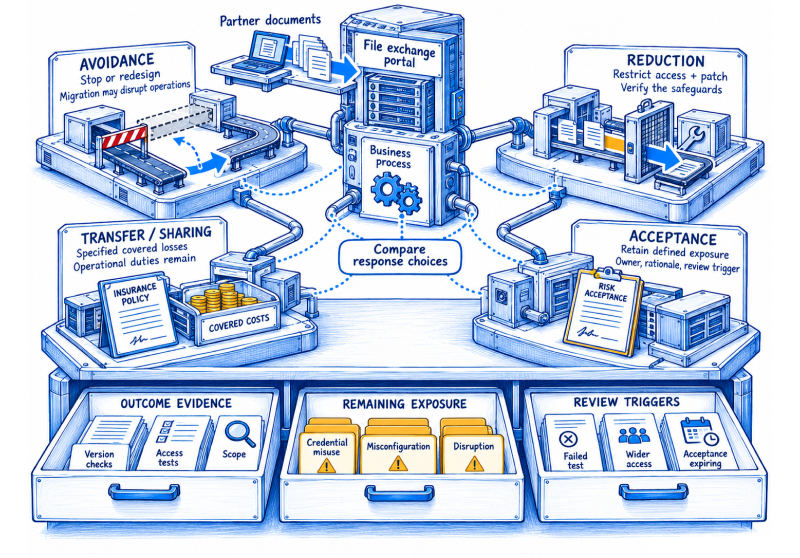
Risk mitigation strategies help organizations decide how to respond when a risk could affect business objectives, information, systems or operations. In cybersecurity, mitigation often means reducing exposure. Risk treatment is broader: avoid the activity, reduce the risk, transfer or share some consequences, or accept what remains.
A treatment choice is not always a mitigation action, and completing a task does not prove exposure fell. Leaders need to compare the responses and understand what each leaves behind.
Risk treatment is broader than risk mitigation
This article uses risk treatment for the full set of choices and risk mitigation for actions that reduce likelihood or impact. Avoidance, transfer and acceptance are treatment decisions, while monitoring helps establish whether any response remains appropriate.
Start with a scenario, not a broad label such as “vulnerability risk.” State what could happen, which system is involved, and the business consequence. Compare each option against that same scenario.
Compare risk mitigation strategies and treatment choices
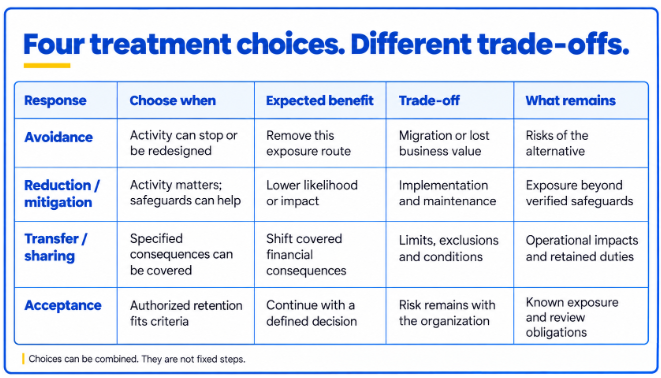
The four common responses are choices, not fixed steps. Select one by weighing risk appetite, business value, likely harm, safeguards, and the cost or disruption of each option.
Treatment response
Choose it when
Main trade-off
Risk avoidance
Stop or redesign the activity that creates exposure
May remove the exposure, but can disrupt a product or process
Risk reduction (mitigation)
Apply safeguards or change operations to lower likelihood or impact
Requires implementation, maintenance, and evidence that safeguards work
Risk transfer or sharing
Use insurance, contracts, or another arrangement to shift some consequences
Does not transfer every operational, regulatory, customer, or reputational impact
Risk acceptance
Retain a defined residual exposure with authorized approval
Leaves the risk in place and requires a clear rationale, owner, and review trigger
Avoidance fits when the activity is optional and exposure cannot be brought within appetite. Reduction fits when the activity matters and safeguards can change the risk. Transfer addresses specified consequences, not prevention. Acceptance retains known exposure and requires authority. Difficulty remediating a risk is not, by itself, a reason to accept it.
Responses can be combined: restrict access now, patch during a controlled window, and use insurance for specified covered losses. Record which action reduces exposure and which decision governs what remains.
Choose by comparing the trade-offs
Compare each response using the same assumptions: what business outcome is at stake, how exposed is it, what will the option change, what new cost or disruption will it create, and who may approve the remaining exposure? State uncertainty about asset ownership, threat activity or control coverage.
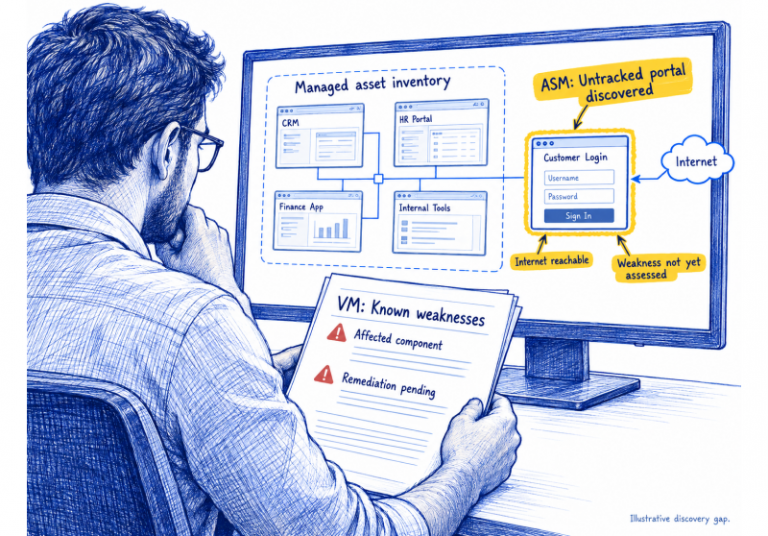
A vulnerability score or audit finding can identify an issue but does not determine treatment. CISA recommends using its Known Exploited Vulnerabilities catalog as an input to prioritization. Teams still need to confirm asset presence, reachability, business importance and working safeguards.
Worked example: an exposed file exchange portal
The following scenario is illustrative. An organization uses an internet-facing file exchange portal to receive documents from business partners. A security review identifies a vulnerability in the portal software. The system supports a time-sensitive process, so shutting it down indefinitely would interrupt operations. The risk scenario is specific: an attacker could exploit the exposed portal, access or alter files, and disrupt the process or expose information.
Compare the responses
Avoidance would mean retiring the portal or moving partners to another approved channel. That could remove the exposure, but migration takes time and may interrupt a process that still depends on file exchange. The organization should compare the security benefit with the operational impact and the readiness of an alternative.
Transfer could include checking whether an insurance policy or supplier contract covers relevant losses and response obligations. Those arrangements may help with some costs, but they do not prevent exploitation, keep the process available, or remove applicable duties. Transfer alone would not address the immediate technical exposure.
Acceptance would retain the portal’s current exposure. Because the system is internet-facing and the potential consequence includes information disclosure or process disruption, accepting the risk without additional safeguards would require a strong rationale and the right approval. An operational deadline is a constraint to manage, not evidence that the risk is acceptable.
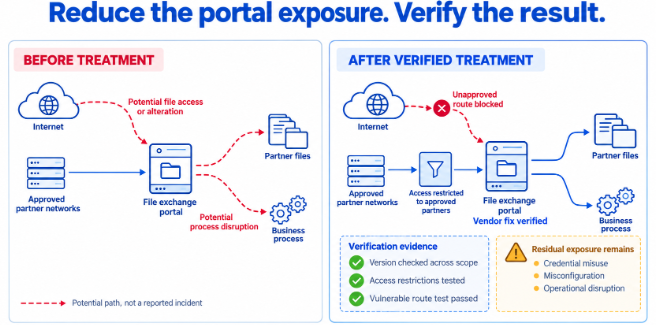
Reduction is the selected immediate response. The organization first restricts external access to approved partner networks where feasible, then applies the vendor’s fix through its change process. If a patch cannot be applied immediately, the temporary access restriction and monitoring reduce exposure while the team prepares the change. The longer-term decision to replace the portal can be assessed separately.
Verify what changed and reassess what remains
Before closing the mitigation action, the team checks that the fixed version is installed on every in-scope portal instance, confirms that the intended external access restrictions are active, and runs an authorized test to verify that the vulnerable route is no longer reachable. It also confirms the portal’s current inventory, partner access, and security logs. A completed change ticket is useful evidence of work performed; the version check and test results show whether the expected outcome was achieved.
The team then reassesses the risk using the same scenario. The vulnerability-related exposure should be lower if the fix and access restrictions are verified, but the portal can still face credential misuse, misconfiguration, or operational disruption. Those remaining concerns may need separate safeguards. If any instance remains unpatched, testing fails, or access becomes broader than intended, the mitigation is incomplete and the issue should be escalated or given a new treatment decision.
This example shows why a treatment decision needs both a trade-off and a test. The organization did not choose reduction because it is always the best response. It chose reduction because the portal still served a business purpose, immediate retirement would disrupt that process, and technical safeguards could be applied and verified. If those conditions changed, the decision should change too.
Set acceptance and transfer boundaries clearly
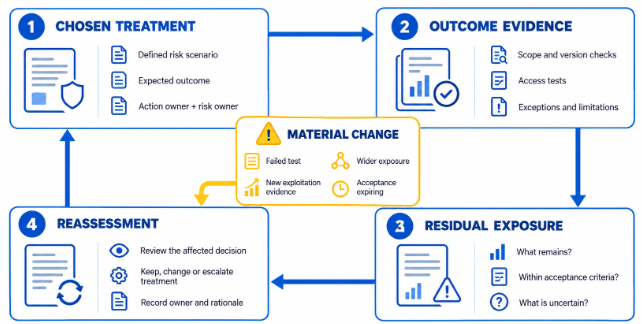
Acceptance is a governance decision, not a way to relabel an unresolved gap. Record the exposure retained, rationale, approving authority, safeguards, owner, and review trigger. The task owner may carry out actions; the risk owner remains accountable for the exposure. Report actual control coverage separately from approved exceptions and unresolved gaps. An exception explains a deviation; it does not make the control effective.
For transfer, check policy or contract terms against the actual scenario: exclusions, limits, notification deadlines, dependencies and incident responsibilities. The organization remains accountable for consequences and duties it has not transferred.
Keep the decision aligned with current conditions
Reassess when exploitation evidence changes, an asset becomes internet-facing, a control fails, a supplier or business process changes, or an exception expires. NIST’s CSF 2.0 ERM Quick-Start Guide supports monitoring, evaluation and adjustment across organizational units.
Tie monitoring to the choice: test safeguards after reduction, revisit assumptions behind acceptance, review changing terms behind transfer, and check that an avoided activity has not returned through a workaround.
A connected governance and risk view can help relate business context, exposure, controls, evidence, exceptions and remediation across existing tools. SPOG.AI’s GRC solution can support that visibility and follow-through; risk owners still make the treatment decision and approve residual exposure.
A useful treatment decision shows its trade-offs
Risk mitigation is one response within broader risk treatment. Compare what the organization can stop, reduce, transfer or accept, then choose what fits the business purpose and appetite. Explain the expected change, trade-off, and exposure that remains.
Make assumptions and outcome evidence visible, name the accountable risk owner, and set a reassessment trigger. This keeps the choice connected to the conditions it was meant to address.
Frequently asked questions
The common risk treatment responses are avoidance, reduction, transfer or sharing, and acceptance. In precise usage, mitigation refers to reducing the likelihood or impact of a risk.
No. Risk treatment is the broader set of response choices. Risk mitigation is one response focused on lowering likelihood, impact, or both.
Avoidance can fit when the activity is optional and the exposure cannot be brought within appetite at an acceptable cost. Consider the operational effect of stopping or redesigning the activity.
Applying a verified patch, restricting access, or improving recovery controls can reduce likelihood or impact. The organization should test whether the safeguards cover the intended systems and work as expected.
No. Insurance may cover specified financial losses under defined terms. It does not prevent an incident or remove every operational, regulatory, customer, or reputational consequence.
When an authorized decision maker understands the residual exposure, accepts it under governance rules, and records the rationale, safeguards, owner, and review trigger.
Yes. It can use controls to reduce exposure, transfer some covered financial consequences, and accept a narrow residual risk. Record what each part of the response is intended to do.
The scenario, affected assets or processes, options considered, selected response, expected result, trade-offs, accountable risk owner, action owner, evidence, residual exposure, approvals, and review triggers.
Compare current, reliable evidence with the expected outcome. Check the affected population, test the safeguard, record exceptions, and reassess the scenario rather than treating task completion as proof.
Review it at a defined cadence and after material changes, including new exploitation evidence, broader exposure, control failure, supplier or business change, or an expiring acceptance.
Technology writer and content strategist with 5+ years of experience, including work for a US-based B2B SaaS client and a cybersecurity solution. I create cybersecurity and GRC content, product documentation, and user guides that help technical teams and business leaders understand security capabilities and workflows. Currently working on Confluence documentations on vulnerability management, ITSM, incident management, and continuous control monitoring, alongside SEO and AEO content, and technology partner database development.