Frameworks
Getting Started With Cyber Risk Quantification: Key Concepts Explained
Cyber risk quantification expresses possible cyber losses in numerical terms, often money, for a defined scenario and period....
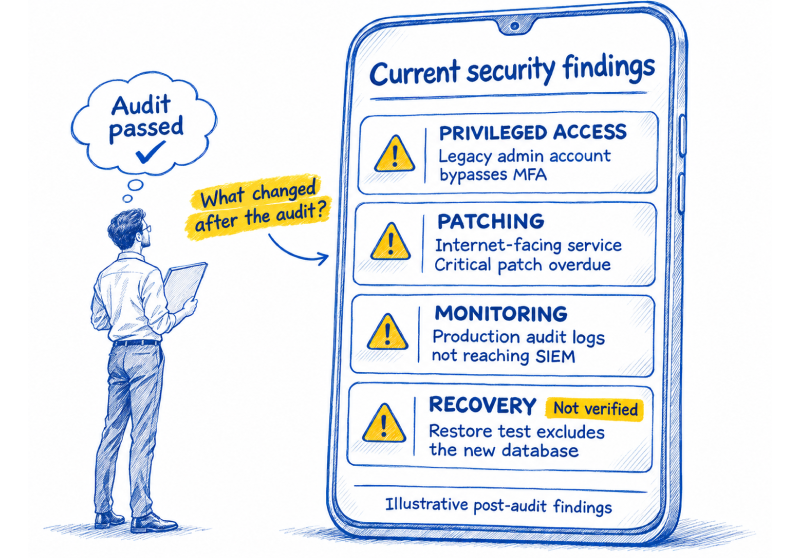
Organizations get stronger results when they connect each important requirement to a business asset, a credible attack scenario, an operating control and a verified outcome. An audit covers selected criteria, scope and period; it cannot prove that every attack path is closed.
Security teams can also deploy effective controls yet struggle to show that they cover all systems, users or obligations. The goal is to meet applicable obligations while directing effort toward exposures that could most harm the business, with evidence strong enough to support both decisions.
Compliance asks which legal, regulatory, contractual and adopted framework requirements apply, and what evidence demonstrates that they are met. Cybersecurity asks what could disrupt confidentiality, integrity or availability, and which safeguards can reduce the likelihood or impact.
Compliance alone can create false assurance: a policy may omit a cloud tenant, privileged account or acquired application. A security improvement may reduce exposure yet leave a reporting, retention or approval obligation unmet. One initiative can support both goals, but evidence for each conclusion may differ.
Current NIST guidance integrates cybersecurity risk with enterprise risk management and incident response. Its June 2026 ransomware profile spans governance, protection, detection, response and recovery. Prevention matters, but readiness to contain and recover belongs in the same decision. NIST IR 8286 Rev. 1 · NIST SP 800-61 Rev. 3 · NIST IR 8374 Rev. 1
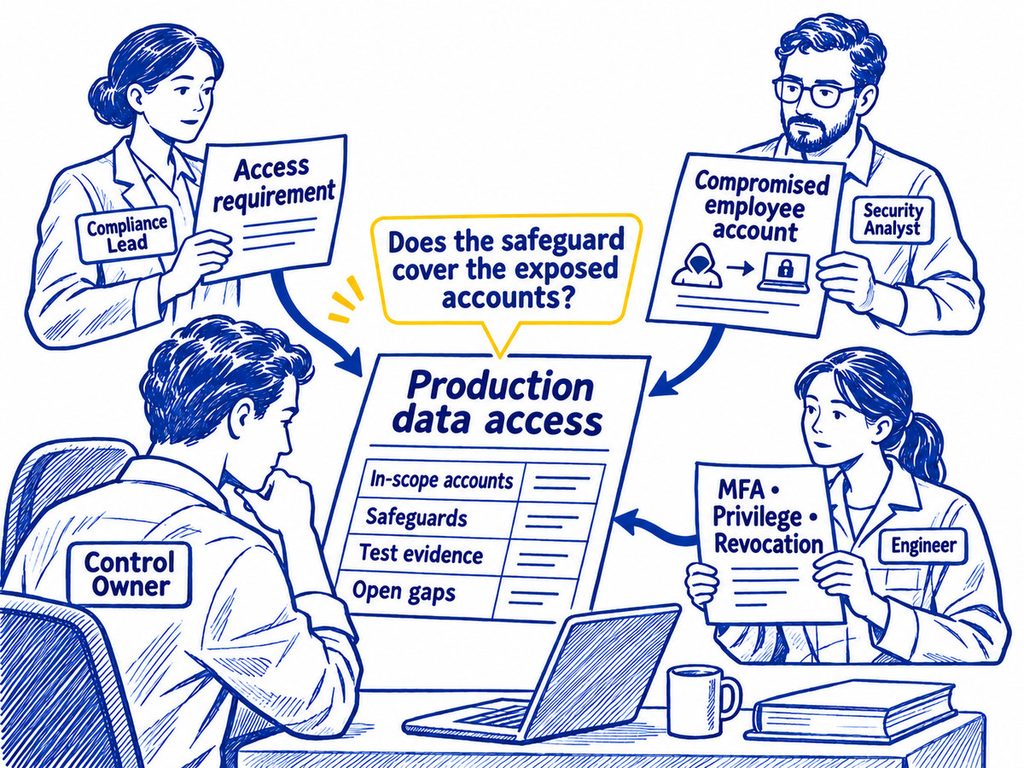
A requirement becomes useful when teams translate it into a testable security outcome. Identify the system, data or process in scope, a credible threat path, the safeguard intended to interrupt it and the evidence that can test the result.
An access-control requirement might map to identity proofing, role assignment, privileged access, logging and timely revocation. If an attacker uses a compromised employee account to reach production data, ask whether multifactor authentication covers in-scope accounts, privileged rights are isolated, unusual access is detected and owners remove access after role changes.
This chain gives teams a common working record:
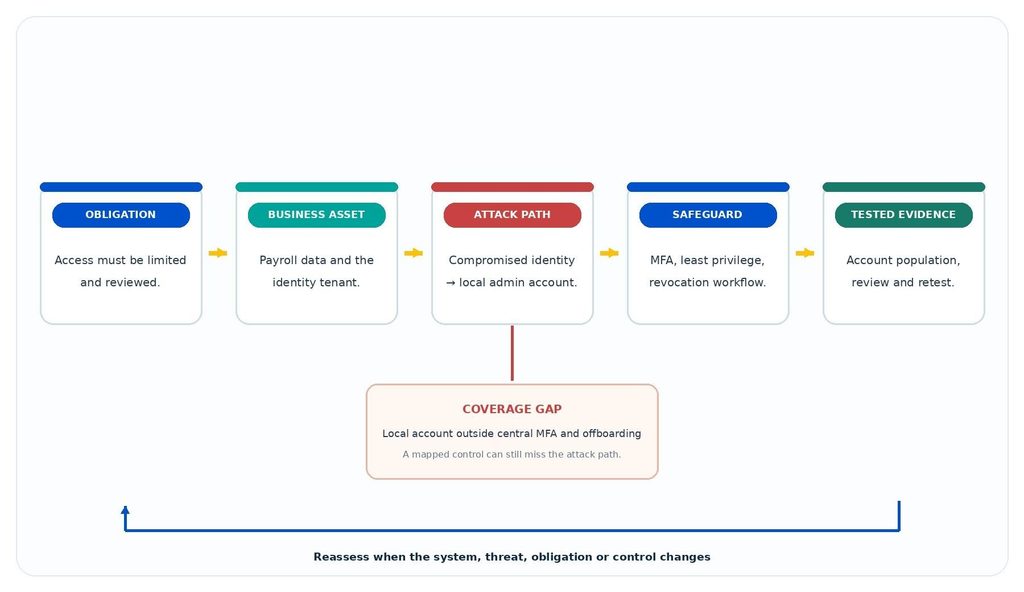
Requirement or commitment → business asset → attack scenario → control objective → technical and procedural safeguards → evidence and test → accountable decision.
Mapping a requirement to a control shows intent, not whether the safeguard covers the exposed population. A vulnerability finding shows technical severity, not necessarily its effect on a critical workflow or obligation. Connecting the records shows where the two views agree, where they diverge and who must act.
Teams face more findings than they can resolve at once. Ranking only by audit deadline can leave exploitable weaknesses open; ranking only by severity can delay a binding obligation. Consider both obligation pressure and security exposure.
| Situation | What to examine | Typical decision |
|---|---|---|
| Binding duty, low immediate exposure | Deadline, reporting or retention requirement, compensating safeguards | Assign an owner and meet the duty on time; document why the risk can wait if policy permits. |
| High exposure, no direct audit finding | Reachability, exploitability, asset importance, likely business impact | Escalate remediation based on exposure; do not wait for a compliance gap to appear. |
| High pressure and high exposure | Affected population, attack path, deadline, containment options | Coordinate urgent treatment, executive oversight and evidence preservation. |
| Low pressure and low exposure | Monitoring signals, scope changes, compensating controls | Track, validate assumptions and set a reassessment trigger. |
This is a decision aid, not a universal score. Internal risk acceptance cannot waive binding duties. Consult legal and compliance owners on interpretation and record the authority for exceptions or alternative treatment.
A policy, certificate or completed task does not establish that a safeguard works for the right systems and people. Good assurance records what was observed, when, across which population, and what the evidence cannot prove.
For access reviews, include direct and inherited privileges, give reviewers context to challenge access, and verify removals in the target system. For patching, track affected assets and confirm the deployed state; ticket closure does not prove a vulnerability is no longer exploitable. For backups, record whether a restore test recovered the required business process.
Keep coverage, operation and effectiveness distinct: scope, execution and risk reduction are different questions. A green result in one should not conceal failure in another. Label missing or stale evidence unknown until a suitable test resolves it.
No control set guarantees that attacks will not occur. A balanced program reduces entry paths and limits damage when prevention fails. Connect control owners with detection, response, notification, continuity and recovery responsibilities.
An incident exercise should test dependencies: who isolates an identity or workload, who can suspend a process, how teams preserve evidence, which obligations drive notification and how leaders confirm restored systems are safe. NIST’s 2025 incident-response guidance integrates response with risk management; its 2026 ransomware profile includes prevention and recovery.
The exercise should expose conflicts early: containment may interrupt a time-critical process, retention duties may shape log preservation, and recovery may depend on an untested identity provider or supplier. Record constraints, assign owners and fund changes that reduce unacceptable exposure.
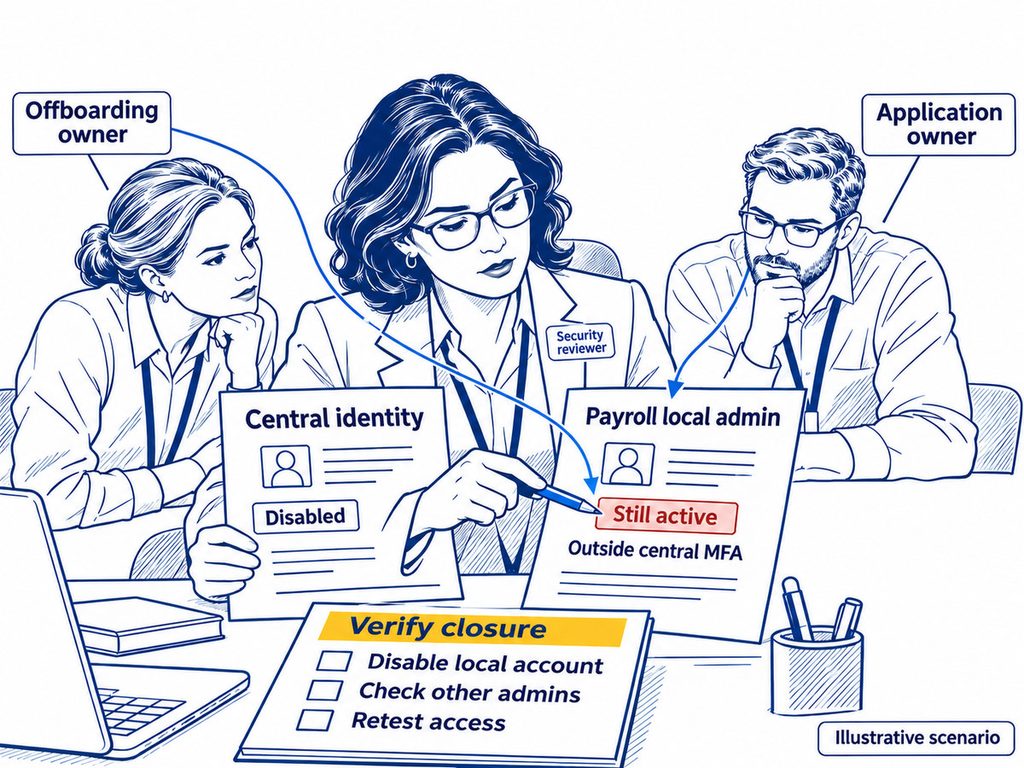
Illustrative scenario: A company’s payroll platform uses a cloud identity provider and a separate application-level administrator account. Its access policy satisfies a documented requirement, but testing finds that the local account does not use the organization’s central multifactor authentication policy. A departing contractor’s central identity was disabled, while the local account remained active.
The compliance view records the scope and failed revocation test; the security view identifies a path into a sensitive process. Rather than marking the requirement green when a ticket closes, the team disables the account, checks for other local administrators, verifies access, updates offboarding and tests the next departure. The risk owner reviews residual exposure and temporary safeguards.
One finding can require both assurance correction and security response. Retain the initial failure, scope, owner, deadline, interim safeguards, correction and validation evidence. This lets leaders distinguish a verified fix from a ticket reported as closed.
SPOG’s GRC solution connects requirements, controls, ownership, evidence and exceptions. Continuous Control Monitoring supports ongoing assessment of control coverage and effectiveness. Exposure Management adds business context to priorities, while Remediation coordinates accountable action and validation.
These capabilities support shared context; they do not replace threat modeling, legal interpretation, incident command or professional judgment. Teams still need clear owners, sound control design and evidence that supports each conclusion.
Balance means meeting applicable obligations while testing whether safeguards address real attack paths, business impact and recovery needs. Start with a critical process, connect requirements to a threat scenario and test the controls that matter. Keep failures visible, assign decisions and verify that remediation changes the outcome.

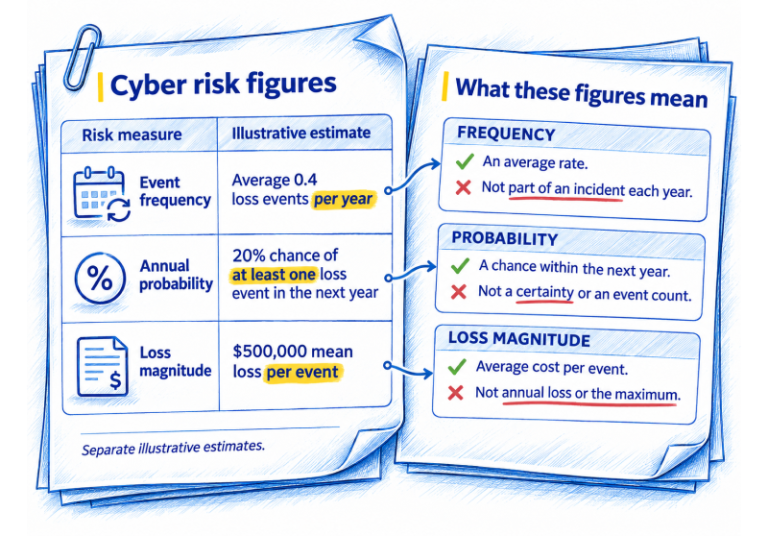
Cyber risk quantification expresses possible cyber losses in numerical terms, often money, for a defined scenario and period....
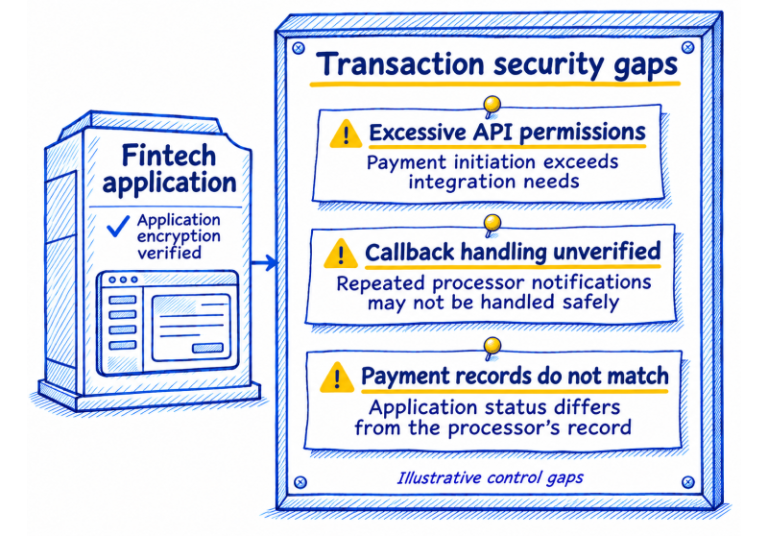
Fintech startup security must protect money, identity and financial data across live workflows enterprise buyers depend on. A...
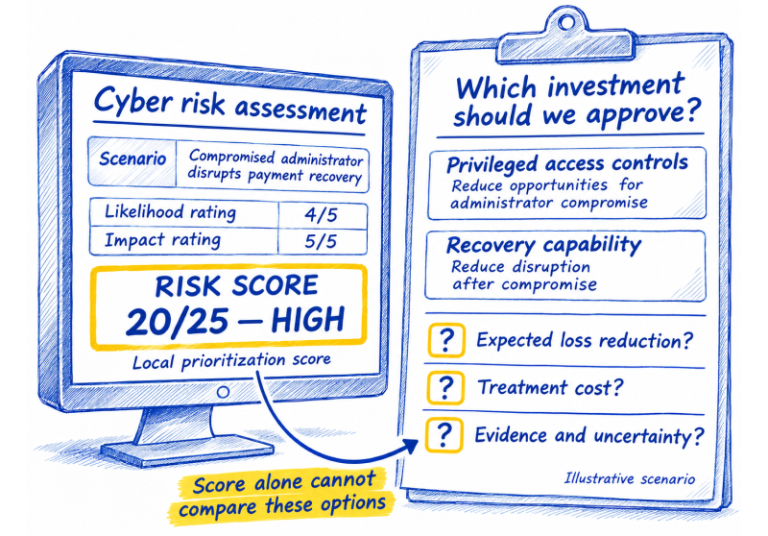
The right cyber risk quantification method is the one that produces evidence a decision-maker can use without implying...