Frameworks
Getting Started With Cyber Risk Quantification: Key Concepts Explained
Cyber risk quantification expresses possible cyber losses in numerical terms, often money, for a defined scenario and period....
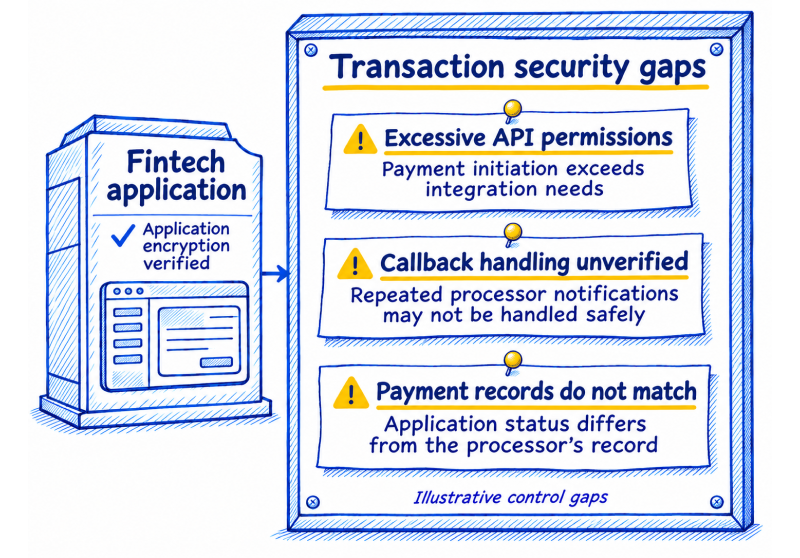
For a fintech startup, “enterprise-ready” is not a bigger policy library. It is confidence that the product can preserve transaction integrity and customer trust as it connects to enterprise identity providers, payment processors, banking partners, cloud platforms and internal finance systems.
That assurance starts with the real transaction path. Trace what a user or system asks the product to do, which identities and interfaces authorize it, how the partner responds, where the resulting state is recorded, and how a mismatch is found. Then assign an owner and an observable control at every boundary.
Enterprise review teams need to know whether controls cover the workflow they plan to use. A fintech may secure its cloud yet leave risk in a privileged support account, over-scoped API key, payment webhook or reconciliation process. These seams cross company boundaries; “data is encrypted” does not explain who can initiate, change or confirm a transaction.
Think in outcomes. Could an attacker initiate a transfer, change a beneficiary, replay a callback, alter a payout file or suppress an alert? Could a request be duplicated after a timeout? Could both startup and processor assume the other will notify the customer? Assess which failures could materially affect the buyer and test the safeguards that interrupt them.
Choose one workflow: business onboarding, payee creation, payout authorization or settlement reconciliation. Map each step from the initiating user or system through the application, identity layer, API gateway, financial partner and ledger. Include asynchronous events, admin tools, support access and exception queues.
At each handoff, record actor, credential, permitted action, exchanged data, validation, system of record, failure response and owner. Mark partner-dependent controls and evidence. Contract terms allocate responsibility; operational procedures detect failures and route escalation.
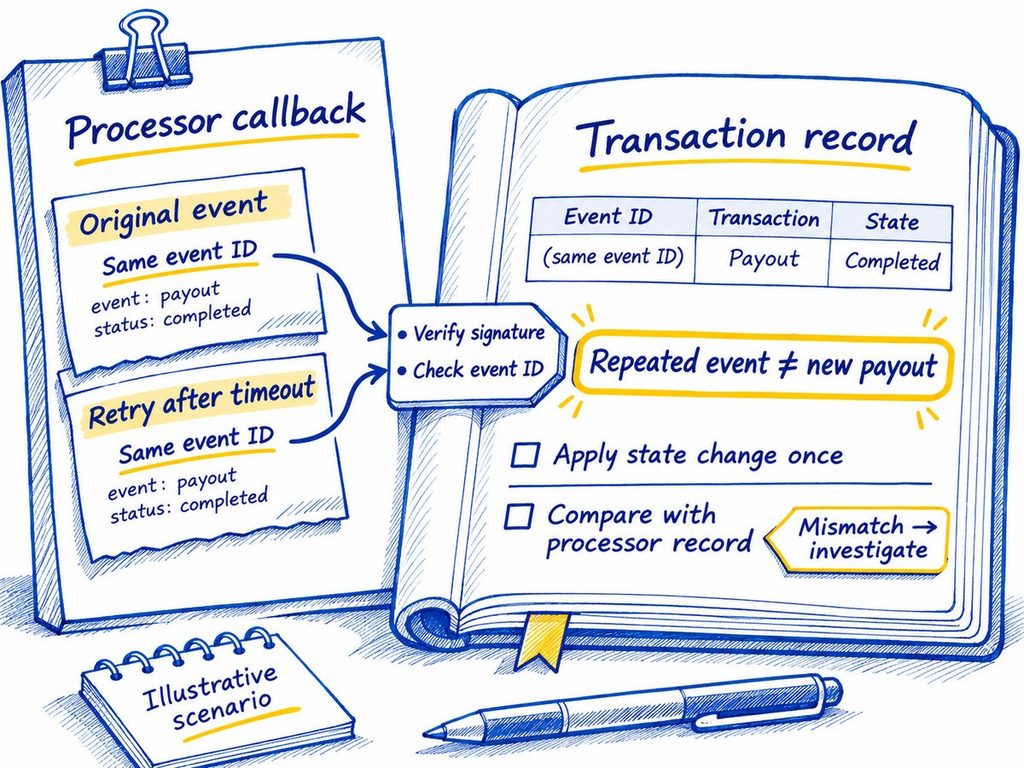
Illustrative example: a processor retries a payout notification after a timeout. The product must distinguish a repeated notification from a new instruction, preserve an auditable event trail and reconcile the payment state before it reports completion. Design the control around the consequence—duplicate movement or misleading status—not around a generic “API security” checkbox.
Apply least privilege to people and workloads. Separate workforce, customer and machine identities. Give integrations narrow scopes, an owner, a rotation or expiry process and a tested revocation path. Protect admin functions with strong authentication, limit standing production access and review emergency access.
Authentication alone does not authorize a transaction. Validate the business context at the point of action: who requested it, what account or beneficiary it affects, what limit applies, which approval is required and whether the request is fresh. For machine-to-machine flows, validate signatures or equivalent trust mechanisms, audience and scope; add replay resistance and idempotency where the workflow requires them. Log rejected and exceptional actions as well as successful ones.
Keep credentials out of code and logs, and ensure secrets can be rotated without an improvised production change. A practical integration inventory should show owners, environments, permissions, data types, partner contacts, dependencies and last review date. SPOG’s Exposure Management solution can be relevant where teams need to connect exposures with assets, business context and accountable action.
Encryption protects traffic, not transaction integrity by itself. Use explicit state transitions, boundary validation, protected audit records and controls that prevent one event from becoming two instructions. Restrict changes to transaction metadata, ledger records, limits and reconciliation rules.
Reconciliation is a security control as well as an accounting activity. Define which records are authoritative, how often the startup compares its internal state with partner or bank records, which mismatches trigger investigation, and who can approve adjustments. Preserve source references so an operator can reconstruct the instruction, partner response, state change and resolution. Test edge cases such as delayed settlement, partial failure, reversal and duplicate events.
SPOG’s Continuous Control Monitoring solution may support ongoing assessment of defined controls when the relevant evidence systems are connected. It does not replace transaction-level validation or the finance and engineering owners who interpret exceptions.
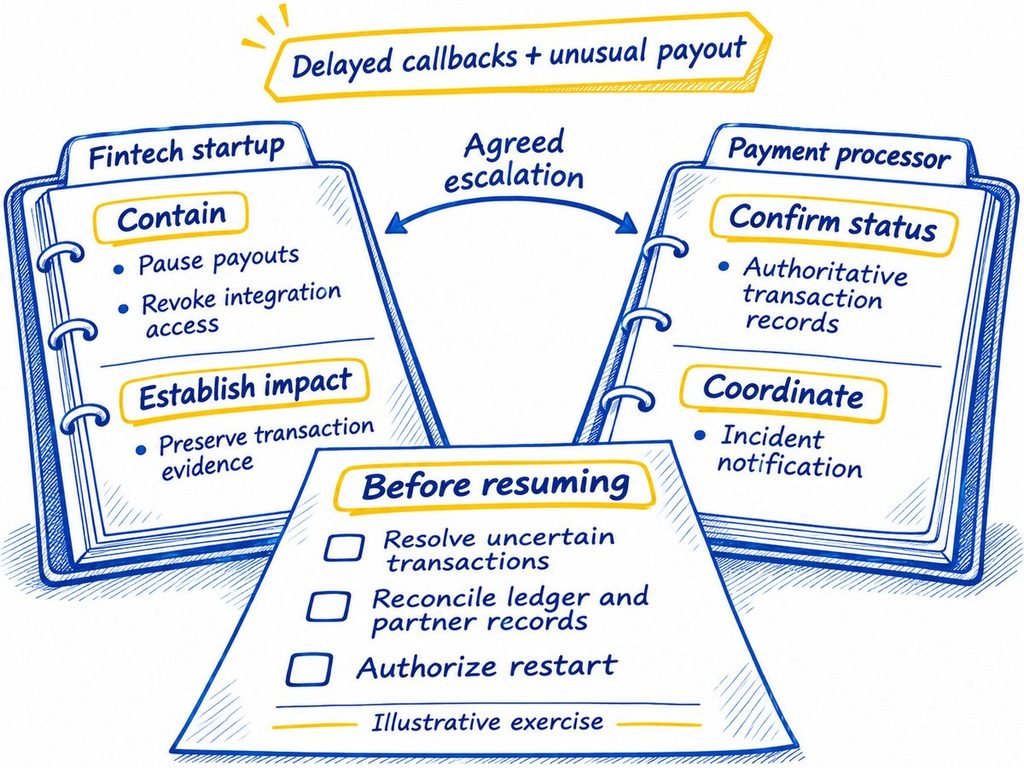
Build response around decisions, not just contacts. Name who can suspend integrations, revoke credentials, pause payouts, preserve evidence, approve customer communications and restore processing. Agree partner notification triggers and when the response clock starts.
Test a scenario that forces teams to coordinate. For example, an unusual payout appears while the processor reports degraded status and the startup sees delayed callbacks. Can the startup determine which transactions are final, contain the integration without corrupting the ledger, explain customer impact and reconcile after recovery? NIST SP 800-61 Rev. 3, published in April 2025, frames incident response as part of cybersecurity risk management across preparation, detection, response and recovery, not as a standalone document exercise.
Use the exercise to identify authority gaps, evidence gaps, and recovery assumptions. Track each corrective action to a named owner and verify closure. SPOG’s Remediation solution provides a relevant model for governing accountable follow-up and checking outcomes; teams still make the operational and customer-impact decisions.
Enterprise buyers need qualified, scope-specific answers. Describe the product, deployment, data and period covered; show the transaction flow and shared responsibilities; identify partner dependencies; and link claims to evidence. State exclusions. Independent reports support assurance only when their scope fits the product and use case.
Keep one controlled source for customer-facing security answers. Link each important statement to an owner, supporting evidence, review date and qualification. Route novel questions—such as support access from a new region or a customer-specific settlement flow—to the right technical or legal owner. Avoid promising a control because a roadmap item or partner commitment sounds likely.
SPOG’s GRC solution can help connect requirements, risk ownership, controls and evidence; use it as governance support rather than a substitute for legal interpretation or control testing. A broader SaaS startup security readiness guide covers general buyer assurance, while SPOG’s fintech compliance guide treats activity- and jurisdiction-specific compliance. This article focuses on securing the operational transaction path.
Before enabling an integration, have product, security, engineering, finance and partner owners walk through one transaction. Confirm authorization, failure behavior, logs, reconciliation ownership, incident escalation and recovery. Resolve assumptions before customer use.
Then revisit the controls when the product adds a new rail, partner, identity flow, data type, geographic market or payout capability. NIST IR 8286 Rev. 1, published in December 2025, emphasizes connecting cybersecurity risk decisions to enterprise objectives. For a fintech startup, that means expressing a technical weakness in terms of affected transaction, customer impact, financial exposure and decision owner—not just a scanner severity.
Fintech startup security is a property of the live operating model. A startup earns confidence when it can show where a transaction can fail, which control limits the consequence, who responds, and how the team knows that the account is reconciled and safe to resume.

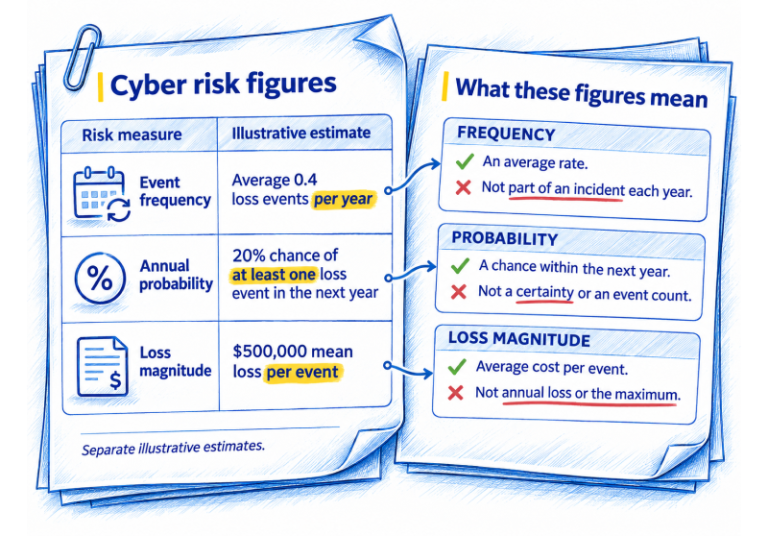
Cyber risk quantification expresses possible cyber losses in numerical terms, often money, for a defined scenario and period....
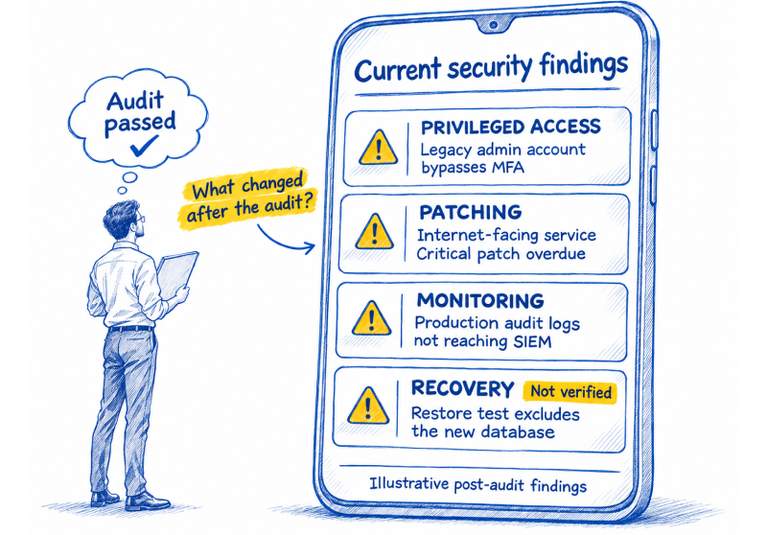
Balancing security and compliance to prevent cyberattacks requires more than passing an audit or buying another security tool....
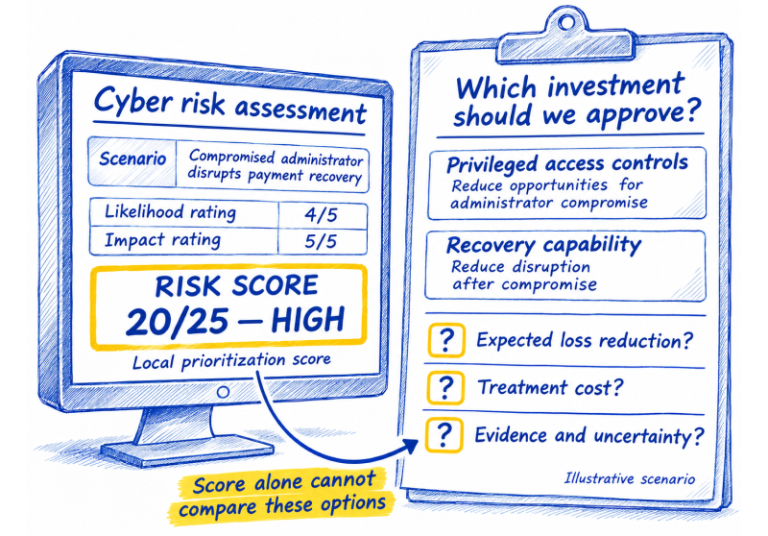
The right cyber risk quantification method is the one that produces evidence a decision-maker can use without implying...