Frameworks
Getting Started With Cyber Risk Quantification: Key Concepts Explained
Cyber risk quantification expresses possible cyber losses in numerical terms, often money, for a defined scenario and period....
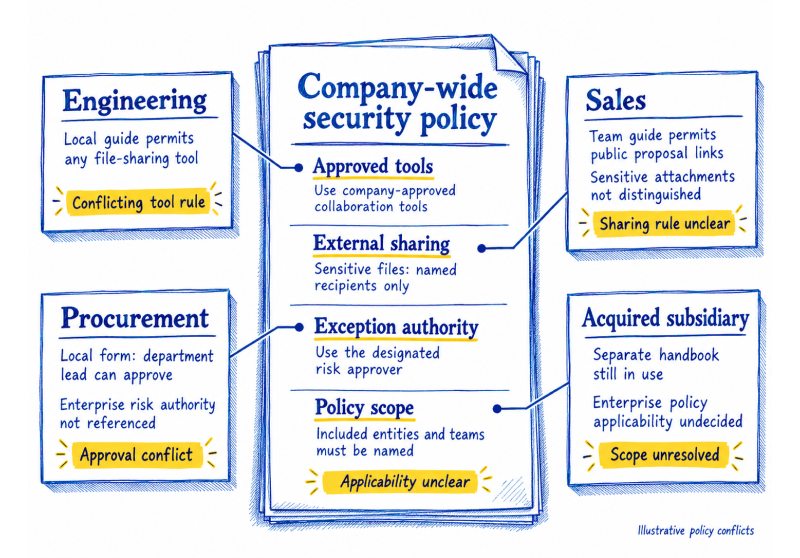
As organizations grow, security expectations often spread across onboarding guides, procurement forms, engineering standards, contracts, and audit responses. Each document may make sense on its own; together, they can leave employees unsure which rule applies or who can approve an exception.
Avoid one oversized document. Establish a company-wide baseline, define its boundaries, and add supporting direction only where teams, systems, or jurisdictions need it.
A company-wide information security policy should reflect the organization that will follow it. Before drafting, map the legal entities, business units, locations, workforce types, information categories, critical applications, infrastructure, and important suppliers that fall within its reach. The purpose is to make scope explicit, not recreate an inventory.
Ask where the organization collects, creates, uses, stores, shares, and disposes of information. Include data handled on paper, in SaaS platforms, in cloud environments, by contractors, and by third parties acting on the organization’s behalf. Consider operational technology or customer-managed environments when they affect the organization’s security responsibilities.
Write the policy boundary so a manager can apply it. “All company information” may sound comprehensive but can obscure who owns a system or whether a subsidiary is covered. Name the included entities and workforce groups, then state how newly acquired teams, new locations, and newly adopted platforms enter scope. If an exclusion is necessary, explain its rationale and identify who has authority to approve it.
NIST’s current Cybersecurity Framework reference tool describes organizational policy as established from the organization’s context, strategy, and priorities, then communicated and enforced. Its GV.PO-02 outcome calls for updates when requirements, threats, technology, or organizational mission change. The framework is a useful design reference; it does not replace legal analysis or sector-specific obligations. NIST’s CSF reference tool was updated in September 2025.

A single policy should establish expectations across the organization. Supporting standards or addenda can address real differences, such as stricter obligations, technology-specific safeguards, or local operating conditions. This keeps common requirements consistent without pretending every team works the same way.
For example, a global company may set one enterprise rule for protecting customer and employee data. A regulated business unit may need an additional control schedule, and an engineering group may need a standard for source code and deployment access. Those additions should point back to the enterprise policy and clarify what is different, why it applies, and who owns it.
Use an applicability matrix before drafting. List each group or environment, relevant requirements, owner, and supporting document. This exposes gaps and duplication. If two documents conflict, state which one governs and who resolves the issue.
A policy is management direction. It states required outcomes, who is accountable, and the authority for decisions. It should not read like a technical configuration guide. Keep detailed settings, work instructions, and platform-specific steps in documents that technical owners can update without rewriting leadership’s intent.
Use direct, testable language. “Employees must use approved collaboration tools for company information” sets an expectation. The supporting standard can define approval criteria and data-handling limits. A procedure can explain how a team requests a new tool or reports a concern. Avoid vague wording such as “appropriate security” unless the policy identifies who decides what is appropriate.
Separate mandatory requirements from guidance. Reserve “must” for obligations the organization intends to enforce. Label examples and recommendations as guidance, so readers do not confuse optional practices with approved rules. Define terms that teams may interpret differently—such as sensitive information, privileged access, approved tool, and security incident—using the organization’s actual data and technology categories.
The policy should address subjects that matter to the organization, not reproduce a generic checklist. Common areas include acceptable use, access, information handling, remote work, cloud and software use, supplier access, incident reporting, continuity, and workforce responsibilities. Current developments such as generative AI use may require explicit direction on what information employees may enter into external tools, who can approve use, and how teams raise concerns. Put fast-changing technical requirements in supporting standards, where owners can revise them more readily.
A policy can state that employees must report suspected incidents promptly, but it must also direct them to a usable channel and name who receives the report. Apply the same test to each requirement: who acts, who approves, who advises, and where a person goes when the normal route fails?
Assign an accountable owner for each subject area. Security may own the policy framework, while IT manages identity and endpoints, engineering governs development practices, HR handles workforce processes, procurement manages supplier terms, and business leaders own local adoption. Legal, privacy, and risk specialists should advise where the policy touches their remit. Record roles in plain language; do not rely only on an unseen RACI chart.
Define exceptions as controlled decisions. State what evidence a request must include, who can approve it, and when it expires. The policy itself should set the authority and minimum conditions; a separate exception procedure can hold forms, escalation steps, and review mechanics. Avoid granting blanket discretion to a role without limits or visibility.
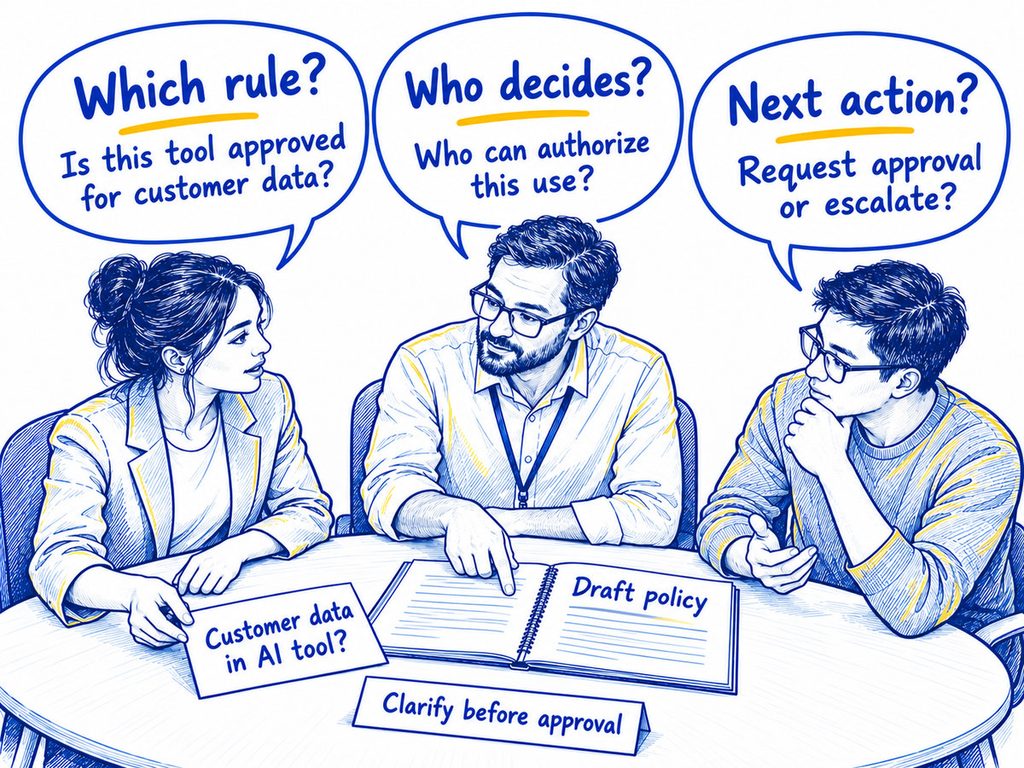
Review a draft with the people who must apply it. Ask a procurement lead how they would evaluate a new supplier, an engineer how they would request access to a production environment, and an employee what they would do after sending sensitive data to an unapproved tool. If their answers differ, the policy may have a scope gap, ambiguous term, missing owner, or unclear route.
A short tabletop review can test whether policy language works under pressure. Use a realistic case: a new unit brings its own systems, a supplier reports a suspected compromise, or a team wants to use an AI tool with customer data. Ask participants to identify the rule, decision-maker, and next action. This tests drafting clarity, not technical controls.
Then review for internal consistency. Check that the policy, employee handbook, supplier terms, incident plan, and technical standards do not contradict one another. Confirm that the policy’s commitments are feasible for the teams expected to carry them out. Avoid promising a universal control state if different environments require a justified variant.
Once approved, make the current version easy to find and tell people what changes in their work. A policy announcement should identify the effective date, audience, key actions, owner, and questions channel. Role-specific summaries can explain practical impact for administrators, developers, people managers, finance teams, and procurement.
Keep the employee-facing policy concise enough to navigate. Add a contents list for longer policies and link technical requirements to their current supporting documents. Acknowledgement can record receipt, but it does not establish that someone understood a requirement or can apply it. Reinforce important rules through onboarding and role-based training, then use questions and recurring confusion to improve the language.
SPOG’s GRC solution connects governance requirements with controls and evidence. Continuous Control Monitoring supports assessment of control coverage and effectiveness, while Remediation and IT & Operations support follow-through and operational context. Teams remain responsible for policy intent, approval, and applicability decisions.
Set a review date and identify events that should reopen a policy decision: a new business model, acquisition, significant data use, material technology shift, supplier change, incident, or change in applicable obligations. Not every event needs a full policy rewrite. The owner should determine whether the enterprise rule remains sound and whether a supporting standard or local addendum needs revision.
Keep the approved version, effective date, decision authority, and change history visible. Retire superseded copies so employees do not rely on outdated instructions. Most of all, treat policy review as a scope and applicability check: are the right teams covered, do they understand the requirement, and can they follow it in the environments they actually use?
A company-wide information security policy works when it is both consistent and specific enough to guide decisions. Set a common baseline, make boundaries explicit, assign clear authority, and test the language against real work before it goes live. That gives employees a rule they can follow and gives leaders a policy they can explain.

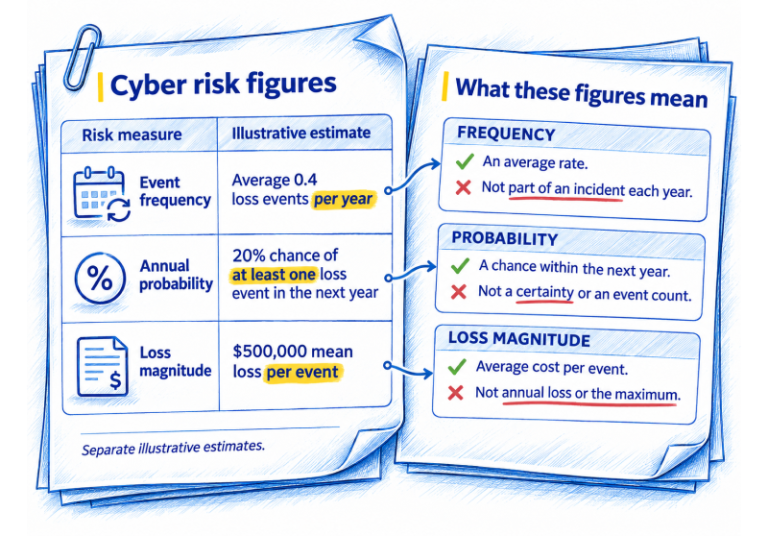
Cyber risk quantification expresses possible cyber losses in numerical terms, often money, for a defined scenario and period....
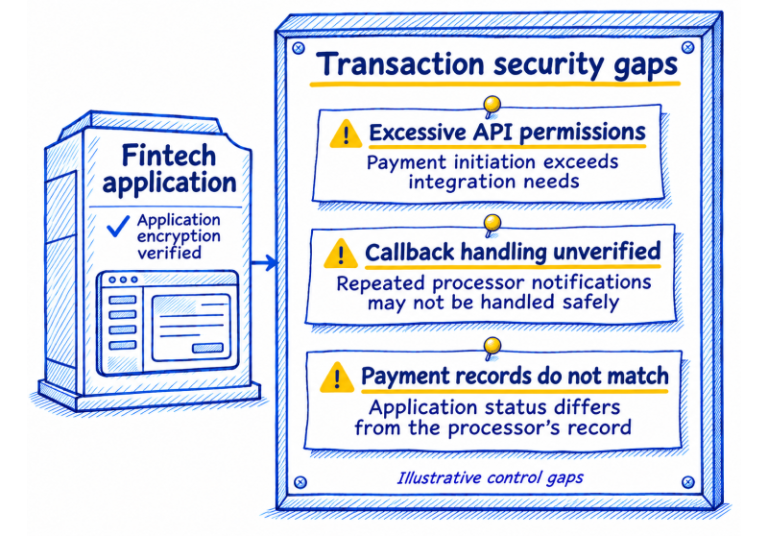
Fintech startup security must protect money, identity and financial data across live workflows enterprise buyers depend on. A...
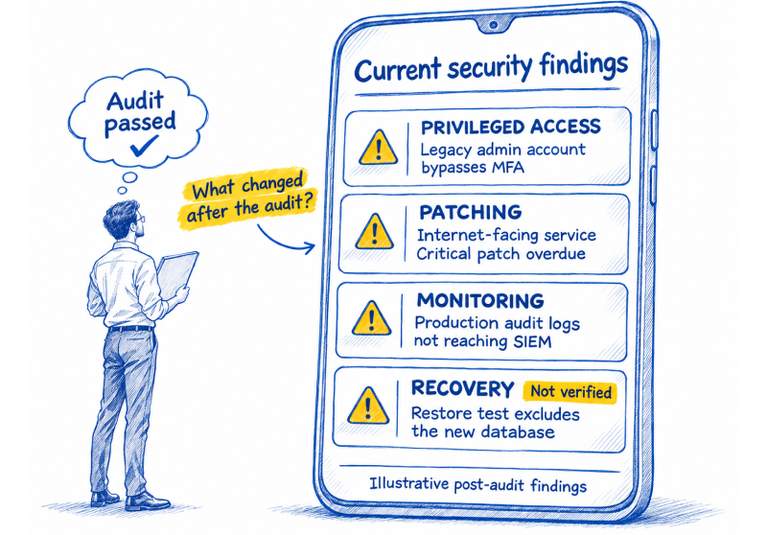
Balancing security and compliance to prevent cyberattacks requires more than passing an audit or buying another security tool....