Data Breach Prevention: Build Controls That Protect Data Before Attackers Arrive
A practical guide to reducing the paths attackers can use to reach sensitive information. Build prevention around data, identity, and access decisions your teams can verify, not a checklist that looks complete on paper.
Data breach prevention is often described as a set of controls: stronger authentication, encryption, patching, employee training, and monitoring. Those controls matter, but the list does not tell a security leader where a breach could begin, what information an attacker could reach, or which team would notice the first unsafe change.
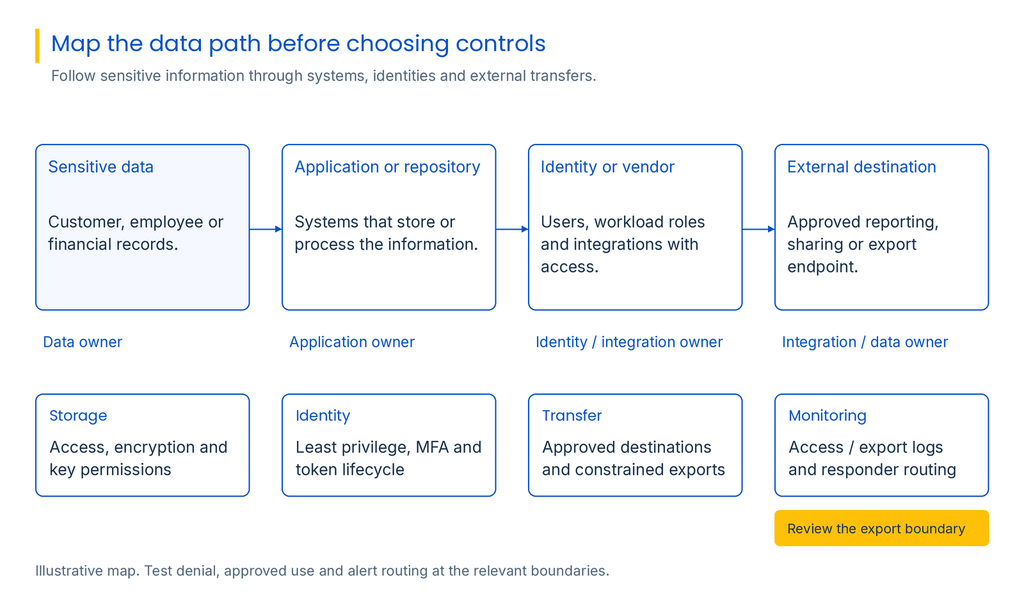
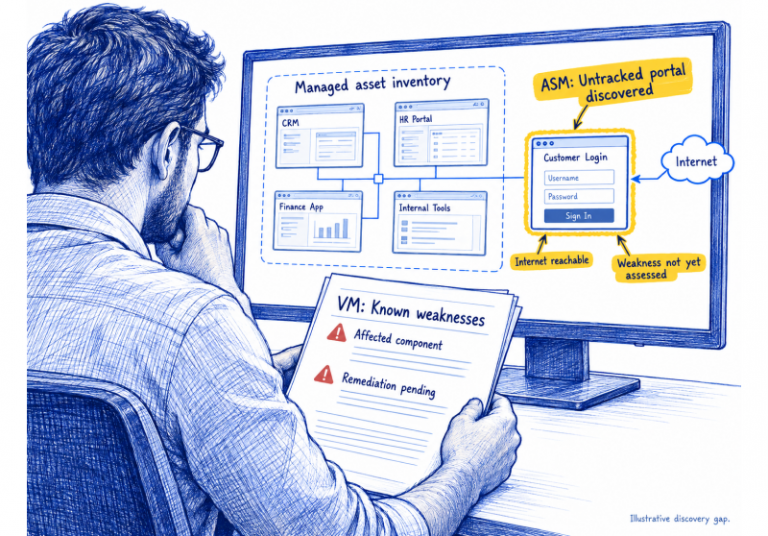
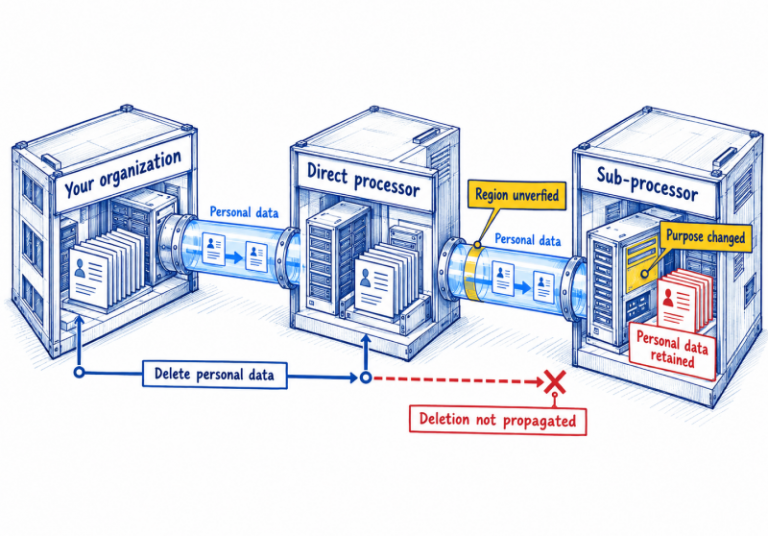
Start with a specific path through the business. Identify a sensitive data set, the applications that create or use it, the identities that can reach it, and the connections that move it elsewhere. Include cloud accounts, SaaS integrations, developer pipelines, support access, and third parties where they handle the same information. A data inventory that excludes an active integration is not a complete picture of exposure.
This changes the opening question from “Do we have MFA?” to “Which identities can access this data, through what path, and how would we know if that path changed?” It also makes prevention measurable: the team can test whether access is constrained, whether the event is recorded, and whether an accountable owner can act.
Reduce what each identity can reach
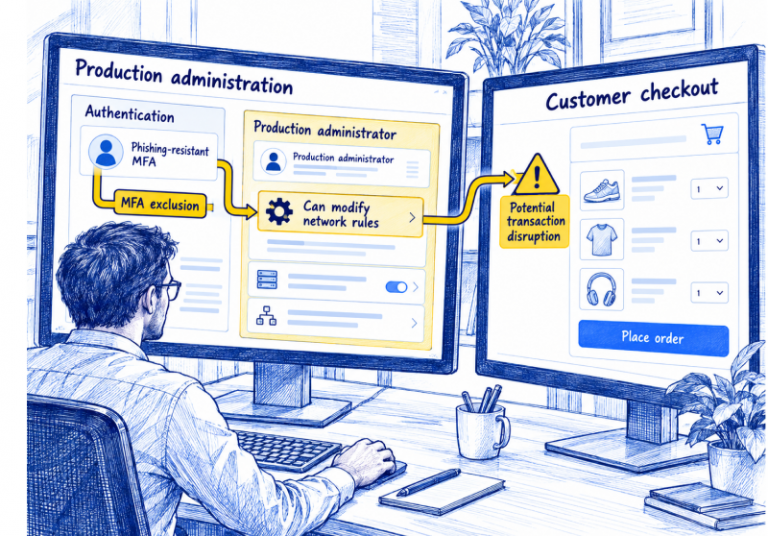
Access control is a breach-prevention measure only when it matches the task. Separate administrator, developer, support, and workload identities. Limit permissions to the required data, environment, and duration; remove dormant accounts and stale integrations; and review trust relationships as well as the permissions attached to a role. A narrowly scoped role can still create broad exposure if an unneeded application or external principal can assume it.
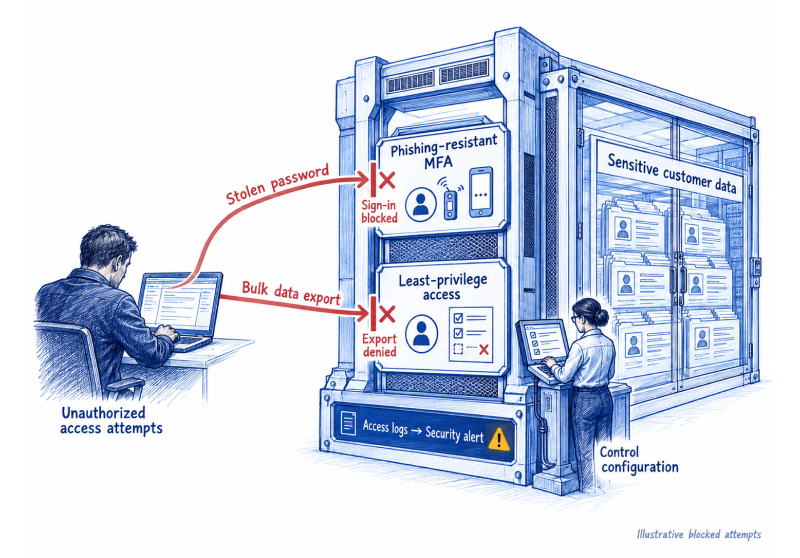
Require multifactor authentication for remote and privileged access, and move toward phishing-resistant methods for accounts that can reach sensitive data or change security controls. MFA makes account takeover harder, but it does not neutralize a stolen session token or excessive authorization. Use short-lived credentials where feasible, store secrets in managed systems rather than source code, and define a rapid revocation path.
CISA’s 2025 cloud identity guidance describes how stolen credentials, forged tokens, weak key management, and limited logging can undermine cloud defenses. Govern the full identity lifecycle: issuance, use, monitoring, rotation, and removal.
For data itself, classify what would materially harm the organization if disclosed or altered. Apply encryption and key-management controls proportionate to sensitivity, but do not treat encryption as a substitute for access decisions. Check who can read, export, share, or change retention on the data, including administrators who can alter the policy protecting it.
Close the routes that make exposure easy
Attackers need a route into an environment and a route to the data. Reduce unnecessary internet exposure, remove unused applications and endpoints, secure remote access, and segment systems so one compromised account cannot freely reach unrelated data stores. Apply security updates based on exploitability, reachability, and business impact; a patch program that counts closed tickets without confirming the affected asset is protected can leave the path open.
The software supply chain belongs in this map. Build pipelines, package registries, source repositories, and deployment credentials can become bridges into production. CISA’s September 2025 advisory on a widespread npm compromise called for dependency review, credential rotation, phishing-resistant MFA on developer accounts, and monitoring for anomalous outbound activity. These recommendations illustrate why developer access and build artifacts need protection alongside production systems.
CISA’s June 2025 Internet Exposure Reduction Guidance emphasizes identifying and reducing internet-facing exposure. For an enterprise, translate that into a recurring check of reachable assets, owner, business purpose, and the data or identity each can access. Unknown ownership should trigger investigation, not silent inclusion in an exception list.
Make suspicious data movement visible
Detection supports prevention when it can interrupt unauthorized access or transfer before impact expands. Record authentication, privilege changes, sensitive-data access, administrative actions, and outbound movement so responders can correlate activity across identity, endpoint, cloud, and application layers. Set retention for investigation and legal needs; test that responders can retrieve records during an incident.
Alerts should describe deviations that prompt action: a dormant account accessing new data, an application exporting outside normal workflow, or a privileged change disabling logs. Tune thresholds to business behavior, assign an investigator, and document the response.
Use threat intelligence and role-based exercises to refresh these tests. When an advisory changes likely access paths, check affected systems and credentials, tune detection, and rehearse how staff report activity and responders escalate.
Prepare for the breach you cannot prevent
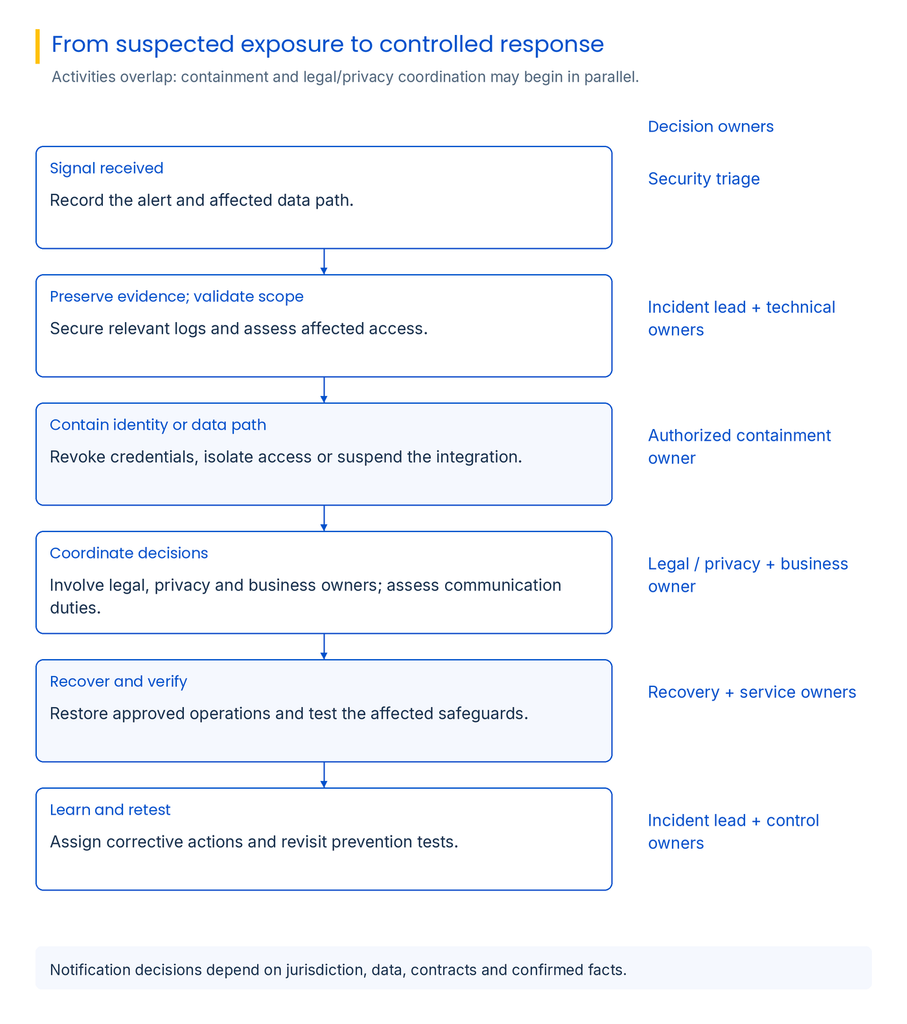
No control set makes a breach impossible. Preparation limits confusion when a prevention layer fails. Define who can isolate an account, revoke credentials, disable an integration, preserve evidence, and approve recovery. Include security, IT, legal, privacy, communications, and business owners in the response model. Notification duties depend on jurisdiction, data type, contracts, and circumstances, so involve legal and privacy leads early rather than relying on a generic clock in a playbook.
NIST’s April 2025 revision of SP 800-61 places incident response within broader cybersecurity risk management. Use that approach to keep readiness connected to routine governance: identify the business process and data at stake, prepare response capabilities, detect and analyze incidents, then contain, recover, and improve. A plan that has not been exercised is an assumption about coordination, not proof of readiness.
Rehearse decision points that are easy to overlook: Who has authority to suspend a revenue-critical integration? Can a vendor preserve relevant evidence? Which backups are isolated from the identity that might be compromised? What facts must be confirmed before customer or regulator communication? Capture gaps as owned actions and retest them, rather than treating the tabletop as a completed control.
Illustrative scenario: a routine integration changes scope
Imagine a finance team connects a new analytics application to a payroll repository. The integration is approved for summary reporting, but its token receives broad read access and the export destination is not monitored. No alert fires when the application begins retrieving individual records. The weakness is not simply “insufficient training” or “missing encryption”; it is a mismatch between approved purpose, technical permission, and observable behavior.
A review would identify the repository and data owner, confirm the integration’s exact scope, reduce the token to the approved fields, set an expiry and rotation owner, and record access and export events. The team would test that a request for unapproved fields is denied, that a permitted report still works, and that an unusual export reaches the responder. If an incident is suspected, it would revoke the token, preserve logs, and assess the data accessed before deciding on recovery and notification steps.
This scenario is illustrative, not a reported breach or SPOG customer example. It shows how a breach-prevention review can produce evidence: approved scope, denied access test, expected activity baseline, alert route, and a named response owner.
Turn controls into evidence teams can act on
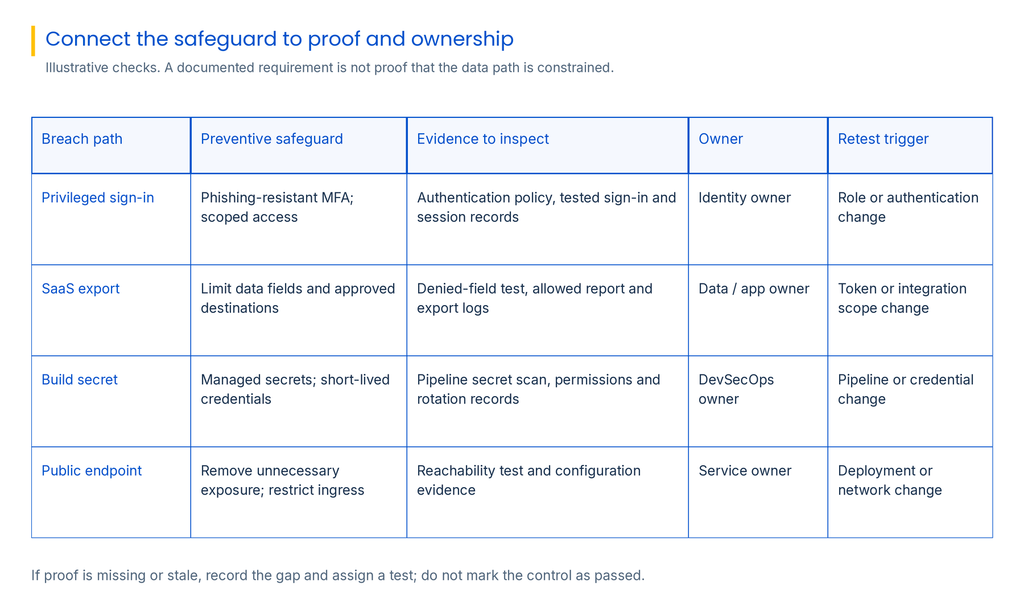
Prevention fails quietly when asset, identity, and control records sit in separate systems with no shared owner. A useful assurance view connects the data-bearing asset to its identities, safeguards, evidence, and open remediation. It should show not only that a policy exists, but whether the relevant asset is covered, when the evidence was observed, who is responsible, and what remains unresolved.
A cross-system assurance view is useful only when it preserves source, observation time, scope, and ownership. That lets reviewers distinguish an operating safeguard from a policy that exists but has not been tested against the data path.
A data breach prevention program is credible when it can show which sensitive data paths matter, which identities can reach them, which safeguards constrain access, and how teams would detect and contain a failure. Start with one high-impact data flow. Test its access boundaries, review its logging and response route, and assign an owner to every gap. Repeat when the data, integration, identity, or business purpose changes. That practice will tell you more than a control inventory that has not been challenged against the way information really moves.
Frequently asked questions
It is the set of technical and operational measures that reduce unauthorized access to, disclosure of, or alteration of sensitive information.
No. Prevention reduces likelihood and impact, while detection, response, and recovery limit harm when safeguards fail.
Prioritize sensitive data and business-critical processes, then map the identities, systems, and external connections that can reach them.
MFA reduces account-takeover risk, especially when phishing-resistant, but it cannot fix excessive permissions or compromised sessions.
No. Encryption protects confidentiality in defined states, but access policies, key permissions, sharing paths, and monitoring still matter.
Use a defined cadence and trigger reviews when data sensitivity, ownership, integrations, roles, or business purpose changes.
Correlate identity, privilege, data access, administrative changes, application activity, and outbound transfers with suitable retention.
Build systems hold code, dependencies, and credentials that can provide access to production environments and business data.
Decision owners, containment authority, evidence preservation, legal and privacy escalation, recovery criteria, and communication responsibilities.
Test access denial, expected business workflows, alert routing, credential revocation, evidence preservation, and recovery through exercises.
Technology writer and content strategist with 5+ years of experience, including work for a US-based B2B SaaS client and a cybersecurity solution. I create cybersecurity and GRC content, product documentation, and user guides that help technical teams and business leaders understand security capabilities and workflows. Currently working on Confluence documentations on vulnerability management, ITSM, incident management, and continuous control monitoring, alongside SEO and AEO content, and technology partner database development.