Frameworks
Getting Started With Cyber Risk Quantification: Key Concepts Explained
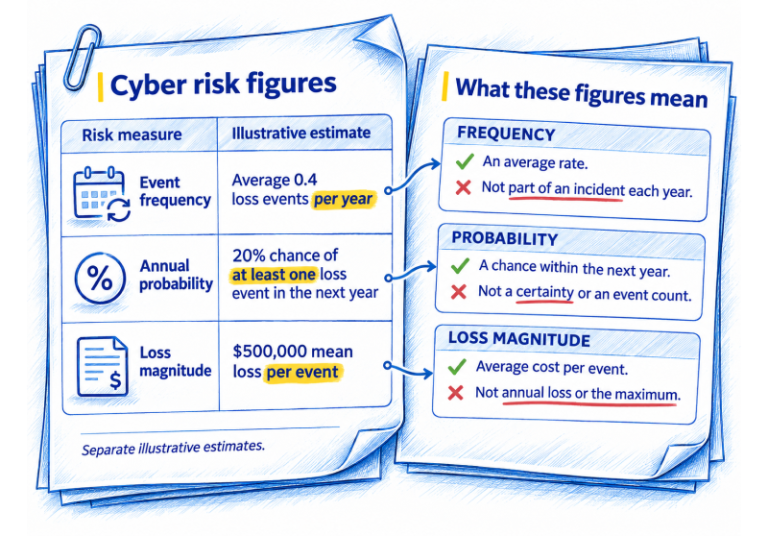
Cyber risk quantification expresses possible cyber losses in numerical terms, often money, for a defined scenario and period....
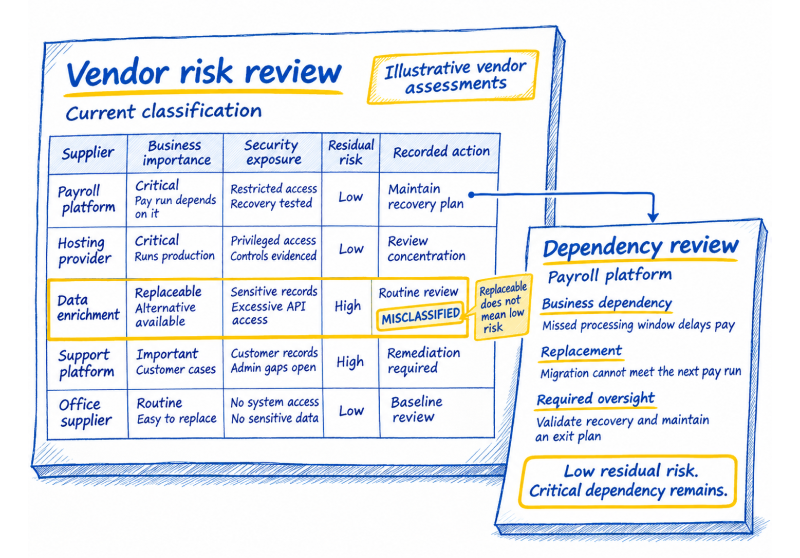
A cloud provider can be essential to a core workflow and still show strong, well-evidenced controls. A niche analytics vendor may be easy to replace yet have excessive access to sensitive records. Calling both “high-risk” obscures why each needs attention.
The practical answer is to classify business criticality and risk independently, then use both to shape approval, assurance, resilience and reassessment. That distinction also helps teams explain why a vendor is important, what remains uncertain and who can accept the exposure.
Criticality measures consequence and dependency. Ask what would happen if the vendor became unavailable, failed to perform, or had to be replaced. Consider the business process affected, customer impact, recovery tolerance, available alternatives and concentration in shared dependencies.
Risk measures the chance and potential severity of an adverse outcome in the relationship. Inherent risk describes exposure before safeguards; residual risk reflects the exposure that remains after relevant controls and other mitigations. Access, data sensitivity, threat conditions, control evidence, subcontractors and legal obligations can affect the assessment.
The labels therefore do not map one-to-one. “Critical” is not a synonym for “poorly controlled,” and “high-risk” does not necessarily mean “essential.” A relationship can be critical with low residual risk, high-risk but replaceable, both, or neither.
That distinction matters in today’s regulatory context. In September 2026, the European Banking Authority issued final third-party risk guidelines focused on arrangements supporting critical or important functions for covered financial entities. Separately, the European Supervisory Authorities published a formal list of designated critical ICT third-party providers under DORA in November 2025. Those regulatory scopes and designations do not automatically define every organization’s internal vendor tiers. EBA, 18 September 2026 · ESAs, 18 November 2025
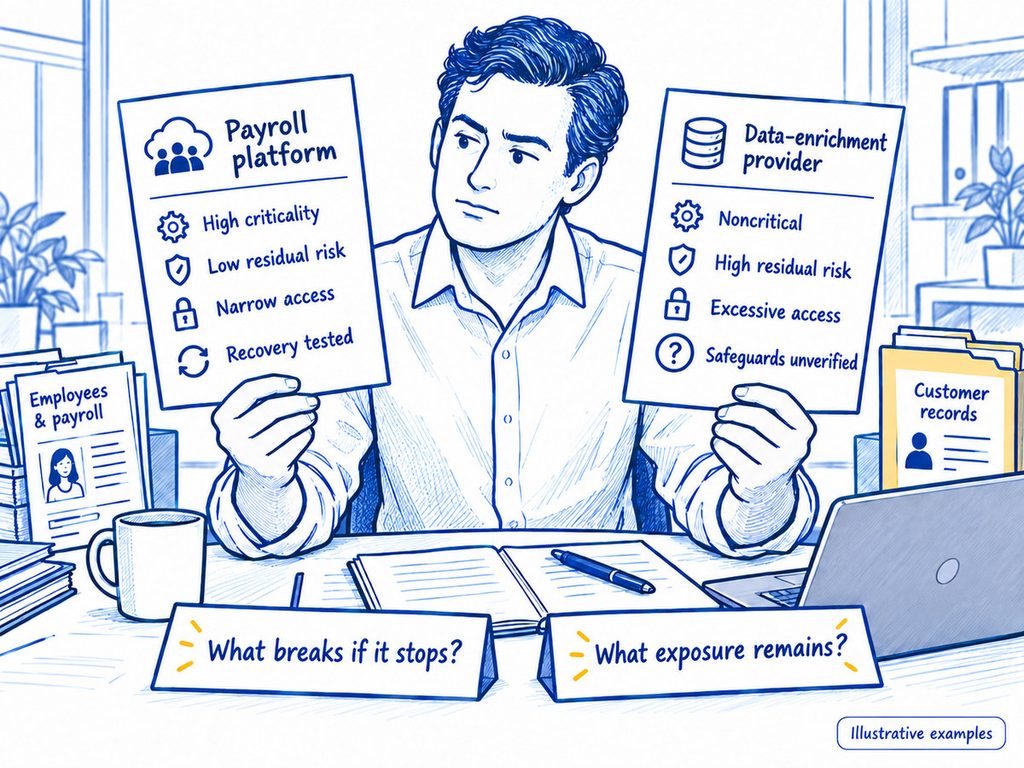
Do not collapse criticality and risk into one score before a decision-maker can see what each dimension means. A blended score can make strong control evidence appear to erase a fragile dependency, or make a vendor with a serious control gap look acceptable because the business can switch providers quickly.
First rate criticality using observable impact factors: process disruption, customer or safety impact, recovery time, substitutability and concentration. Then assess inherent risk based on intended use, access, data, jurisdiction, supply-chain exposure and applicable obligations. Review relevant evidence and safeguards to determine residual risk. Record the assumptions behind both ratings.
The resulting map is a decision aid, not a universal scoring standard. Its purpose is to make distinct responses visible.
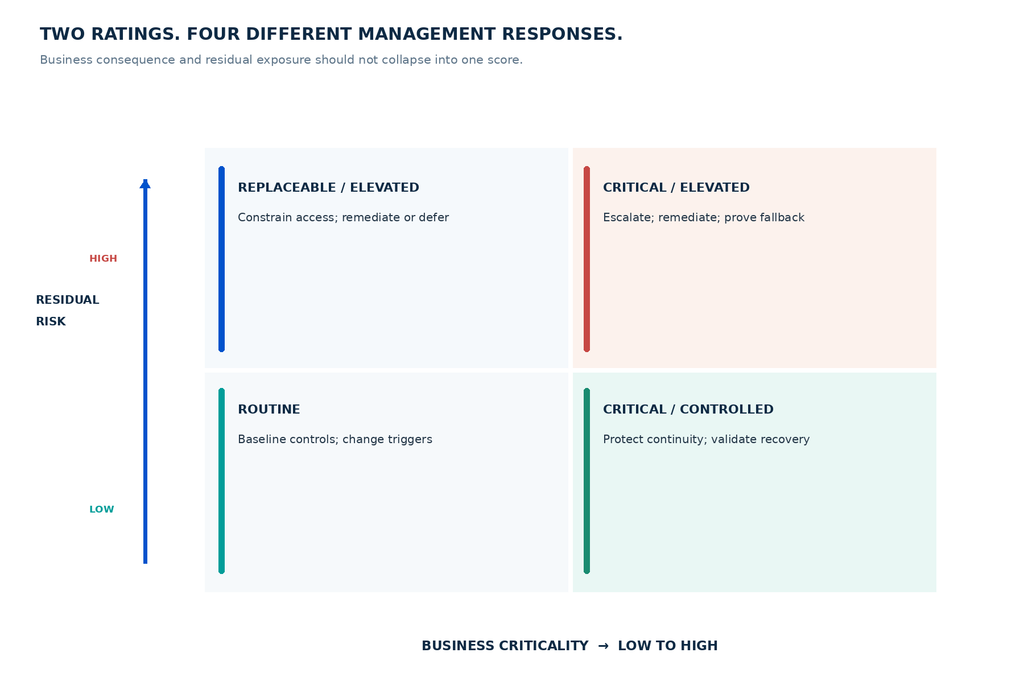
An illustrative example: a payroll platform may be highly critical because a missed processing window disrupts employee pay, yet have low residual risk when access is narrow, controls are evidenced and recovery has been tested. A small data-enrichment provider might be noncritical but high-risk if it receives sensitive records through an over-permissioned integration and cannot substantiate its safeguards. The examples are hypothetical; the ratings depend on each organization’s actual use and evidence.
Classification adds value only when it changes what the organization does. Use a concise set of actions tied to the two ratings rather than expanding questionnaires for every supplier.
| Classification | Management response |
|---|---|
| Critical, low residual risk | Maintain continuity and exit plans; validate key controls and recovery evidence; review dependency and concentration changes. |
| Critical, elevated residual risk | Require accountable executive or risk-owner review; set remediation conditions; strengthen incident coordination, fallback and transition readiness. |
| Replaceable, elevated residual risk | Limit data and access; condition or defer use until material gaps close; define monitoring and a practical replacement path. |
| Routine, low residual risk | Apply baseline terms and a proportionate review; reassess when scope, access or data changes. |
These are response patterns, not mandatory labels. A single material weakness can justify escalation even if other indicators look favorable. Likewise, strong assurance should inform residual risk but should not erase dependency, concentration or exit concerns.
NIST’s July 2026 due-diligence guide for ICT suppliers identifies foreign ownership, control or influence, provenance, resilience, foundational cyber practices and supply-chain tiers as assessment components. Use these to deepen a relevant supplier review, not as a blanket checklist for every purchase. NIST SP 1326, published 8 July 2026
A tier should describe a defined relationship and use, not the vendor’s name in isolation. The same supplier can be routine for one business unit and critical for another, or low-risk before it receives production access and elevated-risk afterward.
Set reassessment triggers alongside calendar reviews. Reopen the decision when the vendor gains new data or privileges, changes a material subcontractor or hosting arrangement, reports an incident, misses recovery expectations, has a significant control exception, becomes harder to replace, or supports a newly important process. Assign an owner to validate the signal and decide whether the tier, safeguards or approval must change.
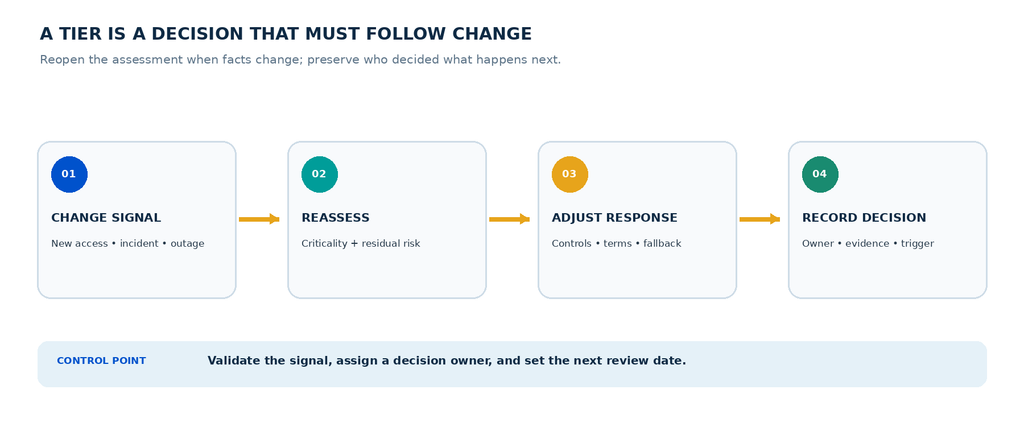
An annual questionnaire alone cannot keep the classification current. Use event-driven review for material changes and periodic review as a backstop. Preserve the rationale, evidence date, decision owner, open conditions and next review trigger so a later reviewer can see why the relationship remains acceptable.
The operating record should show both ratings, the reason for each, evidence supporting residual risk, the business owner, decision authority, safeguards, exceptions and reassessment triggers. This makes it possible to ask a useful question: has the relationship changed enough to alter the decision?
SPOG.AI’s GRC solution describes connecting requirements, controls, evidence, ownership and risk oversight. Its Continuous Control Monitoring solution focuses on control coverage and effectiveness using operational evidence, while Exposure Management brings business context into exposure prioritization. These are relevant where vendor-related controls or exposures feed the organization’s broader governance record; they do not replace procurement decisions, supplier evidence review or business risk acceptance.
Criticality explains what the organization depends on. Risk explains what could go wrong and how much exposure remains. Keep the ratings separate, connect each to a clear management response, and reassess when the relationship changes. That gives leaders a more useful basis for deciding where to add assurance, resilience, remediation or a viable alternative.

Cyber risk quantification expresses possible cyber losses in numerical terms, often money, for a defined scenario and period....
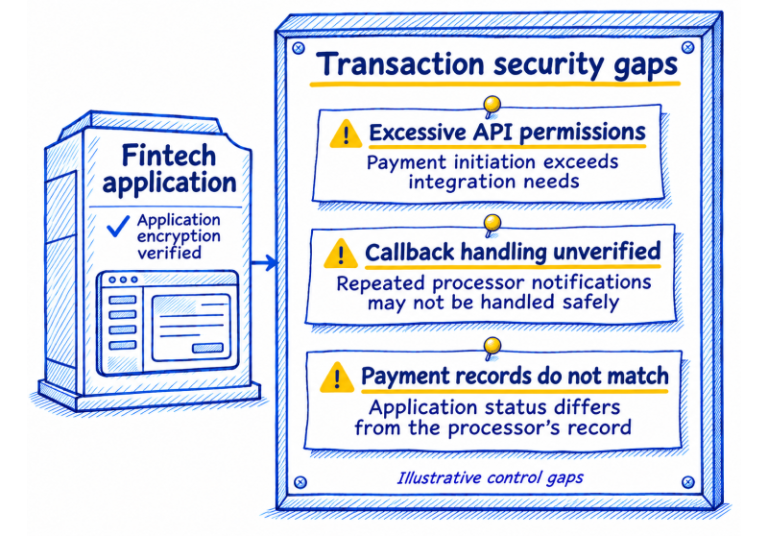
Fintech startup security must protect money, identity and financial data across live workflows enterprise buyers depend on. A...
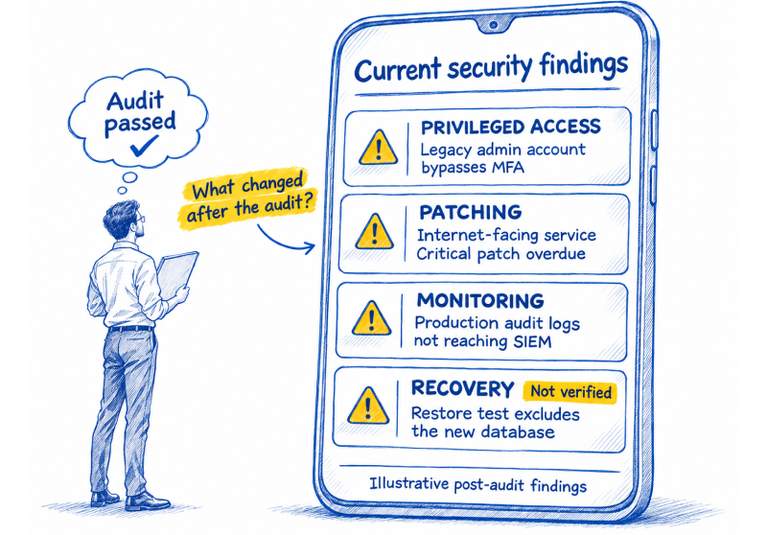
Balancing security and compliance to prevent cyberattacks requires more than passing an audit or buying another security tool....