Continuous Control Monitoring
Security Questionnaires: Respond with Accurate, Verifiable Answers
Security questionnaires help buyers understand how a supplier protects the data, systems and services involved in a proposed...
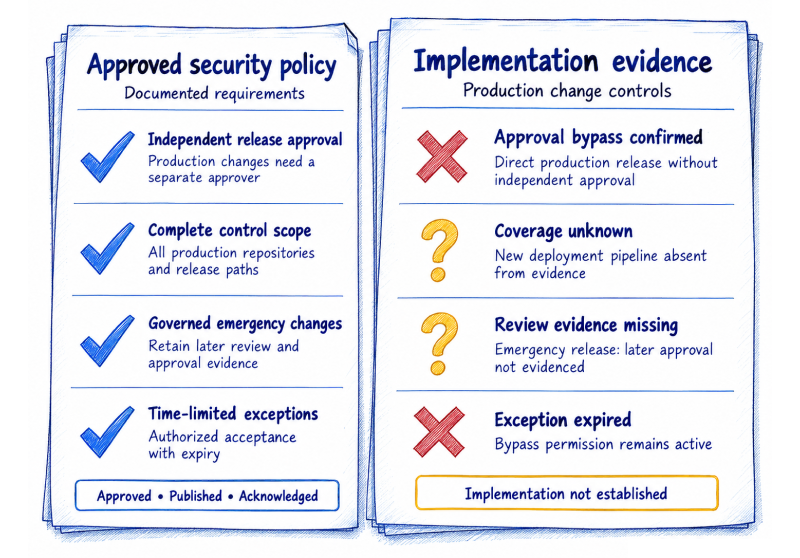
A policy can be approved, published and acknowledged while the behavior it requires remains unclear. Teams may follow different interpretations, technical controls may cover only part of the intended population, and exceptions may outlive the conditions that justified them. The weakness is not always the wording. It is the distance between a management decision and the way work actually happens.
Cybersecurity policy management should therefore operate as a governance process, not a document-maintenance exercise. Each policy needs a defined purpose, scope, decision authority, implementation path, evidence expectations and review triggers. That structure helps leaders distinguish a written commitment from a control that is deployed and working.
A cybersecurity policy sets management direction: what the organization expects, which outcomes matter and who has authority when the expectation cannot be met. Standards add measurable requirements. Procedures describe the steps people follow. Controls implement or test the requirement. Keeping those layers distinct prevents a policy from becoming either a vague statement of intent or a long technical manual that nobody can maintain.
Write each policy around decisions people must make. State the purpose and in-scope activities; define the outcome in plain language; identify who approves, implements and verifies it; and explain how teams handle a conflict or exception. The policy should point to supporting standards and procedures, but it should not duplicate every configuration detail. Technical settings change faster than governance intent.
NIST’s December 2025 revision of IR 8286 emphasizes connecting cybersecurity risk information with enterprise objectives and risk processes. That makes policy management a leadership concern: the rule should express a risk decision, and its implementation should produce information that leaders can use. A current draft of NIST SP 800-100 Rev. 1, published in October 2026, also organizes executive guidance around governance, risk, awareness, incident response and monitoring. The draft remains open for comment, so treat it as developing guidance rather than a final requirement.
Many people may contribute, but each policy needs a named owner who keeps it relevant and brings changes forward. Record who approves it, who implements its requirements and who supplies evidence. These roles can sit with different people; define the boundaries so review and escalation remain clear.
Separate policy approval from risk acceptance. The policy owner can recommend a change, but an authorized risk owner must accept exposure created by a deviation. Define when legal, privacy, technology or business leaders should advise, and set approval limits, duration and escalation conditions.
Keep a responsibility record with the owner, approver, implementers, evidence source, review date and escalation route. When roles change, transfer the work explicitly. A committee is accountable only when its decision process is defined and recorded.
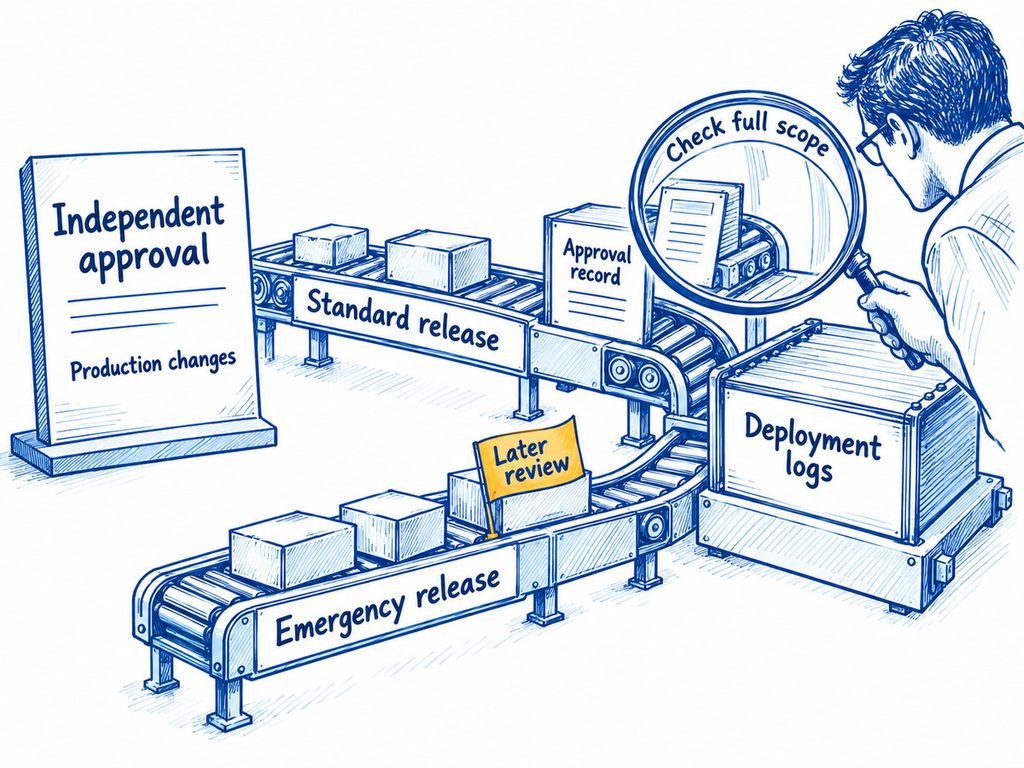
A requirement becomes useful when teams can show how they implement it and verify it. Define its population, expected control state, evidence source and response to missing or conflicting evidence. Evidence must establish control state and scope, not just show that a file was uploaded.
Illustrative example: a company requires independent approval for production code changes. The policy states the expectation; a standard defines in-scope repositories and deployment paths; a procedure covers emergency releases. Review repository protections, approval records and deployment logs across the full population, including later review of emergency changes. A policy statement or one screenshot cannot establish that the control works.
Use four evidence states: verified, failed, unknown and not applicable. Unknown is not a pass; not applicable needs a reason and authorized decision. For failures, record affected scope, owner, corrective action, due date and retest needed to confirm restoration.
Exceptions handle conditions that cannot meet the approved rule; they must not become an informal second policy. Record the unmet requirement, affected scope, rationale, residual risk, decision-maker, safeguards, expiry and review trigger.
Give each exception an action owner and an approver authorized to accept the risk. Link the record to its control and evidence. At expiry, require closure evidence, approved renewal or escalation. Repeated renewals should prompt a policy or architecture review.
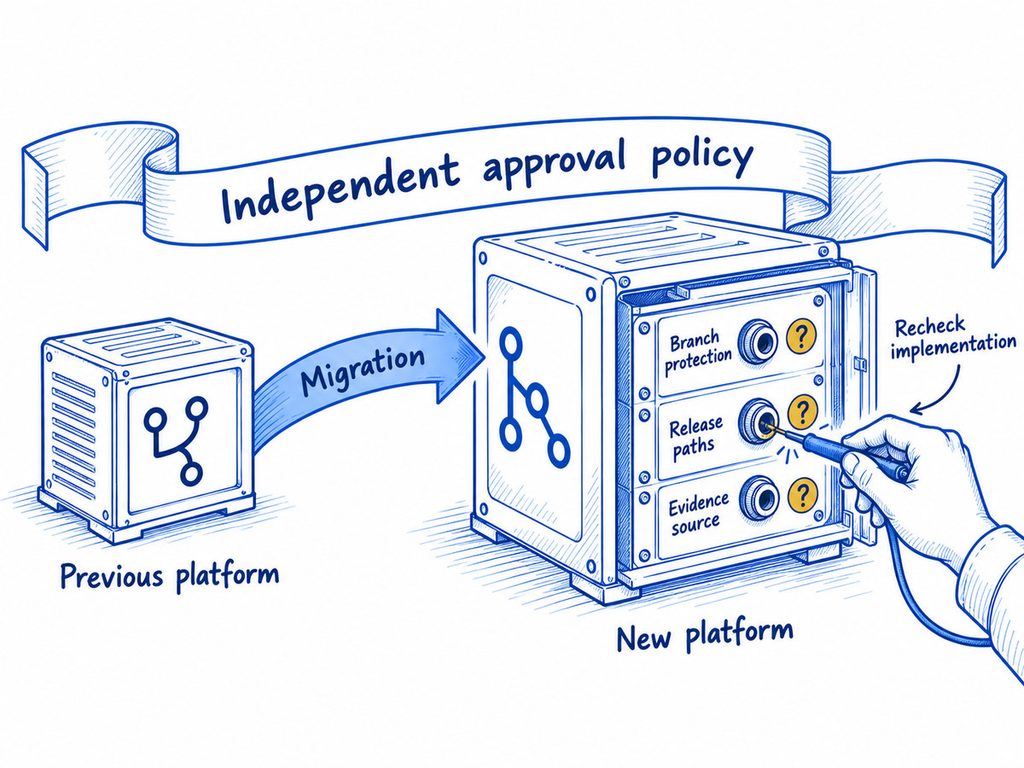
Set a review cadence based on risk, volatility and obligations, then add event triggers. A new system, acquisition, architecture change, incident, repeated control failure, audit finding, new data use or change in accountability may alter how a policy applies.
Illustrative example: an engineering team moves repositories and deployment pipelines to a new platform. The independent-approval policy may still fit, but branch protections, release paths and evidence sources have changed. Reconfirm scope, test the control and update instructions. The policy may stay the same; its implementation record must reflect reality.
Preserve approved text, approver, effective date, rationale and affected audience in version history. Explain what changed and who must act. Focus training on affected roles and decisions. Acknowledgment proves receipt, not comprehension or correct application.
Map each applicable framework, regulatory or contractual requirement to the relevant policy clause, control, owner and evidence. Keep obligation source and scope visible. Maintain one authoritative policy where requirements overlap, but do not imply different requirements are interchangeable.
Where requirements differ, document the additional control or procedure. Record the version or obligation source and revisit the mapping when scope or requirements change. Reviewers gain traceability without parallel documents that repeat the same operating rule.
Automation can route reviews, remind approvers, preserve versions, link evidence to requirements, flag overdue exceptions and surface change signals. Integrations reduce re-entry and help compare approved expectations with operational records, provided source data, scope and ownership are reliable.
Keep interpretation and risk decisions with people. A tool can flag changed evidence or overdue review, but it cannot decide whether a new process falls inside the policy or whether residual risk is acceptable. Review AI-drafted language for scope, conflicts, unsupported commitments and feasibility before approval.
Measure decision quality and follow-through, not document volume. Track named owners and current approvals, requirements linked to tested controls, overdue reviews, evidence gaps, exception age and renewals, and time from material change to impact decision. High acknowledgment or policy counts can coexist with weak implementation.
Before a major policy goes live, test it against a realistic case. Ask a representative employee and control owner what they would do, what would count as an exception and what evidence they would retain. If their answers differ, clarify the decision rule or add the missing procedure before rollout. A short walkthrough can reveal ambiguity while it is still inexpensive to fix.
SPOG.AI can support the governance around cybersecurity policies by connecting requirements, controls, operational evidence, ownership and exceptions. Its GRC solution helps teams maintain context across those records. The Continuous Control Monitoring solution connects defined controls with operational evidence to assess coverage and effectiveness. For changes that affect applications, infrastructure or accountability, the IT & Operations solution adds asset, dependency and ownership context to impact review.
These capabilities can support oversight and follow-through; policy owners still define intent, authorized leaders approve decisions, and technical teams implement controls. The useful test is whether a policy change or failure leads to a clear owner, a defensible decision and evidence that the required outcome was achieved.
Policy management works when people can act on the rule, leaders can see unresolved issues and reviewers can trace decisions to current evidence. Start with policies tied to consequential systems and obligations. Clarify authority, define outcomes, test evidence and time-limit exceptions. Use real changes and failures to improve the lifecycle. A current policy is one the organization can still explain and carry out.


Security questionnaires help buyers understand how a supplier protects the data, systems and services involved in a proposed...

A vendor cybersecurity inquiry should establish what the supplier will do, which data and systems it can access,...

A vendor management policy sets the rules for approving suppliers, accepting exceptions and responding when relationships change. This...