Continuous Control Monitoring
Security Questionnaires: Respond with Accurate, Verifiable Answers
Security questionnaires help buyers understand how a supplier protects the data, systems and services involved in a proposed...
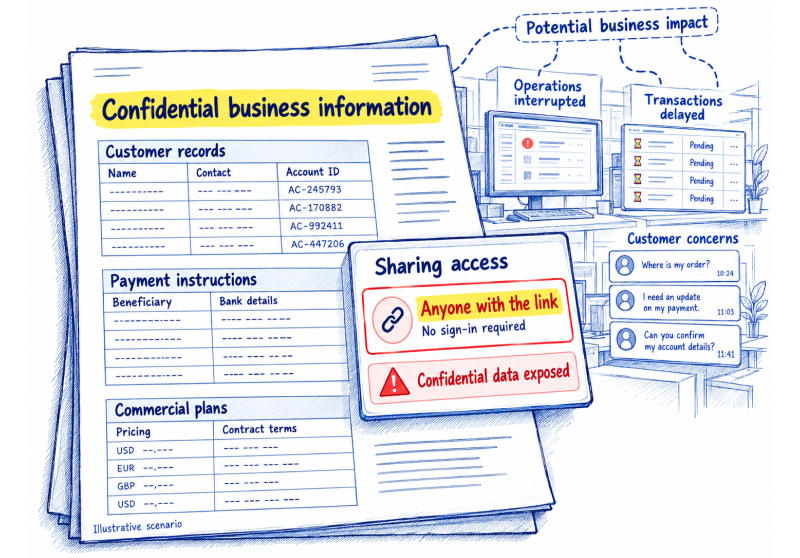
A supplier’s bank details are changed without approval. A customer record reaches someone who should not see it. An outage leaves employees unable to access order information. Each failure affects a different property of information, but all can interrupt work, create financial exposure or undermine business commitments.
The business case starts with identifying which information matters, how its loss or misuse would affect operations, and who is responsible for protecting it. From access restrictions and independent approvals to tested recovery, safeguards need to address those consequences and provide evidence that the intended protection works.
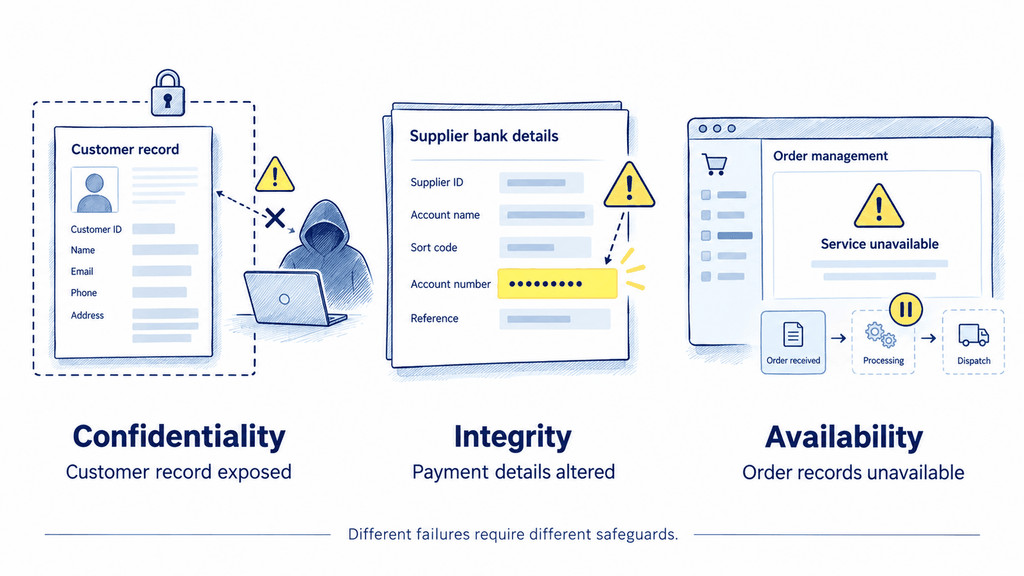
Information security is often introduced through confidentiality, integrity and availability. In business terms, confidential information reaches only authorized people, records stay trustworthy, and people can access information when work requires it.
The consequence depends on context. A disclosed customer address, an unauthorized change and unavailable records are different failures. A secrecy control may not detect an altered record; a backup does not prove data was accurate before recovery. State which information property matters and what business outcome depends on it.
Recent NIST enterprise-risk guidance connects cybersecurity risk information with enterprise objectives; the March 2026 CSF 2.0 workforce guide also addresses workforce decisions. NIST’s 2025 incident-response guidance places response and recovery within cybersecurity risk management. Security has to support how the organization runs before, during and after disruption.
Explain information security benefits through the business promise each safeguard supports. One safeguard may serve several outcomes, but its priority should be clear.
Leaders rely on information to approve payments, price products, manage inventory and plan staffing. Undetected changes can make a complete-looking report reflect the wrong reality. Access controls, change logs, reconciliation and separation of duties help protect critical records.
Identify decisions where inaccurate data could cause material harm. Define how the organization will detect unauthorized changes and correct their effects. Security supports better decisions when the underlying information is trustworthy.
Availability matters when people need information to complete time-sensitive work. An incident may pause dependent processes while teams determine what happened, which records remain trustworthy and how to resume safely.
Teams need to know who can authorize containment and recovery, what to restore first, and how to validate recovered information. NIST’s incident-response guidance integrates preparation, detection, response and recovery into cybersecurity risk management. This supports a deliberate route back to safe operation; it cannot guarantee zero downtime.
A company may promise to protect customer information, limit access or notify affected parties after a defined event. A policy sets expectations; role assignments, system settings and operating records show how the commitment works in practice.
Teams can explain safeguard scope, accountability and how gaps are handled instead of relying on broad claims. This does not guarantee a sale or replace independent assurance; it gives customers a concrete basis for evaluating trust.
Information security can support legal, regulatory and contractual responsibilities. Applicable obligations depend on an organization’s activities, locations, customers and data. A framework or assurance report does not by itself establish that every requirement has been met.
Business value comes from identifying commitments, assigning owners and keeping practices aligned as products and markets change. A GRC solution can connect requirements, controls and evidence. Qualified specialists should confirm legal applicability.
Information security can also make routine work easier to govern. When teams know which records are authoritative, who can approve sensitive changes and how exceptions are escalated, they spend less time reconstructing decisions during delivery, customer review or incident response. This benefit comes from clear ownership and practices that fit the workflow, not from adding more tools.
A security proposal can lose business context when presented only as tools or control names. Show which outcome depends on endpoint protection, access review or backup testing. Keep the technical detail, but connect it to the work it protects.
Use a short chain when proposing or reviewing a security measure:
This chain is a communication aid, not a substitute for risk assessment or control testing. It clarifies why a safeguard matters and what success should look like.
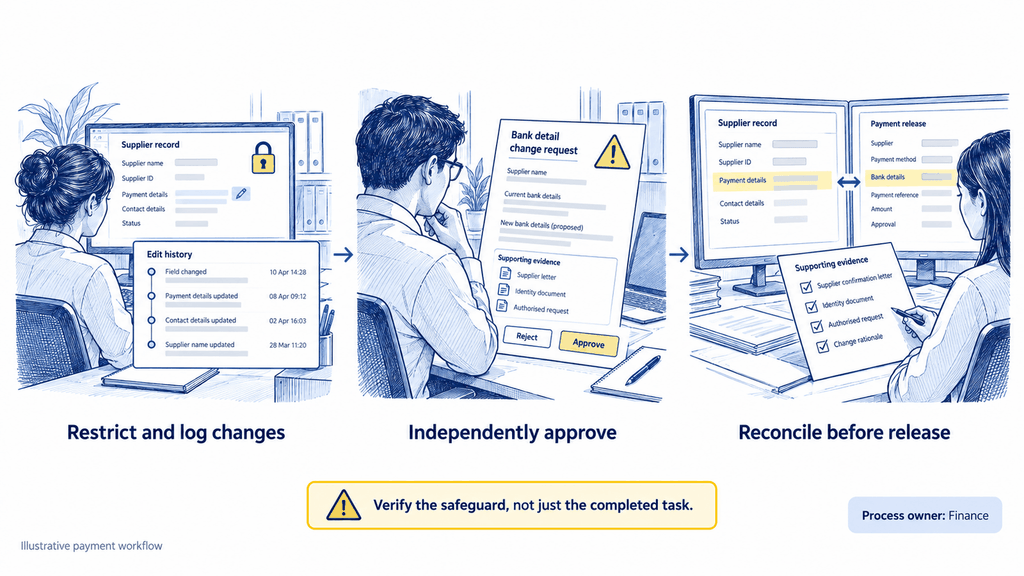
A mid-sized distributor pays suppliers using records in its finance system and a bank portal. Finance staff can update details while a separate team releases payments. A fraudulent change could divert funds and leave the company reconstructing events.
The aim is to protect payment accuracy, detect unauthorized changes and retain enough history to investigate exceptions. The distributor might restrict access, require independent approval, alert on bank-detail changes and reconcile before release. Finance owns the process; security evaluates safeguards; leaders set escalation authority.
This is illustrative, not a report of a SPOG customer outcome. It shows why information security must be tied to a workflow and its information. “Protecting data” alone does not tell a team what records matter or who should respond to a failure.
A safeguard creates value when it covers the right scope, works as intended and prompts action when it fails. A tool purchase or policy review is not an operating outcome. A successful backup job does not prove data can be restored and validated within business recovery needs.
Operational evidence helps teams assess control scope and effectiveness. SPOG.AI’s Continuous Control Monitoring solution connects defined controls with operational evidence, subject to configured scope and sources. The Remediation solution supports governed action and validation for identified gaps. These capabilities do not guarantee that every business consequence is prevented.
Security does not remove uncertainty. Incidents, failures and human error can still occur. Avoid claims that a control makes a company “safe” or guarantees compliance. State its purpose, scope, how it is checked and what remains outside it.
This precision helps leaders compare investments. Consider the affected process, information involved, potential scope of impact, safeguards and improvement effort. NIST’s current enterprise-risk guidance connects cybersecurity risks with organizational objectives; authorized leaders still make resource and trade-off decisions.
Information security matters because businesses depend on information that is accurate, controlled and available when needed. It protects decisions, supports continuity, strengthens customer commitments and helps meet applicable obligations.
Start with a process the company cannot afford to misunderstand or interrupt. Identify its information dependencies, consequential failure, safeguard owner and evidence of the intended result. That connects information security to how the business runs.


Security questionnaires help buyers understand how a supplier protects the data, systems and services involved in a proposed...

A vendor cybersecurity inquiry should establish what the supplier will do, which data and systems it can access,...

A vendor management policy sets the rules for approving suppliers, accepting exceptions and responding when relationships change. This...